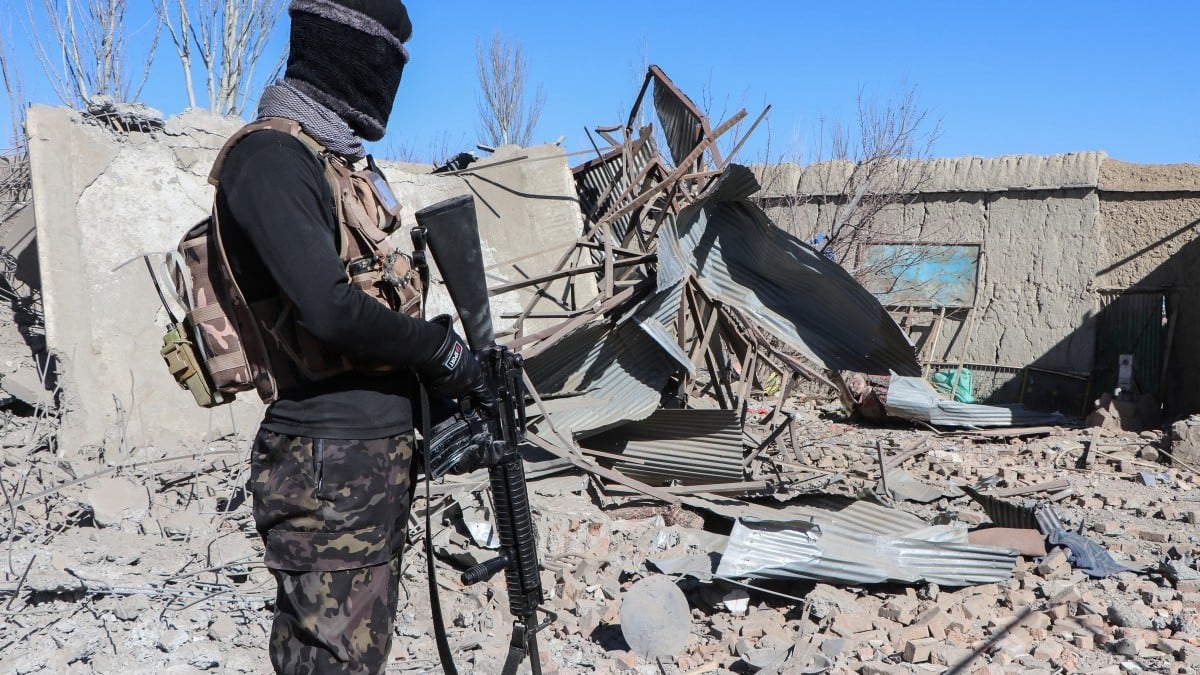
The reported aerial strikes by the Taliban-led Afghan Air Force against military installations near Islamabad and Nowshera represent a fundamental shift in the regional security architecture, signaling a transition from border skirmishes to deep-strike kinetic operations. This escalation is not merely a tactical retaliation; it is a calculated stress test of Pakistan’s integrated air defense systems (IADS) and a challenge to the established doctrine of strategic depth. To understand the implications of these strikes, one must deconstruct the operational mechanics of the Afghan Air Force’s remaining assets, the failure points in regional early warning systems, and the geopolitical calculus that drives a non-state actor turned sovereign entity to target the administrative heart of a nuclear-armed neighbor.
The Mechanics of Tactical Reach
The Taliban inherited a fragmented but functional fleet of fixed-wing and rotary assets following the 2021 withdrawal. The primary concern for regional analysts is the operational status of the A-29 Super Tucano light attack aircraft and the UH-60 Black Hawk and Mi-17 helicopters. While these platforms are traditionally viewed as counter-insurgency tools, their deployment in a cross-border strike capacity suggests a significant advancement in the Taliban’s maintenance cycles and pilot proficiency.
The strike profile targeting Nowshera and the periphery of Islamabad necessitates a flight path that evades the standard radar picket lines along the Durand Line. This implies the use of low-altitude ingress tactics to exploit the "clutter" of the mountainous Hindu Kush terrain, effectively neutralizing high-altitude surveillance.
The Technical Constraints of the Afghan Fleet
- Avionics and Targeting: The A-29 is equipped with integrated avionics and a laser-guided bomb capability. If the Taliban have successfully integrated GBU-12 Paveway II munitions, the precision of these strikes increases exponentially, allowing for the targeting of specific command and control (C2) nodes rather than broad geographical areas.
- Combat Radius: A-29s have a combat radius of approximately 300 nautical miles. A flight from Bagram or Jalalabad to the vicinity of Islamabad sits at the edge of this envelope, suggesting that these missions were either one-way high-risk sorties or involved forward positioning of assets in unconventional airstrips near the border.
- Maintenance Sustainability: The bottleneck for the Afghan Air Force remains the supply chain for proprietary spare parts and the specialized knowledge required for airframe overhauls. The execution of a multi-vector strike indicates a temporary peak in readiness, likely achieved through the cannibalization of grounded units or the recruitment of former Afghan National Army technicians.
Structural Vulnerabilities in Pakistani Air Defense
The penetration of Pakistani airspace toward Islamabad suggests a multi-layered failure in the defensive grid. Pakistan’s air defense is historically oriented toward the eastern border, optimized for high-speed, high-altitude intercepts against Indian platforms. The western frontier, characterized by porous topography and unconventional threats, presents a different set of variables that current deployments may not fully address.
The Low-Slow-Small (LSS) Problem
Modern radar systems often filter out slow-moving or low-flying objects to prevent "false positives" from birds or weather patterns. An A-29 or a rotary-wing asset flying at nap-of-the-earth (NOE) levels creates a detection gap.
- Radar Horizon Limitations: Terrestrial radar is limited by the curvature of the earth and physical obstructions. In the rugged terrain of Khyber Pakhtunkhwa (KPK), "dead zones" are frequent, allowing an aggressor to leapfrog between valleys.
- Response Time vs. Proximity: The distance from the Afghan border to Nowshera is negligible in terms of flight time. Even if detection occurs at the border, the window for a scramble-to-intercept is measured in minutes.
- Identification Friend or Foe (IFF): The chaos of border operations, where Pakistani military aviation is also active, creates an environment where IFF protocols can be strained, leading to hesitation in the engagement of unidentified tracks.
The Cost Function of Retaliatory Escalation
Military action in this context follows a strict economic logic of deterrence. For the Taliban, the cost of a strike is the potential loss of a rare airframe and the certainty of a Pakistani kinetic response. However, the perceived benefit—demonstrating that the "strategic heart" of Pakistan is no longer a sanctuary—outweighs these material risks in their current political framework.
The Pakistani response is governed by a different set of constraints. A heavy-handed aerial campaign into Afghanistan risks a full-scale conventional conflict that Pakistan’s current economic instability cannot sustain. Conversely, a lack of response erodes the credibility of its military deterrent. This creates a "Strategic Bottleneck" where both parties are forced into high-stakes posturing that can easily tip into unintended total war through miscalculation.
The Three Pillars of Afghan Strategic Shift
The transition from guerrilla tactics to conventional air strikes rests on three pillars that the previous administration in Kabul could never stabilize.
Pillar I: Legitimacy through Force
By striking targets near the capital, the Taliban seek to project the image of a stabilized state power capable of projecting force beyond its borders. This is a message directed as much to internal dissenters and rival factions like ISIS-K as it is to the international community. It asserts that the Taliban are no longer just an insurgency but a regional military player.
Pillar II: Disruption of the TTP Dynamics
Pakistan has consistently accused the Taliban of harboring the Tehrik-i-Taliban Pakistan (TTP). By initiating direct strikes against Pakistani military bases, the Taliban are attempting to flip the narrative, claiming they are responding to Pakistani "aggression" or "incursions" on Afghan soil. This creates a defensive pretext for their continued support of proxy groups.
Pillar III: Testing the "Grey Zone"
The strikes occupy a "Grey Zone" in international law. They are significant enough to cause damage but small enough to potentially avoid triggering a full-scale invasion. The Taliban are testing where the threshold for a major Pakistani offensive lies.
Logistical Reality vs. Propaganda
It is critical to distinguish between the Taliban’s claims and the physical reality on the ground. The Taliban’s communication wing is adept at information warfare. Claims of striking "near Islamabad" may include areas in the Margalla Hills or the outer limits of the Islamabad Capital Territory, which, while symbolically massive, may have limited tactical impact.
The "Nowshera Strike" is more plausible given its proximity to the border and the presence of the Pakistan Army’s School of Artillery and other vital training centers. Targeting Nowshera hits the logistical and educational spine of the Pakistani military, disrupting the pipeline of personnel and equipment moving toward the front lines.
The Intelligence Deficit
The primary failure leading to this escalation is likely an intelligence gap regarding the Taliban's technical maturation. The assumption that the Taliban could not operate complex machinery without Western contractors has proven to be a dangerous fallacy.
- Cyber and Signal Intelligence (SIGINT): There is a clear lack of real-time monitoring of Afghan hangars and fuel depots. Large-scale sorties require fuel logistics and pre-flight checks that should be detectable via satellite or SIGINT.
- Human Intelligence (HUMINT): The transition of former Afghan Air Force pilots into the Taliban's service suggests a successful reintegration program that regional intelligence services underestimated.
Geopolitical Contagion and the Durand Line
The Durand Line remains the core friction point. Afghanistan has never formally recognized this border, and the recent strikes are an atmospheric rejection of the fence Pakistan has constructed. This is not just a border dispute; it is an existential disagreement on the definition of sovereignty.
The involvement of airpower changes the geography of the conflict. In previous decades, the conflict was lateral—fought in the valleys and passes. It is now vertical. The ability to bypass the ground-level fortifications via the air renders the multi-billion dollar border fencing project partially obsolete in a conventional skirmish context.
Strategic Forecast: The Move Toward Integrated Buffer Zones
The immediate requirement for Pakistan is the re-calibration of its western air defense sector. This involves a shift from centralized, heavy SAM (Surface-to-Air Missile) sites to a decentralized, mobile MANPADS (Man-Portable Air-Defense Systems) and SHORAD (Short-Range Air Defense) network.
- Deployment of Pulse-Doppler Radars: To counter low-altitude threats, the deployment of mobile, high-frequency radar units capable of "look-down" detection is mandatory.
- Electronic Warfare (EW) Corridors: Establishing EW blankets along the Durand Line to disrupt the GPS and radio links of Afghan aircraft could provide a non-kinetic layer of defense.
- Direct Proportionality: Pakistan will likely respond with targeted drone strikes or artillery barrages against the launch points of these aircraft. The objective will be to eliminate the Taliban’s air assets on the ground, as they are a finite, non-renewable resource for Kabul.
The situation demands a move away from the "Strategic Depth" doctrine, which viewed Afghanistan as a backyard, toward a "Hard Border" doctrine that treats the western frontier with the same level of high-alert conventional readiness as the eastern border. The era of the Durand Line as a purely counter-insurgency theater is over; it is now an active conventional front. The next logical step for Islamabad is a formal ultimatum coupled with a verifiable strike on Afghan air infrastructure to restore the deterrence equilibrium. Failure to do so invites further deep-penetration sorties, potentially targeting civilian infrastructure or larger population centers.