The traditional dominance of Western state-aligned media is currently undergoing a structural degradation caused by the emergence of high-frequency, low-cost digital insurgency tactics. Iran’s current positioning in the global information environment is not a product of superior resources, but rather a sophisticated application of Asymmetric Narrative Saturation. By leveraging the decentralized nature of social media and the diminishing trust in legacy institutional gatekeepers, Tehran has effectively decoupled information influence from kinetic power. This shift suggests that the "information war" is no longer won by the side with the largest broadcasting budget, but by the entity that best exploits the cognitive biases of a fragmented global audience.
The Triad of Iranian Information Operations
To understand how a middle-tier power projects global narrative influence, one must analyze the three functional pillars that define the Iranian strategy. These are not isolated tactics; they are integrated components of a broader effort to erode the consensus-building capacity of its adversaries. For an alternative view, consider: this related article.
1. The Cost-Efficiency of Satirical Subversion
The use of visual media, specifically cartoons and meme-style graphics, serves as a high-yield, low-risk entry point into foreign discourse. Visual satire bypasses the linguistic and cultural barriers that often hinder text-based propaganda.
- Low Barrier to Entry: Producing a digital illustration requires minimal capital compared to maintaining a satellite news network.
- Viral Velocity: Satirical content is shared at a rate significantly higher than traditional reporting because it triggers emotional rather than analytical responses.
- Plausible Deniability: By utilizing independent or semi-independent creators, the state can distance itself from controversial content while reaping the benefits of its circulation.
2. Exploiting the "Alternative Narrative" Market
There is a quantifiable global demand for perspectives that challenge the Western geopolitical status quo. Iran has positioned its state-affiliated media, such as Press TV or partnerships with outlets like RT, to serve as a primary supplier for this demand. This is a classic supply-and-demand mechanism where the product is "skepticism." By framing its output as the "untold story," Iran captures audiences that are already predisposed to distrust their own domestic institutions. Further coverage on this matter has been provided by USA Today.
3. Algorithmic Arbitrage
The Iranian strategy exploits the inherent vulnerabilities of platform algorithms. These systems prioritize engagement—measured by likes, shares, and comments—over factual accuracy. Narrative actors use coordinated bot networks and organic "super-spreaders" to create an illusion of consensus. When an Iranian-backed narrative enters the feedback loop of a social media algorithm, the platform itself becomes the distribution mechanism, effectively subsidizing the reach of the Iranian state.
Quantifying the Information Parity Gap
The concept of "Information Parity" suggests that in a digital ecosystem, a single viral image can hold the same cognitive real estate as a multi-million dollar advertising campaign. The gap between Western institutional media and Iranian insurgent media is narrowing because the metrics of success have shifted from credibility to attention.
The cost function of Iranian influence is remarkably low. While Western governments invest billions in public diplomacy and strategic communications—often bogged down by bureaucratic layers and factual verification requirements—Tehran operates with a leaner, more agile framework. Their "Minimum Viable Narrative" model focuses on speed and emotional resonance. The goal is not necessarily to make the audience believe the Iranian version of events, but to make them doubt the validity of all versions. This is the Strategy of Universal Skepticism.
Structural Failures in Western Counter-Narratives
The reason Iran appears to be "winning" is less about their ingenuity and more about the structural rigidities of Western responses. The current counter-strategy relies on three flawed assumptions:
- The Fact-Checking Fallacy: The belief that debunking a false claim with data will neutralize its effect. In reality, the "continued influence effect" ensures that once a narrative is planted, the emotional residue remains even after the facts are corrected.
- Institutional Reliance: Western strategy is heavily centralized. This creates a bottleneck where responses are too slow to compete with the 24-hour digital cycle.
- Platform Over-Correction: Relying on social media companies to "shadow-ban" or de-platform Iranian content often backfires. It reinforces the Iranian claim of censorship and drives the audience toward more radicalized, unmoderated encrypted channels like Telegram.
The Cognitive Mechanics of Narrative Endurance
The durability of Iran’s information strategy relies on The Framing Effect. By framing geopolitical conflicts not as nation-state disputes but as struggles between "oppressors" and the "oppressed," Iran taps into a universal archetype. This framing is particularly effective in the Global South and among disillusioned demographics in the West.
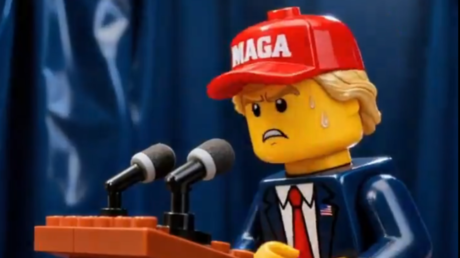
When a Lego-style cartoon or a satirical graphic depicts a complex conflict, it strips away the nuance. This simplification is a deliberate cognitive tool. The human brain is hardwired to prefer simple, binary stories over complex, multifaceted realities. Iran’s information architects understand that in the battle for public opinion, the simplest story—not the truest one—often wins.
Technical Constraints and Strategy Limitations
Despite the perceived success, the Iranian model faces significant long-term headwinds. The strategy is almost entirely dependent on the infrastructure of its adversaries. If global platforms were to successfully implement strict identity verification or if the internet becomes further "splintered" (the Balkanization of the web), the reach of Iranian asymmetric operations would be severely throttled.
Furthermore, the "Credibility Floor" presents a constant risk. If the gap between the digital narrative and the physical reality becomes too wide, the strategy collapses. Propaganda requires a kernel of truth to remain effective. If Iran’s narrative becomes purely fictional, it loses its ability to influence "swing" audiences and becomes relegated to a closed loop of true believers.
Strategic Realignment: The Decentralized Defense
Countering Iran’s narrative dominance requires a shift from a defensive, reactive posture to a proactive, decentralized network. The following structural changes are the only viable path to neutralizing asymmetric influence:
- Horizontal Content Distribution: Instead of top-down government messaging, Western interests must empower a diverse ecosystem of independent voices that can challenge Iranian narratives in real-time without the lag of official approval.
- Cognitive Immunization: Education efforts must move beyond "spotting fake news" toward understanding the emotional triggers used in information operations. This is a long-term investment in the resilience of the target population.
- Algorithmic Transparency: Forcing platforms to disclose how "engagement" is calculated can help identify and neutralize the inorganic amplification that Iranian bot networks rely on.
The focus must shift from "winning the argument" to "denying the space." The goal is to increase the cost of Iranian operations until the return on investment—measured in global influence—is no longer sustainable for the regime. This is not a battle of ideas; it is a battle of system efficiency.