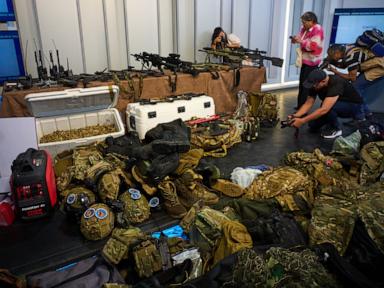
Standard wire reporting on maritime infiltration arrests treats state announcements as closed-loop facts, missing the strategic incentives that turn a speedboat shootout into an instrument of asymmetric leverage. When Cuban authorities report in October 2026 that ten U.S.-based suspects detained after a February armed incursion have confessed, cooperated with investigators, and face penal code charges involving deadly devices and explosives, the surface event is clear. The underlying mechanics are not. Understanding what this episode actually signifies requires separating verified state claims from unverified evidentiary assertions, mapping how Havana uses prosecution to counter external pressure, and evaluating where intelligence-sharing breaks down across the Florida Straits.
To move beyond headline summaries, this analysis examines the case through four structural components: the evidentiary gap in state-controlled confessions, the three pillars of Havana's prosecutorial signaling, the friction points in bilateral counterterrorism coordination, and the operational constraints governing small-craft maritime raids. In related developments, we also covered: Why Blaming Drones for Sudan's Civilian Slaughter Misses the Real War.
The Evidentiary Gap Between State Claims and Independent Verification
Wire coverage of the February 2026 speedboat confrontation and October 2026 investigation update relies heavily on statements from Colonel Francisco Estrada Portales of Cuba's Interior Ministry State Security apparatus. In intelligence and legal analysis, a government briefing announcing confessions, operational explosives, and recordings of alleged plotters stating an intent to secure territory and spur uprising is a primary source of state posture, not an independent adjudication of guilt.
A rigorous assessment separates three distinct tiers of information: Al Jazeera has analyzed this fascinating issue in great detail.
- Known baseline facts: A fatal confrontation occurred in February involving a vessel linked to the United States and Cuban border forces, resulting in deaths and detentions; in October, Cuban officials stated that ten detained men had confessed and faced terrorism-related charges under Cuban law.
- State assertions requiring corroboration: Specific tactical details—such as which detainee fired initial shots, the exact operational readiness of seized weapons and explosives, and the contents of recorded statements—come from an interested party whose security services control detention and interrogation.
- Educated hypotheses: Havana's decision to publicize confessions eight months after the initial interception reflects a calibrated effort to shift diplomatic narrative momentum during heightened bilateral friction rather than a purely routine procedural milestone.
In closed or heavily restricted legal systems, confessions carry high probative value for understanding the state's narrative framing and potential trial strategy, yet lower standalone evidentiary certainty than in systems with independent defense discovery and public cross-examination. Treating official allegations as settled history conflates accusation with proof.
The Three Pillars of Havana's Prosecutorial Signaling
Why release a detailed investigative update in mid-October when the interception occurred in February? Timing in geopolitical messaging rarely happens by accident. The announcement operates across three reinforcing pillars that convert a tactical border incident into strategic leverage.
1. Legitimacy and Deterrence Through the Terrorism Label
Classifying an armed maritime approach as terrorism under Cuba's penal code—specifically invoking deadly devices and explosives—elevates the event from smuggling or border violation to an existential threat against public order. Framing suspects as violent extremists rather than misguided exiles serves two domestic functions: it rallies internal security cohesion and signals severe escalation costs to any diaspora networks contemplating similar actions. Highlighting links to individuals with international terror designations further reinforces the state's narrative of external hostility.
2. Asymmetric Counter-Pressure Amid Economic Strain
The confessions surfaced amid acute friction with Washington, including U.S. energy restrictions aimed at pressuring political change in Havana. Asymmetric actors frequently use legal and security disclosures to impose reputational and diplomatic costs when they cannot match an adversary's economic or military weight. By asserting that plotters originated in the United States and that Cuban authorities shared findings without receiving a U.S. response, Havana attempts to cast Washington as indifferent or permissive toward cross-border violence.
3. Escalation Control Without Direct Confrontation
Charging individuals under domestic criminal statutes keeps the conflict bounded at the law-enforcement and diplomatic level. Even though Cuba's penal code includes severe penalties—up to capital punishment in certain categories—prosecutors leaving specific sentencing demands open preserves room for maneuver. Harsh sentences can project strength to domestic hardliners, while delayed or calibrated adjudications leave a narrow channel open if diplomatic backchannels ever reopen.
Why Bilateral Coordination Stalls Across the Florida Straits
A critical blind spot in basic news summaries is the institutional friction that turns shared investigative claims into a diplomatic stalemate. When Cuban officials state they transmitted investigative material to the United States without receiving a reply, the lack of visible reciprocity stems from structural asymmetries rather than mere administrative delay.
First, mutual trust and evidentiary standards diverge sharply. U.S. federal prosecutors and intelligence agencies require chain-of-custody documentation, admissibility standards, and assurance against coerced statements before acting on foreign investigative files. Cuban State Security operates within an intelligence-led model where investigative disclosure often serves political objectives alongside legal ones.
Second, political context poisons technical cooperation. When Washington applies coercive pressure—such as energy restrictions—while Havana accuses U.S.-based actors of plotting armed subversion, both capitals view security exchanges through a zero-sum lens. Even when shared interests exist on paper, such as preventing unauthorized armed maritime departures, political hostility raises the domestic cost for U.S. officials to engage visibly with Cuban security claims.
Third, jurisdictional reach is uneven. Washington can enforce domestic statutes governing weapons export, maritime departure, or neutrality violations on U.S. soil when evidence supports federal prosecution, but it cannot validate Havana's domestic terrorism charges on faith. Conversely, Cuba holds physical custody and prosecutorial authority over detainees inside its territory, creating an information monopoly that external parties cannot independently audit.
The Operational Cost Function of Small-Craft Maritime Incursions
Small-vessel armed incursions across the Straits of Florida follow a harsh operational cost function that explains why covert plots repeatedly fail against a prepared coastal state. Unlike large-scale amphibious operations, small boats—often speedboats—offer speed and lower radar or visual profiles over open water, yet they face severe constraints once they approach contested littoral zones.
Consider the trade-offs built into a small-craft raid:
- Payload versus range and speed: Carrying firearms, ammunition, and explosives reduces fuel margins, speed, and maneuverability, increasing vulnerability during transit and coastal approach.
- Detection asymmetry: Coastal surveillance, maritime patrols, and local informants give a defending state strong positional advantage near shore, where a small landing party has minimal cover and no logistics depth.
- Extraction impossibility: Without air cover, heavy support, or sympathetic local control, an intercepted boat faces immediate containment, turning an infiltration attempt into a high-casualty or capture event.
Historically, small-group armed raids from South Florida toward Cuba have suffered from poor operational security, uneven training, and rapid detection. Even when plotters harbor intense ideological conviction, the gap between tactical aspiration and operational feasibility remains wide. A small armed cell cannot realistically trigger mass uprising on an island tightly monitored by state security unless the state apparatus is already fracturing from within—a condition that has not materialized from external raids.
Strategic Play for Analysts, Policymakers, and Risk Teams
For analysts tracking Caribbean security, policymakers managing hemispheric risk, or corporate teams assessing regional stability, the immediate strategic move is to treat Havana's October confession rollout as an information-leverage play while maintaining strict baseline monitoring of maritime enforcement and energy-driven instability.
Do not build forecasts around the assumption that confessions alone prove broader U.S. state complicity, nor assume that publicizing a foiled plot automatically resolves underlying tensions. Instead, track three concrete indicators over the coming months: whether formal trial proceedings introduce verifiable physical or documentary material beyond state media summaries; whether U.S. authorities announce any domestic law-enforcement actions tied to vessel departure or weapons logistics; and how energy constraints inside Cuba affect internal governance and border patrol readiness. Analytical clarity comes from pairing skepticism toward unverified state narratives with disciplined attention to how those narratives reshape political risk.


