Centralized political administrations rarely collapse from a single frontal assault. Instead, executive authority erodes when an incumbent government is forced to fight simultaneous battles across two incompatible operational theaters—one institutional and legislative, the other decentralized and grassroots. Prime Minister Narendra Modi’s administration faces precisely this structural dilemma: a pincer movement combining coordinated parliamentary resistance from formal opposition parties with the rapid proliferation of a decentralized, leaderless grassroots protest phenomenon colloquially termed the "cockroach" movement.
Understanding this political convergence requires moving beyond surface-level media narratives of electoral rivalry. The strategic vulnerability of the ruling Bharatiya Janata Party (BJP) lies in the distinct operational mechanics of these two threats. Standard political containment strategies designed to neutralize formal opposition parties actively accelerate the growth of decentralized movements, while concessions aimed at pacifying street-level agitation hand immediate legislative and narrative victories to institutional rivals. For a different look, read: this related article.
The Architecture of Dual-Front Political Pressure
To analyze the current stress on New Delhi’s governance model, we must separate the two vectors of pressure by their organizational topology, resource dependencies, and strategic objectives.
1. The Institutional Vector (Formal Opposition Coalitions)
Formal opposition parties operate within the established constitutional and electoral framework. Their primary currency is parliamentary disruption, judicial litigation, regional coalition-building, and electoral arithmetic. Related coverage on this matter has been provided by Reuters.
- Mechanism of Action: Opposition blocs target the executive branch’s legislative bandwidth. By forcing floor debates, stalling key economic and administrative bills, and weaponizing state-level governance (federalism) against central mandates, they impose high transaction costs on policy implementation.
- Vulnerability: Because formal parties rely on centralized leadership, registered funding, and electoral calculations, they are susceptible to traditional statecraft. Investigative agencies, defection mechanics, media narrative control, and targeted welfare counter-messaging can fracture their cohesion.
2. The Decentralized Vector (The "Cockroach" Phenomenon)
In organizational theory, a "cockroach" movement—a term applied by political observers to describe hyper-resilient, non-hierarchical protest networks—possesses no single head to sever. Inspired by leaderless mobilization models seen globally in the late 2010s and early 2020s, these domestic Indian movements rely on encrypted messaging, localized micro-agitations, and rapid dispersal tactics.
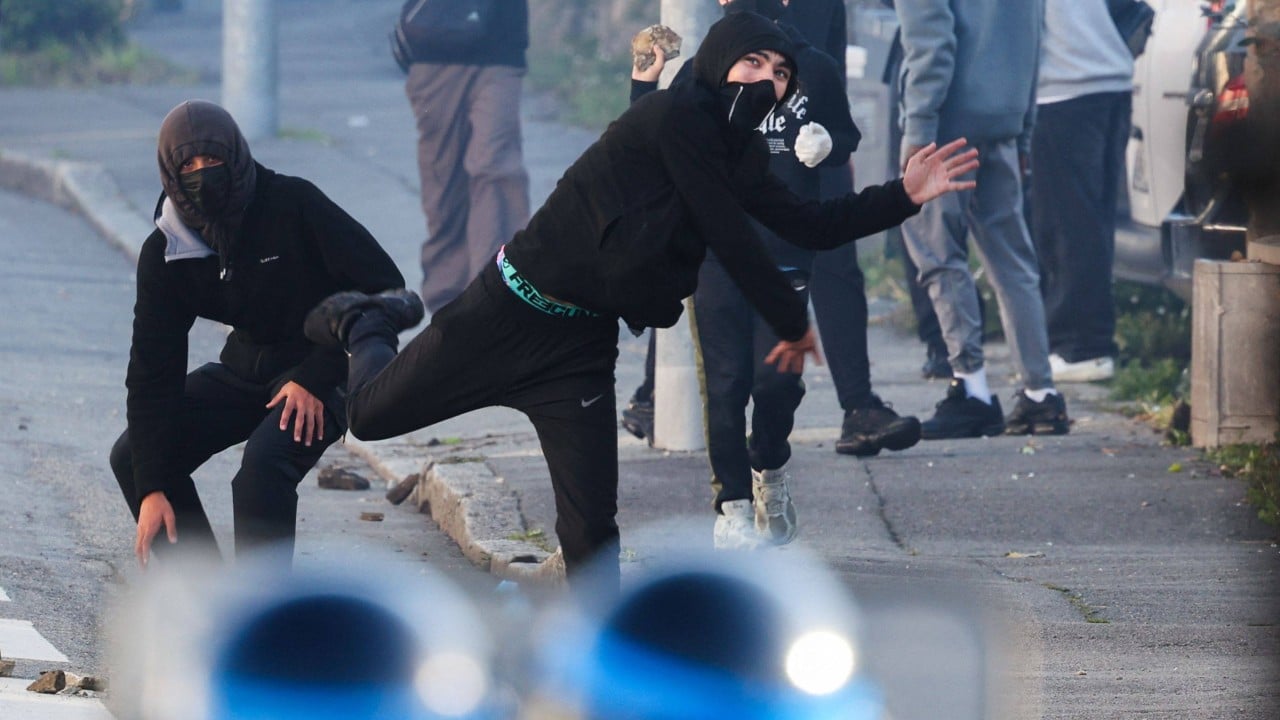
- Mechanism of Action: Rather than staging massive, static demonstrations that security forces can cordon off and clear, decentralized networks execute synchronized, low-footprint disruptions across dozens of tier-two and tier-three cities. They target economic choke points, local administrative offices, and digital information spaces simultaneously.
- Vulnerability: Leaderless movements struggle to translate street-level disruption into formal policy concessions because they lack an authorized negotiating body. Without a hierarchical command structure, they cannot enforce a truce or sign a legislative compromise.
The Containment Paradox and Asymmetric Friction
The core strategic problem facing the Modi administration is an acute containment paradox: the tactical playbook required to defeat Vector 1 is actively counterproductive against Vector 2.
When the central government deploys high-visibility state power—such as internet shutdowns, preventive detentions, or aggressive policing—to suppress decentralized street protests, it generates immediate political capital for formal opposition parties. Opposition leaders do not need to organize the protests themselves; they simply harvest the resulting grievance, framing the state's reaction as authoritarian overreach on the floor of Parliament and in regional election campaigns.
Conversely, if the administration attempts to starve the grassroots movement of oxygen by adopting a posture of strategic patience and non-intervention, the localized disruptions persist. Persistent, unaddressed agitation creates an administrative perception of state weakness. For a political brand built heavily on decisive governance, strongman stability, and centralized efficiency, prolonged operational friction erodes its core value proposition among middle-class and business constituencies.
Three Structural Bottlenecks for the Incumbent Administration
Evaluating the sustainability of the BJP's current governance model reveals three specific operational bottlenecks created by this dual pressure.
1. Bandwidth Depletion and Executive Overload
Highly centralized administrations concentrate decision-making authority within a tight inner circle—primarily the Prime Minister's Office (PMO) and the Ministry of Home Affairs. While this structure accelerates execution during periods of stability, it creates a severe processing bottleneck during multi-front crises. Every localized flare-up that threatens national optics demands top-down calibration. Simultaneously, managing fragile coalition dynamics and hostile state governments consumes senior ministerial hours. The opportunity cost is measurable: structural economic reforms, bureaucratic modernization, and long-term foreign policy execution are sidelined in favor of daily crisis management.
2. The Federalism Friction Multiplier
India’s constitutional design grants significant policing and administrative powers to state governments. In states controlled by opposition parties, the institutional vector and the decentralized vector frequently align by default. Opposition Chief Ministers can withhold the aggressive local policing required to clear decentralized protests, effectively turning opposition-ruled states into safe harbors for grassroots mobilization. New Delhi is then forced to choose between deploying central paramilitary forces—a move that triggers severe constitutional disputes over federal overreach—or allowing the agitation to build momentum unchecked.
3. Information Asymmetry and Narrative Fracture
For over a decade, the ruling party maintained dominance over the national political narrative through superior capital allocation in mass media and highly disciplined digital messaging networks. Decentralized movements bypass this monopoly entirely. Because "cockroach" networks generate content hyper-locally—capturing raw, unedited footage of localized economic distress or administrative friction—they achieve high organic engagement that centralized state media cannot easily debunk or drown out. Formal opposition parties then amplify these hyper-local micro-narratives, stitching isolated incidents into a cohesive national indictment of central governance.
Distinguishing Empirical Realities from Strategic Hypotheses
Rigorous political risk analysis requires separating verifiable structural facts from speculative forecasts regarding how this pressure will resolve.
Established Operational Facts:
- Coalition Arithmetic: Following the 2024 general election, the BJP's reliance on regional coalition partners altered its legislative margin for error. Controversial bills now require extensive pre-legislative negotiation, giving formal opposition parties greater leverage to delay or dilute executive initiatives.
- Shift in Protest Topology: Across major Indian policy disputes—ranging from agricultural pricing to public sector recruitment and regional autonomy—protest organizers have systematically abandoned static, single-site occupations in favor of dispersed, multi-nodal actions to avoid preemptive state containment.
- Judicial Intervention Rates: The Supreme Court and High Courts have increasingly become the primary arenas where institutional opposition and grassroots grievances intersect, with public interest litigation frequently freezing executive action while street protests maintain public pressure.
Educated Strategic Hypotheses:
- The Radicalization Risk of Leaderless Networks: Historical precedent suggests that when decentralized movements lack formal leadership to negotiate off-ramps, fringe elements eventually capture the movement's tactical direction. If localized agitations escalate into property destruction or severe economic blockades, public sympathy could rapidly swing back toward the central government, neutralizing the opposition's narrative advantage.
- Co-optation Failure: Formal opposition parties may attempt to formally absorb the grassroots networks ahead of upcoming state assembly elections. Historically, such mergers fail; institutional parties impose bureaucratic hierarchies that alienate decentralized activists, causing the grassroots energy to dissipate before ballots are cast.
Limitations of Current Counter-Strategies
Neither side possesses a frictionless path to victory. Both the incumbent administration and its dual challengers face severe structural constraints that limit the effectiveness of their preferred strategies.
For the Modi administration, the primary limitation is the diminishing marginal return of welfare populism. Direct benefit transfers (DBT) and targeted infrastructure spending successfully insulated the government from anti-incumbency for a decade. However, when grassroots movements are driven by structural grievances—such as youth underemployment, agrarian distress, or localized identity politics—incremental cash transfers fail to pacify the core demographic. You cannot solve a structural labor-market bottleneck with a temporary subsidy.
For the formal opposition, the limitation is internal ideological incoherence. While they effectively unite around procedural resistance in Parliament and shared critiques of central overreach, they lack a unified alternative economic or administrative blueprint. Once street-level protests force the government onto the back foot, opposition coalitions frequently fracture over seat-sharing arithmetic and competing regional interests.
For the decentralized "cockroach" networks, the limitation is temporal decay. Leaderless movements rely on high emotional intensity and organic digital virality to sustain participation. Without institutional funding, legal defense funds, or formal organizational infrastructure, participant burnout inevitably sets in over a six-to-nine-month horizon unless a major state miscalculation reignites public anger.
The Strategic Playbook for Executive Stabilization
To break the containment paradox, a centralized administration cannot rely on symmetrical escalation. Fighting decentralized networks with heavy-handed policing guarantees institutional blowback, while ignoring them invites administrative paralysis.
The optimal strategic response requires decoupling the two theaters through targeted institutional decentralization:
- Delegate Containment to the Periphery: New Delhi must systematically push the operational burden of managing localized protests back onto state governments and district-level administrations. By framing localized disruptions as strictly law-and-order or municipal governance failures rather than national ideological battles, the PMO insulates the central brand from daily friction and forces opposition-ruled states to bear the economic cost of prolonged disruptions within their own borders.
- Preempt Legislative Bottlenecks via Executive Rule-Making: Rather than exposing flagship economic reforms to prolonged parliamentary attrition by a revitalized opposition, the administration should shift toward administrative deregulation, state-level competitive federalism incentives, and executive notifications that do not require floor votes.
- Create Structured Off-Ramps for Grassroots Grievances: Because decentralized movements lack leaders to negotiate with, the state must establish formal, institutionalized grievance-redressal commissions at the district and sectoral levels. Offering specific, technical policy adjustments—such as modifying recruitment exam protocols or adjusting localized procurement formulas—allows individual participants to claim tangible victories and exit the protest network without requiring a formal truce.
If the central administration continues to treat decentralized agitation as a traditional law-and-order problem while fighting a trench war in Parliament, executive bandwidth will remain trapped in a reactive loop. Breaking the pincer requires starving the formal opposition of nationalized grievances while depriving leaderless networks of the centralized target they need to sustain momentum.