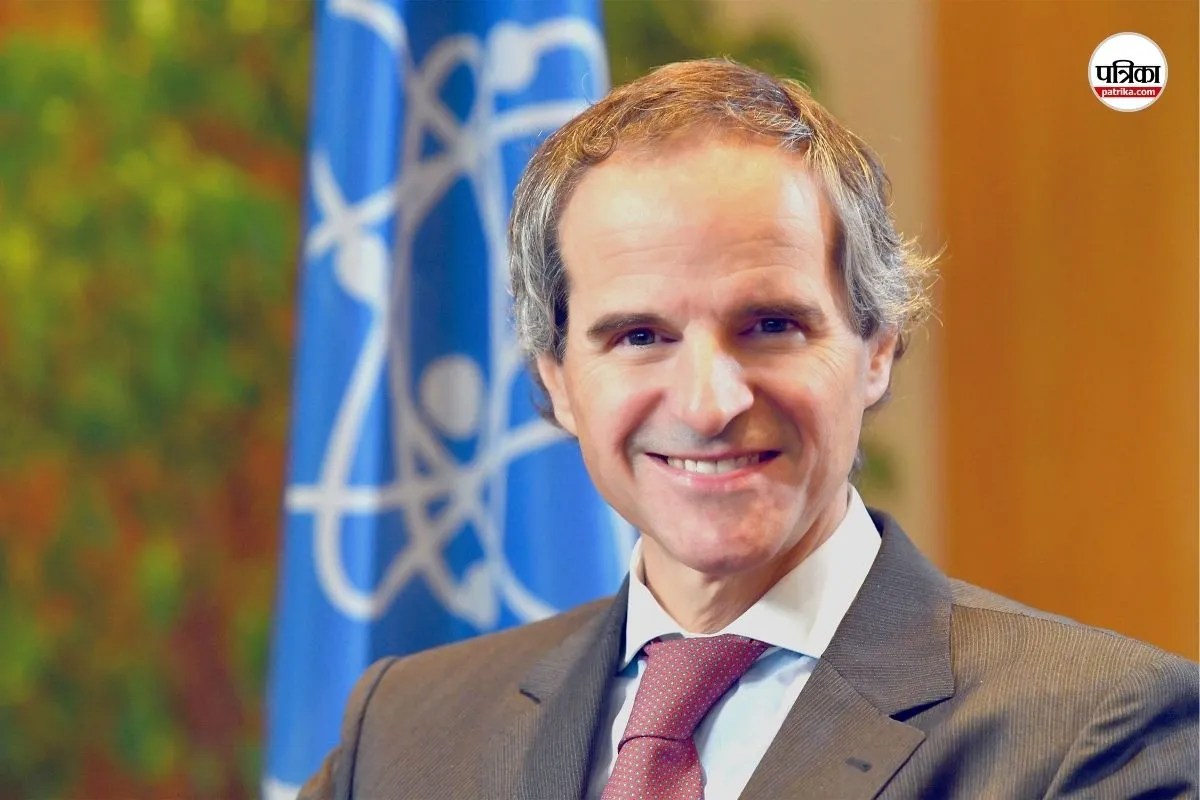
Rafael Grossi, the chief of the International Atomic Energy Agency (IAEA), is not a man prone to hyperbole. When he speaks of the "narrowing window" for diplomacy regarding Iran’s nuclear ambitions, he is describing a technical reality that the political world is desperate to ignore. The consensus in Western capitals often suggests that as long as inspectors are on the ground and cameras are rolling, the threat is contained. This is a dangerous fallacy. The Iranian nuclear program has moved past the point of being a mere "threat" to become a permanent fixture of Middle Eastern geopolitics, one that no longer relies on a single "breakout" moment but rather a sustained state of near-weaponization.
While the world watches the shifting frontlines in Ukraine or the volatility in Gaza, Tehran has quietly refined the art of nuclear brinkmanship. They are not rushing toward a bomb in a way that would trigger an immediate preemptive strike. Instead, they are normalizing a level of enrichment and technical capability that was unthinkable a decade ago. The danger is not that we won't see a bomb coming. The danger is that we have already accepted the conditions that make one inevitable.
The Technical Reality Behind the Diplomatic Smoke
To understand why Grossi is sounding the alarm, one must look at the specific isotopes involved. Iran is currently enriching uranium to 60% purity. In the world of nuclear physics, the jump from 60% to the 90% required for a weapons-grade payload is a short, technical hop. Most of the hard work—the separation of isotopes and the massive energy expenditure required to move from 3% (power plant grade) to 20% and then to 60%—is already finished.
The IAEA’s ability to monitor this progress is currently a patchwork of compromises. Following the collapse of the Joint Comprehensive Plan of Action (JCPOA), Iran restricted access to several key sites and stopped honoring the "Additional Protocol" which allowed for snap inspections. Grossi’s warning is rooted in the fact that the "continuity of knowledge" has been broken. We know what they have in their stockpiles, but we are increasingly blind to how quickly they can move that material through clandestine supply chains.
The Mirage of De-escalation
Policy experts often talk about "deals" as if they are static legal documents. In reality, the Iranian nuclear program is a living technological organism. Even if a new treaty were signed tomorrow, the "human capital"—the knowledge held by Iranian scientists—cannot be unlearned. They have mastered the manufacturing of advanced centrifuges like the IR-6, which can enrich uranium at speeds several times faster than the older models permitted under previous agreements.
This creates a paradox for international regulators. If you tighten sanctions, Iran accelerates enrichment to gain leverage. If you loosen sanctions to bring them back to the table, they use the economic windfall to further fund the ballistic missile programs required to deliver a potential warhead. It is a closed loop of escalation where the "diplomatic solution" often serves as a breathing room for technical advancement.
The Regional Arms Race Nobody Wants to Name
If Iran reaches a "threshold" status—where it has all the components of a bomb but has not yet assembled it—the regional response will not be diplomatic. It will be existential. Saudi Arabia has hinted for years that if Tehran goes nuclear, Riyadh will follow suit. We are looking at the possibility of a multipolar nuclear Middle East, a scenario that would make the Cold War look stable by comparison.
The intelligence communities in Tel Aviv and Washington are currently debating "red lines" that have been moved so many times they are now virtually invisible. Is the red line 90% enrichment? Is it the miniaturization of a warhead? Or is it simply the moment the IAEA admits it can no longer verify the peaceful nature of the program? Grossi’s recent statements suggest we are approaching that final threshold.
The Blind Spots in Intelligence
History is littered with examples of "surprises" that were actually visible for years. From the secret enrichment plant at Fordow to the archives seized by Israeli intelligence, the Iranian program has thrived on concealment. Today, the focus is often on the physical stockpiles, but the more pressing concern is the development of re-entry vehicle technology. A nuclear device is useless if it cannot survive the heat of re-entering the atmosphere on the tip of a missile.
Analysts often overlook the synergy between Iran’s satellite launch program and its military ambitions. The physics required to put a satellite into orbit are nearly identical to the physics required to launch an Intercontinental Ballistic Missile (ICBM). While the IAEA monitors the uranium, the aerospace sector is perfecting the delivery system. It is a two-pronged strategy that ensures when the political decision is finally made to "go nuclear," the wait time will be measured in weeks, not years.
The Failure of Economic Deterrence
The assumption that sanctions would eventually force a total surrender of nuclear ambitions has proven false. Iran has built a "resistance economy" that, while strained, has not buckled under the weight of international pressure. They have found ways to export oil through "dark fleets" and have strengthened ties with eastern powers that are less inclined to enforce Western-led embargoes.
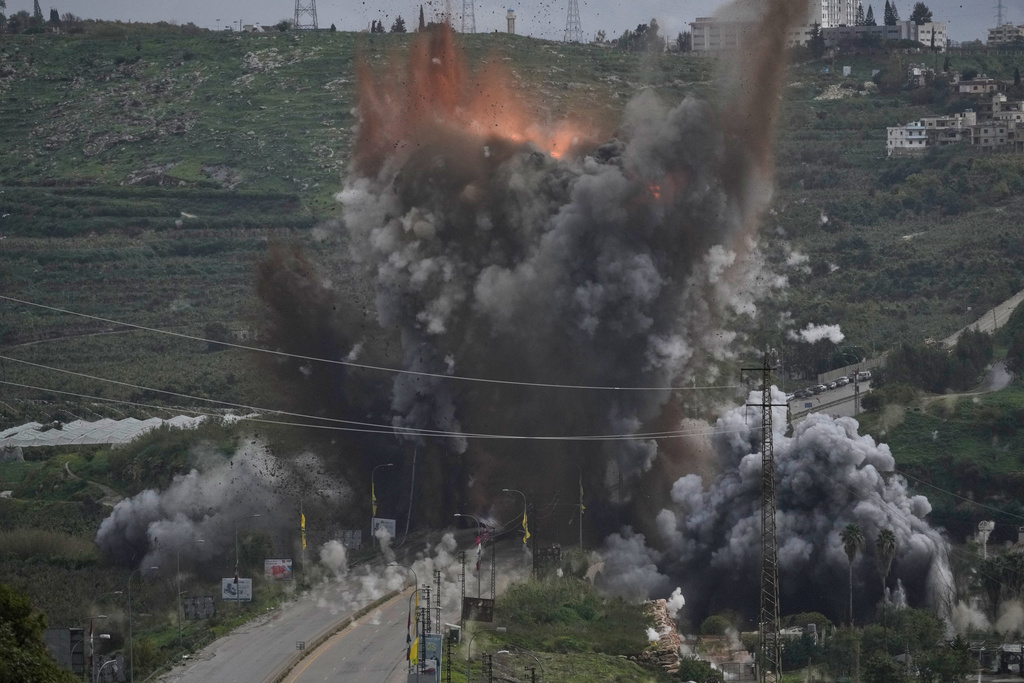
When the economic lever fails, the only remaining options are sabotage or direct military intervention. We have seen cyberattacks like Stuxnet and the targeted assassination of nuclear scientists, but these are temporary setbacks. They buy time, but they do not solve the underlying problem. In some cases, they actually provide Iran with the justification it needs to move its facilities deeper underground, into mountain complexes that are nearly impervious to conventional bunker-buster bombs.
The Burden on the IAEA
The IAEA was never designed to be a global police force. It is a verification body that relies on the cooperation of the states it inspects. When a state decides to stop cooperating, the IAEA becomes a witness to its own irrelevance. Grossi is fighting to keep the agency relevant in a world where "rules-based order" is increasingly viewed as a Western suggestion rather than a global mandate.
The agency is currently operating on "good faith" in an environment where faith is in short supply. If the IAEA loses its eyes on the ground, the international community loses its only objective metric for peace. Without those metrics, the vacuum will be filled by rumors, intelligence leaks, and eventually, the sound of sirens.
The Price of Apathy
The current international strategy appears to be one of "managed tension." The goal is to keep the situation from boiling over while avoiding the political cost of a final resolution. However, in the world of nuclear proliferation, there is no such thing as a stalemate. Every day that passes without a verifiable, intrusive inspection regime is a day that the technical "breakout time" shrinks.
We are living in the shadow of a nuclear-ready Iran. The "warning" issued by Grossi isn't about a future event; it is a description of the present. The danger isn't that the world will end in a flash of light tomorrow, but that we are slowly becoming accustomed to a world where nuclear blackmail is a standard tool of diplomacy.
The window for a peaceful resolution is not just narrowing; it is being built over with concrete and advanced centrifuges. If the international community continues to treat this as a secondary issue that can be kicked down the road, it will eventually find that the road has reached a dead end. The question is no longer whether Iran can build a nuclear weapon, but what the world is prepared to do now that they have shown they know how.
Identify the specific enrichment facilities that have recently barred IAEA inspectors and demand a transparent timeline for their return to the monitoring regime. Without this, any talk of "stability" is nothing more than a dangerous fiction.