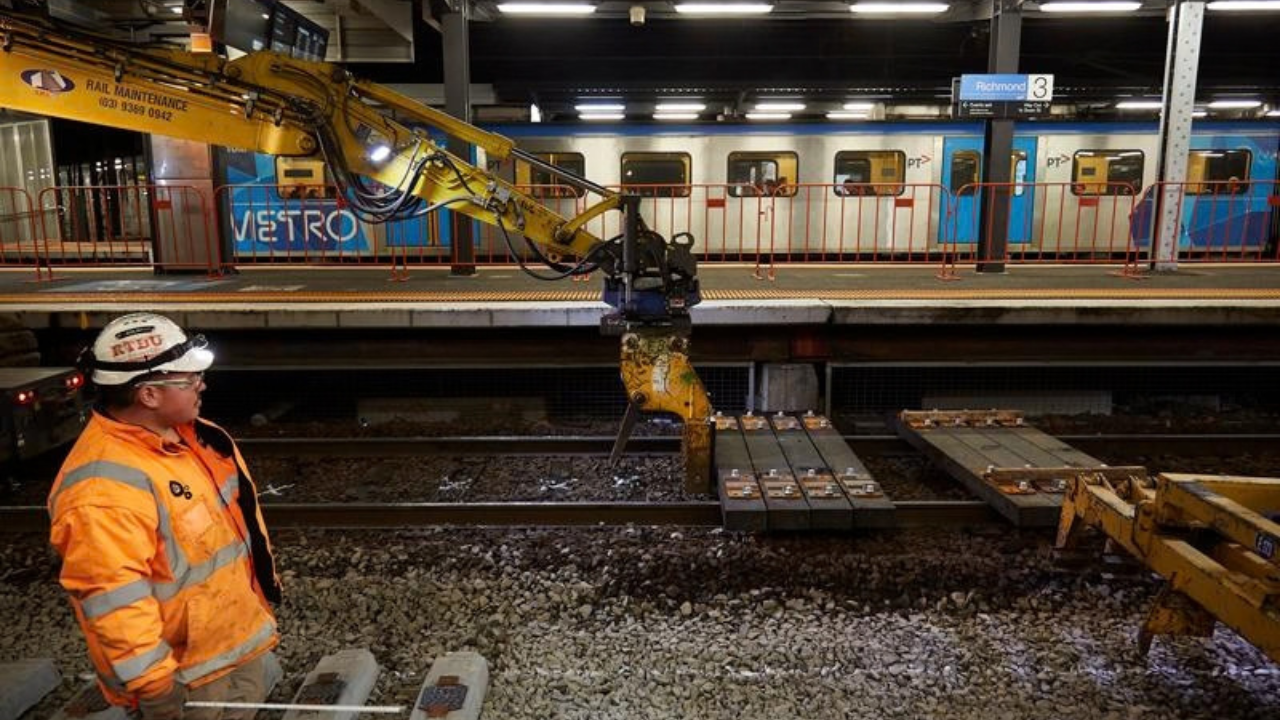
Traditional timber railway sleepers have an expiration date dictated by nature itself. They rot, split, succumb to fungal infections, and get eaten by termites. Replacing them requires cutting down old forests or hauling heavy, energy-intensive concrete blocks.
Back in 2015, a quiet revolution began in Australia to tackle two massive problems at once: mounting plastic waste and decaying transport infrastructure. Instead of sending agricultural wrap, polystyrene, and household packaging to crowded landfills, engineers started turning that discarded material into heavy-duty railway sleepers designed to last half a century.
If you look at how heavy freight and commuter lines operate, material failure isn't an option. Let's break down how this innovation actually works, why it took years of grueling testing, and what it means for global infrastructure.
The Engineering Challenge Behind Recycled Plastic Sleepers
You cannot simply melt old milk jugs and slide them under a freight train. Railway tracks experience immense lateral and vertical forces from thousands of tons of moving steel.
The initial R&D effort—spearheaded by Victorian manufacturer Integrated Recycling alongside researchers at Monash University’s Institute of Railway Technology—required rigorous laboratory analysis. The team evaluated elastic modulus, maximum elastic strain limits, load transfer, and vibration damping.
The resulting composite formulation, branded as Duratrack, relies on roughly 85 percent post-consumer recycled plastic. This includes difficult-to-recycle agricultural items like silage twine and grape vine covers, blended with recycled polystyrene.
For every single kilometer of track utilizing these composite sleepers—roughly 1,500 units—about 54 to 64 tonnes of plastic waste are permanently diverted from landfills. More importantly, it saves hundreds of mature trees from being felled for traditional timber alternatives.
Moving From Heritage Tracks to Heavy Mainlines
Laboratory tests only tell half the story. To prove the material could handle reality, developers started small.
The early iterations were trialled on tourist and heritage rail lines across Victoria, including the famous Puffing Billy Railway. These low-speed environments provided a testing ground for how the composite handled moisture, temperature swings, and minor dynamic loads.
The real test came later. In June 2019, roughly 190 recycled sleepers were installed at Richmond railway station in Melbourne—one of the busiest interchanges on the metropolitan network. Thousands of commuters and heavy sporting crowds rolled over them daily.
Subsequent trials at Tottenham Junction, alongside instrumented tests monitored by the Australian Rail Track Corporation, gathered live load data under daily mainline traffic. Engineers found that unlike timber, these plastic sleepers do not split at the ends or suffer from fungal decay. They require virtually zero maintenance, and when they finally reach the end of their decades-long service life, the material can be reground and manufactured into new sleepers all over again.
The Broader Shift in Australian Infrastructure
Australia's push didn't stop with local polymer blends. Government backing through initiatives like Sustainability Victoria and state-level recycled-first procurement policies created a reliable domestic market.
International innovators noticed. British infrastructure firm Sicut utilized local recycling grants to build a specialized manufacturing facility in New South Wales to process thousands of tonnes of household waste into structural rail components. By anchoring production locally, companies ensure strict intellectual property protection while scaling up supply chains for domestic freight and export markets across Southeast Asia.
Critics often point out that composite sleepers aren't a universal drop-in replacement for every single engineering context. Concrete still dominates high-speed, heavy-axle freight corridors due to its sheer mass and rigidity.
However, for environments prone to moisture rot, termite damage, and difficult maintenance logistics, recycled plastic is proving to be a superior structural material.
Transport networks generate staggering amounts of waste. Turning household rubbish and agricultural plastic into structural assets that survive fifty years changes the math on how we build and maintain the physical world.