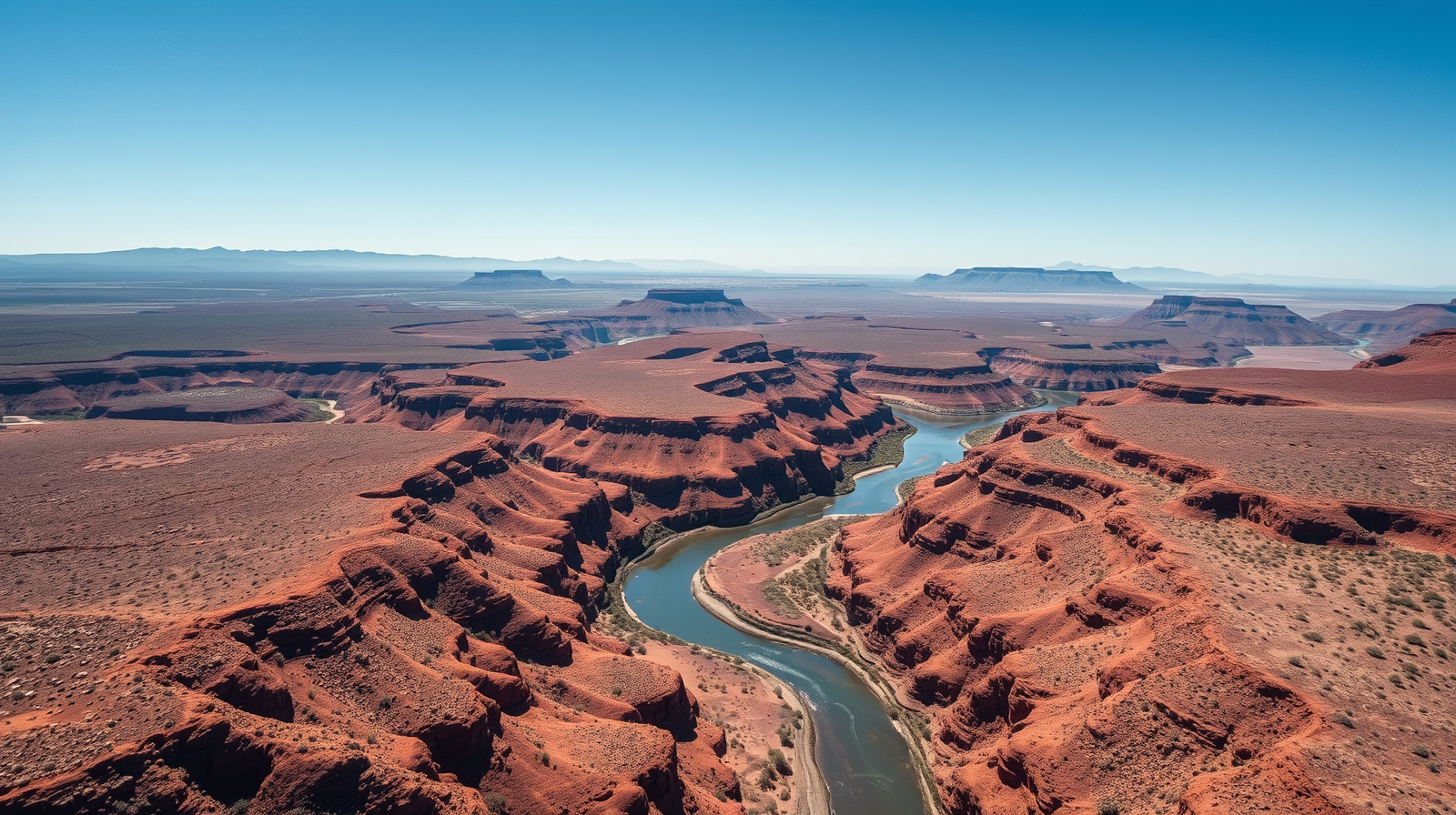
You’ve probably heard the viral trivia fact before. Deep in the red heart of Central Australia flows the Finke River—known as Larapinta or Lhere Pirnte to the Traditional Owners, the Arrernte people. Internet lists love to call it the oldest river in the world, claiming its waters have carved the exact same path for over 300 to 400 million years. That means it was supposedly flowing before dinosaurs ever walked the earth, surviving continental drift, ice ages, and mountain shifts.
It sounds incredible. It's also wildly oversimplified.
If you travel out to the West MacDonnell Ranges expecting a roaring, unbroken ancient waterway, you'll be greeted by dry sand, sun-baked red dirt, and scattered waterholes for most of the year. The reality behind the Finke's age isn't about a single stream of water running continuously for hundreds of millions of years. The real geological story is far weirder, much more nuanced, and frankly a lot more interesting than the catchy headlines suggest.
The Flaw in Calling Any River Old
First, we need to address what a river actually is. Water changes. Channels shift. Sediments get washed out, buried, dig up, and moved somewhere else over thousands of seasons. Rivers are dynamic systems, not static museum pieces.
When someone says a river is "350 million years old," what do they actually mean? Do they mean the water? Obviously not. Do they mean the exact sandy bed? No, that changes every time a massive flood rips through the outback.
What geologists are actually measuring when they talk about the Finke's extreme age is a concept called inherited drainage or antecedence.
Most rivers take the path of least resistance. They flow downhill, around hard obstacles, along soft valley floors. But the upper Finke doesn't do that. Instead of flowing around massive, dense rock structures like quartzite in the MacDonnell and James ranges, the river cuts directly through them in deep, winding gorges.
How does a river cut straight through a rising mountain range?
It happens when the river was already there before the mountains started pushing up. As tectonic forces slowly squeezed the crust and buckled the landscape upward during the Alice Springs Orogeny—a massive mountain-building event roughly 300 to 400 million years ago—the ancestral river kept grinding downward at the same speed. It held its ground while the mountains grew around it.
So, the route itself is ancient. The river memory is written in the stone. But calling it an unbroken, 350-million-year-old river in the literal sense ignores how much that landscape has been torn apart and rebuilt since then.
What Science Actually Says About the 300-Million-Year Claim
In recent years, geomorphologists have taken a much closer look at the physical evidence resting inside the Finke's gorges. Studies analyzing river gravels using cosmogenic isotopes—a technique that measures how long rocks have been exposed to cosmic rays versus buried underground—tell a far more cautious story.
Researchers studying overlapping gorges in the upper Finke found that river gravels had been buried and exposed repeatedly over a few million years, not hundreds of millions. The findings suggest a pattern of gentle tectonic tilting. The river would carve a gorge, get choked with sediment, shift slightly, cut a new gorge, and then abandon the old one.
While the broader drainage system in Central Australia has undoubtedly survived for eons due to the continent's incredible tectonic stability—Australia hasn't seen major mountain-building or widespread glaciation in over 100 million years—pinning down a fixed date of "300 million years" for the Finke specifically is more of a geological educated guess than a proven fact. Other old river systems, like the New River in North America or the Meuse in Europe, share similar claims of extreme antiquity based on ancient landforms, making the "world's oldest" title a hotly debated contest rather than a settled trophy.
A River That Spends Most of Its Life Dry
If you look at a map of Australia, you'll see the Finke marked as a long, sweeping line stretching roughly 600 to 750 kilometers from the Northern Territory down toward Lake Eyre in South Australia.
Maps are deceiving.
For most of the year, the Finke doesn't look like a river at all. It's an ephemeral river—a ghost waterway made of vast stretches of dry, soft sand, framed by massive ghost gum trees and towering red cliffs. The water sits hidden underground, surfacing only in deep, permanent or semi-permanent waterholes like Ellery Creek Big Hole, Ormiston Gorge, and Glen Helen.
┌─────────────────────────────────────────────────────────────┐
│                 THE FINKE'S DUAL NATURE                      │
├──────────────────────────────┬──────────────────────────────┤
│  DRY SEASON                  │  AFTER HEAVY RAINS           │
├──────────────────────────────┼──────────────────────────────┤
│  * Dry sandy riverbeds       │  * Raging inland floods      │
│  * Isolated waterholes       │  * Channels connect          │
│  * Subsurface water flow     │  * Transforms red desert     │
└──────────────────────────────┴──────────────────────────────┘
When heavy rains hit the Red Centre, the Finke transforms instantly. Water swells out of the gorges, connects the dry channels, and surges southward through the desert. On rare occasions—only a few times a century—floods carry water all the way to the salt flats of Lake Eyre. Once the storm passes, the surface water vanishes into the Simpson Desert sands, leaving the river quiet once again.
For the Arrernte people, who have lived alongside this landscape for tens of thousands of years, Larapinta isn't just a geological curiosity or a line on an Outback map. It's a vital, living artery. Arrernte creation stories explain that the river was formed by the movement of the Rainbow Serpent as it traveled north from Lake Eyre, creating the deep gorges and permanent waterholes that allowed humans and animals to survive in an otherwise unforgiving climate.
How to Experience the Finke Yourself
You don't need a degree in geology to appreciate what makes this landscape extraordinary. Visiting the upper reaches of the Finke River offers some of the most dramatic Outback scenery in Australia.
If you want to experience the Finke river system firsthand, here is how to plan it right:
- Trek the Larapinta Trail: This world-class 223-kilometer walking track parallels the West MacDonnell Ranges, crossing the Finke River near Glen Helen Gorge. Section 10 and Section 11 give you stunning elevated views of the ancient river meanders cutting through quartzite ridges.
- Drive to Finke Gorge National Park: Located about 140 kilometers west of Alice Springs, Palm Valley inside Finke Gorge National Park is home to rare cabbage palms—botanical relics from a time when Central Australia was a lush rainforest. You will need a high-clearance, low-range 4WD vehicle to navigate the rough, sandy riverbed track.
- Base Yourself Near Glen Helen: Glen Helen Gorge is one of the easiest places to see the Finke breaking through the West MacDonnell Ranges. The towering red walls framing a deep permanent waterhole offer a clear, dramatic visual of how the river has held its ground against rising rock for millions of years.
- Check Weather and Track Conditions: Outback rivers can flood rapidly without warning, cutting off road access. Always consult the Northern Territory park alerts and check local road status before heading out into the desert.
The Finke River might not be a pristine, 350-million-year-old pipe flowing untouched since the Paleozoic Era, but the reality is far more compelling. It's a dynamic, resilient landscape feature that has survived mountain uplift, continental drift, and deep desertification. To stand in its dry riverbed is to look directly at the immense, slow mechanics of deep time on Earth.