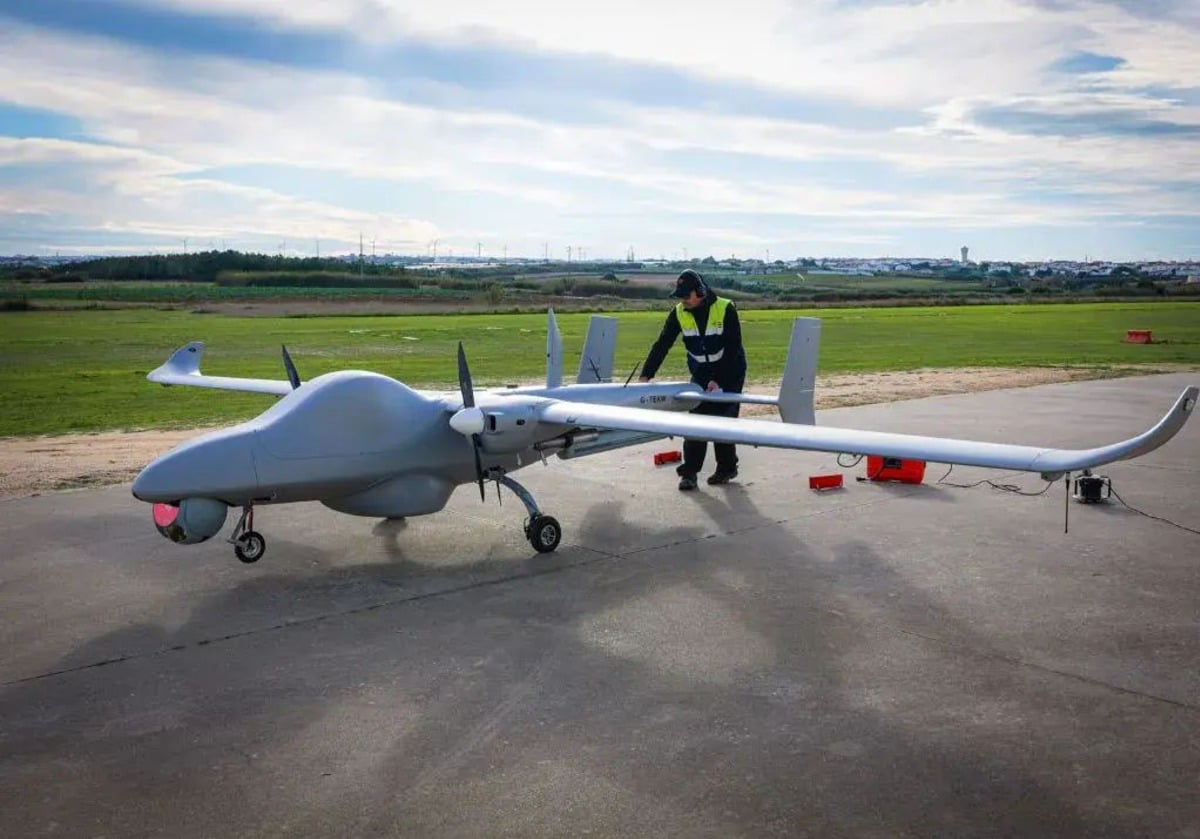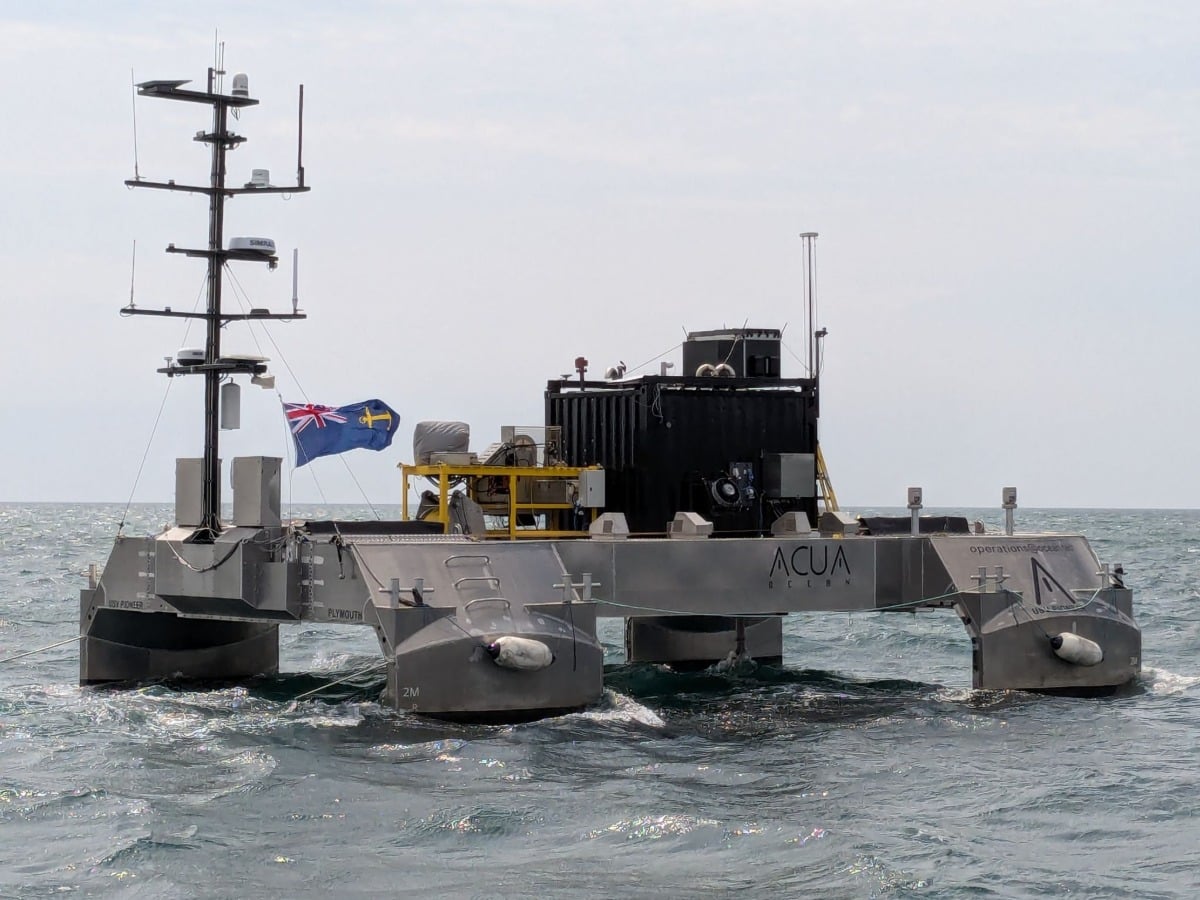
The defense press loves a shiny toy. Show them a sleek, grey plastic hull skimming across whitecaps while a miniature quadcopter buzzes off its back deck like an angry hornet, and defense journalists lose their minds. Headlines scream about a revolution in maritime warfare. They drool over the concept of unmanned surface vessels launching aerial surveillance scouts without a single sailor in harm's way.
It sounds brilliant on a press release. It sounds like the plot of a cheap military thriller written by an algorithm.
It is also largely a mirage.
I have watched defense contractors burn billions of dollars on over-engineered autonomous platforms that look incredible in a 30-second promotional clip filmed on a calm Tuesday off the coast of Dorset, only to choke on actual saltwater and a moderately choppy sea state. The lazy consensus in military tech circles is that adding more automation automatically equals better capability. That is false. Every layer of autonomy you bolt onto a floating hull introduces a new vector for failure, a new vulnerability for electronic warfare, and a astronomical price tag that nobody wants to talk about until the maintenance bills arrive.
Stop treating robotic boats as magic bullets. Let us look at what is actually happening beneath the polished veneer of autonomous naval demonstrations.
The Mechanical Reality Nobody Mentions
Saltwater is the enemy of electronics. Anyone who has spent ten minutes on a rigid-hull inflatable boat knows that the marine environment is violently unforgiving. Sensors get coated in salt spray. Actuators seize. Connectors corrode.
When you place a complex drone-launching mechanism on an autonomous surface vessel, you are multiplying your points of mechanical failure exponentially. A manned ship has a crew with grease guns, wrenches, and spare parts ready to hammer a jammed rail or reboot a frozen control unit in a Force 5 gale. A robotic boat five hundred miles out in the Atlantic does not.
The current narrative suggests that remote operation solves this. It does not. Satellite links are notoriously brittle. They suffer from latency, bandwidth constraints, and above all, aggressive jamming from near-peer adversaries. If a drone-launching boat loses its high-bandwidth data link because a rival state is spoofing GPS or flooding the spectrum with noise, your expensive floating robot instantly transforms into an expensive, blind target bobbing uselessly in international waters.
The Autonomy Fallacy
Let us dismantle the word autonomy as it is currently marketed. True autonomous decision-making in unpredictable, high-stakes environments does not exist yet. What we have is remote tele-operation disguised as artificial intelligence, or rigid, rule-based scripting that panics the moment an unexpected variable enters the theatre.
A civilian cargo ship crosses your path. A rogue fishing vessel turns sharply without signaling. A pod of whales breaches near your sensor array. In these moments, a human captain processes context, local maritime tradition, and split-second intuition. An autonomous boat runs an algorithm that either freezes, aborts the mission, or rams the obstacle because the edge case was never written into the training data.
Defense analysts love to point out that keeping sailors off ships saves lives. True. But losing a multi-million-dollar asset because it lacked the common sense of an eighteen-year-old midshipman does not save budgets. It burns them. Worse, it hands the enemy a textbook salvage opportunity to reverse-engineer proprietary software and sensor packages.
The Economics of attrition
Imagine a scenario where a major maritime conflict breaks out in a contested chokepoint like the Strait of Hormuz or the South China Sea.
Proponents of unmanned swarms argue that we can simply flood the zone with dozens of cheap, disposable robotic boats. This argument falls apart the second you look at the bill. There is nothing cheap about a vessel capable of navigating rough seas autonomously, powering an onboard flight deck, and securely communicating with aerial drones. These are not toy quadcopters bought off an e-commerce site; they are exquisite, highly sensitive military-grade systems.
When attrition sets in—and in any serious conflict, assets get destroyed—you are burning capital at a rate that industrial bases cannot easily replace. A manned corvette or patrol boat can take a hit, sustain damage, fight back, and limp home. A robotic boat takes a hit, loses its propulsion or nav system, and sinks to the bottom of the ocean, taking its entire payload of high-end aerial scouts with it. You have traded tactical presence for expensive, easily sinkable hardware.
What The Competitors Got Wrong
The core error in almost every glowing report about naval robotics is the confusion between a technological capability and a tactical advantage.
Just because a boat can launch a drone does not mean it should. Ask yourself what the drone is actually achieving that cannot be done better, cheaper, and more reliably from an existing platform or a fixed coastal installation. If your autonomous boat needs constant babysitting by a team of engineers sitting in a comfortable operations room four hundred miles away, you haven't removed the human from the loop. You have just added an incredibly fragile communication umbilical cord that can be severed by a basic electronic attack.
True naval innovation is not about removing humans to make operations look futuristic for political PR campaigns. It is about resilience, redundancy, and brutal cost-efficiency under fire.
The next time you see a press release about a robotic vessel performing automated stunts in calm waters, remember what happens when the weather turns ugly, the communications jammer turns on, and the spare parts are out of reach.
Build simpler. Build tougher. Or accept that your fleet will sink under the weight of its own software.