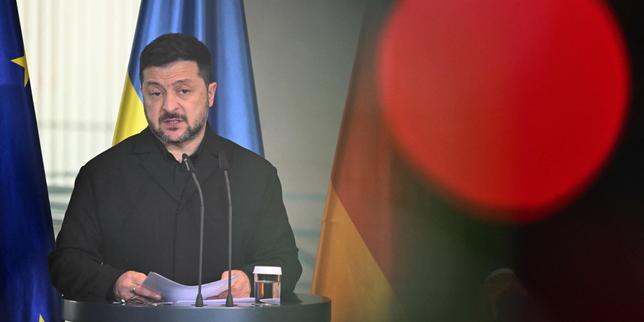
Direct engagement between Ukrainian President Volodymyr Zelensky and informal American envoys Steve Witkoff and Jared Kushner marks a structural shift from institutionalized statecraft to transactional backchannel diplomacy. When a wartime head of state allocates political capital to non-traditional interlocutors operating adjacent to formal diplomatic channels, the underlying negotiation matrix changes from alliance management to bilateral deal-making.
The Structural Shift in Diplomatic Channels
Standard international conflict resolution relies on institutionalized bureaucracy—ministries of foreign affairs, defense departments, and codified security frameworks. This institutional model prioritizes predictability, multilateral consensus, and long-term treaty durability. However, bureaucratic channels introduce high transaction costs and slow decision cycles, particularly when domestic political transitions alter the strategic calculus of a primary security guarantor.
The introduction of figures such as Steve Witkoff and Jared Kushner represents an alternative operational model: transactional envoy diplomacy. Unlike career diplomats bound by interagency clearance processes, informal envoys operate with direct proximity to executive decision-makers while maintaining plausible deniability.
This dual-track architecture creates three immediate operational effects:
- Compression of the Feedback Loop: Information passes directly between principals without filtration through diplomatic cables or interagency committees, reducing signal distortion regarding core red lines.
- Asymmetric Accountability: Informal envoys can float territorial, economic, or security concessions as exploratory hypotheses rather than official state positions, insulating both Washington and Kyiv from immediate domestic political backlash.
- Shift in Valuation Metrics: Institutional diplomats evaluate agreements through the lens of international law, deterrence theory, and alliance cohesion. Transactional envoys evaluate agreements through cost-benefit balance sheets, immediate liquidity, and enforceable commercial or security guarantees.
Deconstructing the Negotiating Incentives
To understand why Kyiv engages with informal American emissaries despite the diplomatic risks of bypassing traditional channels, one must map the incentive structures governing both sides of the table.
Kyiv’s Strategic Calculus
For the Ukrainian executive branch, prolonged attrition warfare degrades demographic capacity, energy infrastructure, and economic solvency. Relying exclusively on conventional diplomatic channels exposes Kyiv to legislative bottlenecks in partner capitals and incremental weapons delivery schedules that sustain resistance without guaranteeing decisive operational breakthroughs.
Engaging Witkoff and Kushner serves a specific hedging function. By establishing direct rapport with individuals holding influence over prospective or active American executive policy, Zelensky aims to shape the initial framing of any settlement proposal before it hardens into an ultimatum. In negotiation theory, anchoring determines the boundaries of the bargaining zone. Kyiv’s objective is to anchor American expectations around verifiable security mechanisms rather than uncompensated territorial freezes.
The American Transactional Model
From the perspective of the American emissaries, the conflict represents an open-ended financial and strategic liability requiring a structured exit mechanism. Previous diplomatic deployments by Kushner—most notably the Abraham Accords—demonstrated a distinct methodology: bypassing entrenched political grievances in favor of economic integration, bilateral security assurances, and elite-level personal guarantees.
Applied to the Russo-Ukrainian theater, this methodology treats the conflict not as an ideological struggle over international order, but as a distressed asset restructuring. The primary variables under evaluation are:
- Capital Exposure: Reducing ongoing fiscal transfers from the United States Treasury while shifting reconstruction financing toward European institutions, frozen sovereign assets, or private capital markets.
- Deterrence Architecture: Identifying the minimum viable security guarantee required to prevent renewed Russian offensive operations without triggering automatic American military intervention under formal treaty obligations.
- Territorial Equilibrium: Establishing a demarcation line that reflects current kinetic realities while avoiding formal de jure recognition that would collapse the Ukrainian government.
The Three Pillars of a Transactional Settlement Framework
Any durable framework emerging from backchannel discussions between Kyiv and transactional envoys must resolve three interdependent bottlenecks. Failure to synchronize these pillars results in a temporary ceasefire that incentivizes rearmament rather than stabilization.
1. The Security Guarantee Deficit
Ukraine’s historical skepticism toward non-binding assurances stems from the failure of the 1994 Budapest Memorandum. A signature without an enforcement mechanism holds zero deterrence value against a revisionist state. Because immediate NATO accession faces structural vetoes within the alliance, informal envoys must engineer a substitute deterrence architecture.
This substitute relies on asymmetric deterrence—equipping Ukrainian forces with long-range strike capabilities, integrated air defense networks, and domestic defense manufacturing joint ventures financed by Western capital. The operational logic is straightforward: raise the projected military cost of a future Russian incursion above any conceivable territorial gain, thereby eliminating the need for direct American troop commitments.
2. The Sovereign Asset and Reconstruction Ledger
War termination requires an immediate liquidity injection to prevent macroeconomic collapse in Ukraine. Traditional foreign aid models face severe donor fatigue. Consequently, backchannel negotiations increasingly center on leveraging immobilized Russian central bank assets and structuring private-public investment vehicles.
In this equation, economic reconstruction is weaponized as a stabilization tool. If American and European commercial entities hold direct equity stakes in Ukrainian energy, logistics, and critical mineral extraction sectors, those financial interests create a de facto corporate security umbrella. Attacking infrastructure owned by major Western institutional investors carries severe financial and political escalation risks for Moscow.
3. The Demarcation and Monitoring Mechanism
A ceasefire line spanning over a thousand kilometers cannot be policed by traditional, lightly armed international observers. Past monitoring missions in the Donbas demonstrated that observers without enforcement mandates merely document violations rather than deterring them.
A viable settlement requires a technological buffer zone combining persistent satellite surveillance, autonomous drone reconnaissance, and automated sensor networks, backed by pre-authorized punitive sanctions or lethal aid triggers upon verified breaches. Separating kinetic enforcement from subjective diplomatic interpretation removes Moscow’s ability to exploit ambiguity during low-intensity skirmishes.
Structural Limitations of Backchannel Diplomacy
While informal envoys excel at breaking bureaucratic deadlocks and establishing personal trust among principals, the model carries severe structural vulnerabilities when applied to high-intensity interstate warfare.
The Principal-Agent Problem in Execution
Backchannel negotiators can agree on broad strategic principles in a closed room, but they do not control the state apparatus required to execute them. Defense ministries must coordinate weapons transfers, treasury departments must unfreeze or redirect assets, and legislatures must ratify funding or treaty commitments. When informal agreements bypass institutional stakeholders during the negotiation phase, those same stakeholders frequently slow-roll or dilute implementation during the execution phase.
The Multilateral Exclusion Risk
The Russo-Ukrainian war is not strictly a bilateral dispute mediated by Washington; it directly governs the security architecture of the European continent. Excluding key European capitals—particularly Warsaw, Berlin, Paris, and London—from backchannel frameworks creates immediate friction. European states bear the primary burden of refugee absorption, energy market disruption, and long-term reconstruction financing. If a bilateral US-Ukraine backchannel produces terms perceived in Europe as capitulation or unilateral burden-shifting, European governments can withhold the financial and logistical cooperation necessary to make the deal function.
Information Asymmetry and Verification
Informal envoys often lack the deep regional intelligence apparatus available to career statecraft professionals. In negotiations involving complex historical claims, localized ceasefires, and intricate military logistics, granular detail determines survival. Overlooking minor geographical features—such as control over specific water supply canals, rail junctions, or elevated terrain—can render an entire defensive line untenable within months of a ceasefire.
Operational Mechanics of the Negotiation Sequence
When high-level informal meetings occur, they rarely produce immediate, public breakthroughs. Instead, they initiate a multi-stage calibration process designed to test the elasticity of each party's red lines.
First, the envoys establish a baseline inventory of non-negotiables. For Kyiv, this consistently includes sovereignty over unoccupied territory, the preservation of an independent military force without arbitrary troop caps, and continuous access to Western intelligence and air defense replenishment. For Washington’s transactional emissaries, the baseline includes a quantifiable timeline for reducing direct US budgetary outlays and a clear separation between American financial support and direct kinetic entanglement.
Second, the parties engage in issue linkage. Rather than negotiating territory in isolation—where compromise is politically fatal for Ukrainian leadership—envoys link territorial restraint to concrete economic and military offsets. For example, accepting a temporary, non-recognized line of control becomes mathematically viable for Kyiv only if paired with binding multi-year air defense delivery schedules and immediate access to reconstruction capital.
Third, the concepts generated in the backchannel must be re-institutionalized. Before any framework can be presented to Moscow as a unified Western-Ukrainian position, the informal agreements reached with figures like Witkoff and Kushner must be translated into formal diplomatic language and stress-tested by national security councils and defense planners. Without this re-institutionalization phase, the backchannel remains a collection of non-binding conversations vulnerable to sudden geopolitical shocks.
Strategic Imperatives for Kyiv Moving Forward
Kyiv cannot afford to treat engagement with informal American envoys as a substitute for institutional diplomacy, nor can it afford to dismiss them as peripheral actors. The optimal operational posture requires running a synchronized dual-track strategy.
Ukrainian leadership must utilize the backchannel with Witkoff and Kushner exclusively for high-level framing—locking in the core principle that any reduction in active hostilities requires corresponding increases in Ukraine’s long-term defensive lethality and economic self-sufficiency. Simultaneously, Kyiv’s diplomatic and defense ministries must immediately codify every conceptual concession or security pledge discussed in those private sessions into formal bilateral working groups with the Pentagon, the State Department, and European capitals. Treating informal emissaries as architects of the deal’s political architecture while relying on state institutions to pour the concrete foundation is the only mechanism capable of preventing a premature, unenforceable freeze.

