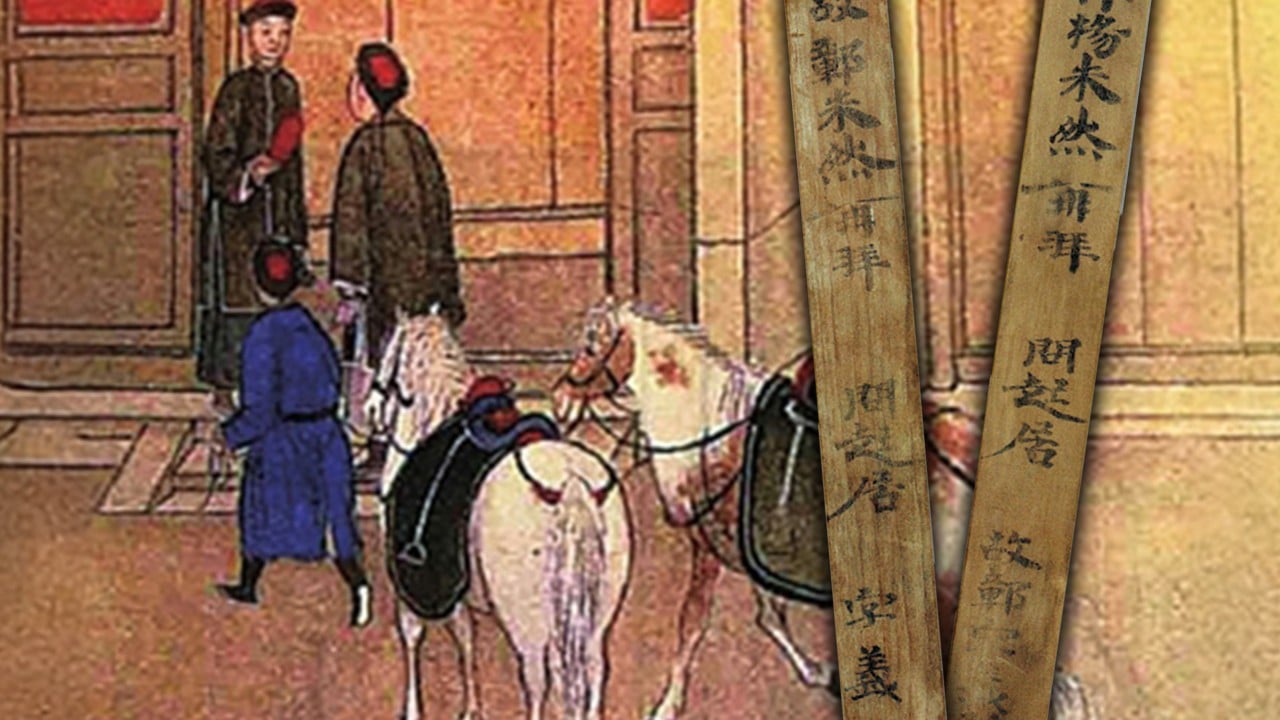
History is often a game of telephone played by people who want to sell you a souvenir. The narrative that Chinese New Year greeting cards have been a static, 2,000-year-old tradition involving bamboo slips is a romanticized oversimplification that ignores how humans actually communicate. Most articles on this topic treat the Han dynasty as a monolithic era of polite stationery exchange. They are wrong.
The "Tao Fu" or bamboo peach wood charms were not "greeting cards" in any sense a modern person would recognize. They were defensive weaponry. To call them cards is like calling a burglar alarm a "welcome mat."
The Security System Misidentified as Stationery
The lazy consensus claims that people in the Han dynasty (202 BC – 220 AD) exchanged bamboo slips to wish each other a Happy New Year. This suggests a level of literacy and postal infrastructure that didn't exist for the masses.
In reality, the earliest iterations of these bamboo objects were "Tao Fu." These were two planks of peach wood placed on either side of a door. They were inscribed with the names of two deities, Shentu and Yulü, who were tasked with capturing evil spirits and feeding them to tigers.
This wasn't a social nicety; it was a ritualistic fortification. You didn't give them to your neighbor to be polite. You hung them to keep the literal demons out.
The transition from "supernatural security system" to "paper greeting" took over a thousand years. When you read that greeting cards are 2,000 years old, you are witnessing the classic historical fallacy of retroactive labeling. Just because an object evolved into something else doesn't mean the original object served the same purpose. A sword is not an early version of a letter opener, even if you can use it to slice an envelope.
The Literacy Gap Everyone Ignores
Let's talk about the logistics. The Han dynasty was an era of profound intellectual growth, but the idea of a "greeting card industry" or widespread exchange of written well-wishes among commoners is a fantasy.
- The Cost of Materials: Bamboo was cheaper than the early silk paper, but it was heavy, cumbersome, and required skilled carving or ink work.
- The Literacy Rate: Estimates for literacy in ancient China vary, but it was largely the domain of the elite and the bureaucracy.
- The Messenger Problem: Unless you were part of the landed gentry with servants to spare, you weren't sending "cards." You were working in a field.
The "Meitie" or visiting cards that people cite as the origin of New Year greetings didn't become a cultural staple until the Tang and Song dynasties. Even then, they were a tool of the bureaucracy. Officials who couldn't visit every superior or peer would leave a card to say, "I was here, and I am acknowledging your status."
It was a power play, not a "warmest wishes" moment.
Why We Cling to the 2,000-Year Narrative
We love a long timeline. It provides a sense of stability in a volatile world. Brands use this "ancient" hook to sell modern products because "rooted in Han dynasty tradition" sounds better than "a 19th-century commercial adaptation of a medieval bureaucratic habit."
If you look at the Song dynasty (960–1279), we see the real shift. Paper was finally cheap enough. The "Feitie" (flying cards) became a way to handle the social exhaustion of the New Year. Instead of visiting every house in the village—which was the actual tradition—people started sending paper proxies.
It was the original "I'll just text them" move. It was an act of social efficiency, a way to dodge the physical labor of visiting relatives you didn't particularly like. By framing it as a "beautiful ancient tradition," we mask the fact that it was actually a labor-saving device for the tired and the socially anxious.
The Red Envelope Revisionism
While we are dismantling the New Year aesthetic, we have to look at the "Hongbao" or red envelope. People often conflate the history of the card with the history of the envelope.
The exchange of money in red paper is a relatively recent phenomenon in the grand scheme of Chinese history. Before paper money was ubiquitous, people gave "Ya Sui Qian"—coins threaded together with red string. The red string, like the peach wood, was about protection. It was meant to suppress the "Sui" demon that terrified children.
The transition to paper envelopes only happened when the printing press and paper currency became the standard. This isn't a 2,000-year-old tradition; it’s a modern adaptation of an ancient superstition.
The Downside of Authenticity
I’ve seen historical consultants for major film productions try to shove "bamboo greeting cards" into scenes set in 100 BC. It looks ridiculous. If you want a "true" Han dynasty New Year experience, you don't send a card. You slaughter a pig, drink grain wine until you’re numb, and nail two heavy planks of wood to your door to prevent a monster from eating your soul.
The modern greeting card is a Victorian-era Western influence that merged with the Chinese "Meitie" tradition in the late 19th and early 20th centuries. The mass-produced, glitter-covered, "Year of the Dragon" cards you see in shops today have more in common with Hallmark than they do with the Han dynasty.
Stop Sanitizing History
When we tell the "2,000-year-old bamboo card" story, we strip the history of its grit. We turn a desperate struggle against the supernatural into a Hallmark movie.
The ancient Chinese didn't have time for your "Best Wishes for a Prosperous Year" sentimentality. They lived in a world where the winter was long, the food was scarce, and the spirits were hungry. Their "greetings" were protective talismans and bureaucratic checkpoints.
If you want to honor the tradition, stop looking for "meaningful" cards. Admit that the exchange is about social obligation and the maintenance of hierarchy. The "Meitie" was a receipt of respect. The "Tao Fu" was a shield.
Put down the fancy stationery. If you really want to go old school, get some peach wood and start carving. Otherwise, acknowledge that you’re participating in a 150-year-old commercial habit, not a 2,000-year-old cultural artifact.
Stop pretending your greeting card is an ancient relic. It’s a social shortcut we invented because we got too busy to actually see each other.