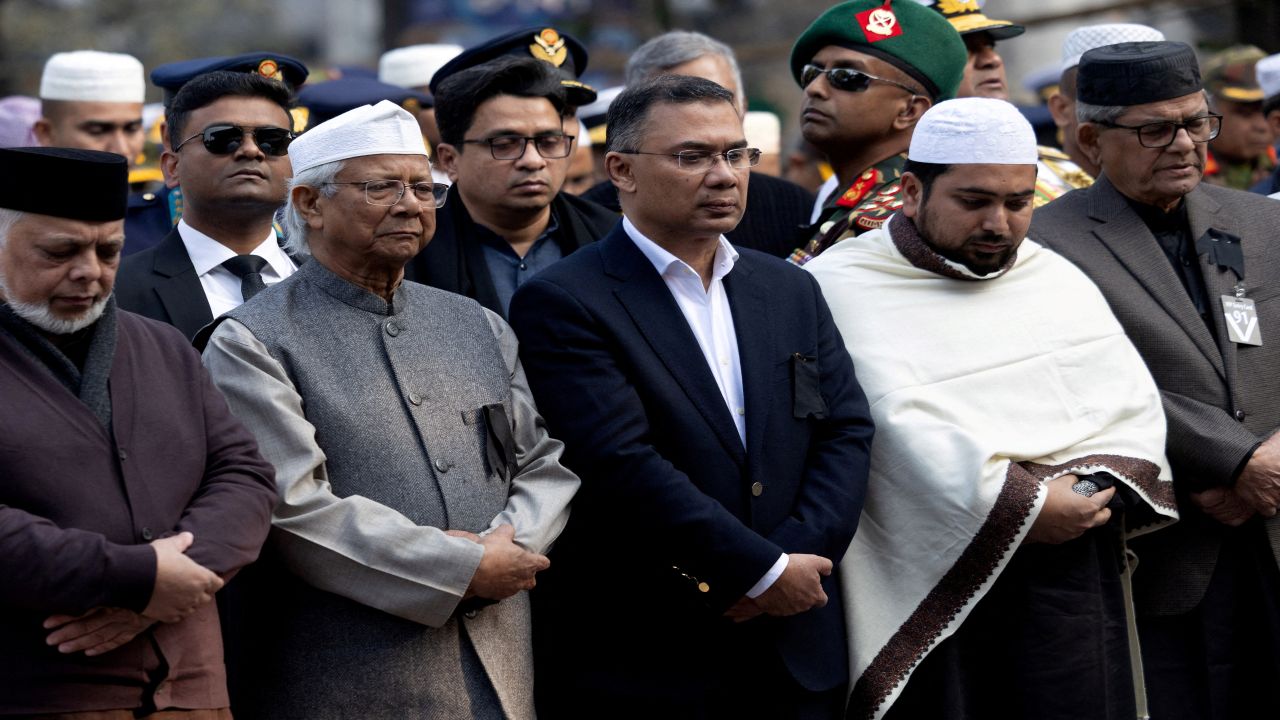
The dust hasn't even settled on the streets of Dhaka, but the barracks are already seeing a massive transformation. Following the sudden exit of Sheikh Hasina and the rise of the interim government led by Nobel laureate Muhammad Yunus, the Bangladesh Army is undergoing one of its most significant leadership overhauls in decades. It’s not just about swapping names on office doors. This is a deliberate, high-stakes effort to scrub the military of the deep-rooted political allegiances that defined the previous fifteen years.
If you're watching from the outside, it might look like standard procedure. It isn't. The scale of these dismissals and transfers suggests a "de-politicization" strategy that is as much about survival as it is about reform. Recently making headlines in this space: The Kinetic Deficit Dynamics of Pakistan Afghanistan Cross Border Conflict.
The Fall of the Inner Circle
For years, certain figures within the military were seen as the bedrock of the Awami League's power. That foundation crumbled the moment General Waker-uz-Zaman refused to enforce a bloody crackdown on protesters in early August. Since then, the purge has been swift.
The most headlines went to the dismissal of Major General Ziaul Ahsan. For anyone following Bangladesh’s human rights record, Ahsan was a name whispered with fear. As the former head of the National Telecommunication Monitoring Centre (NTMC) and a senior figure in the Rapid Action Battalion (RAB), he was the face of the state's surveillance and "disappearance" apparatus. His arrest while allegedly trying to flee the country was a seismic event. It sent a clear message: the old "killing machine" is being dismantled. More insights on this are covered by NPR.
But the reshuffle goes deeper than just one man. Look at these major moves that happened almost immediately after the transition:
- Lieutenant General Mujibur Rahman, previously a General Officer Commanding (GOC), was moved to the Army Training and Doctrine Command (ARTDOC).
- Lieutenant General Saiful Alam, once a powerful figure in military intelligence, was shunted to the Foreign Ministry—a classic "diplomatic exile" move for officers the new administration wants away from active command.
- Lieutenant General Ahmad Tabrez Shams Chowdhury was reassigned as the Quartermaster General.
- Lieutenant General Mizanur Rahman Shamim took over as the Chief of General Staff (CGS).
Why This Reshuffle is Different
In previous years, army shifts were often about rewarding loyalty to the Prime Minister’s Office. This time, the pressure is coming from the bottom up. The student-led "Monsoon Revolution" didn't just demand a change in civilian leadership; they demanded an end to the culture of impunity.
General Waker-uz-Zaman finds himself in a precarious spot. He’s a relative of the ousted Prime Minister, yet he’s the one overseeing the dismantling of her loyalist network. It’s a tightrope walk. He has to satisfy a public that wants justice for the hundreds killed during the protests while keeping the rank-and-file soldiers from feeling like the institution itself is under attack.
The military's refusal to fire on civilians on August 4 was the final nail in the previous regime's coffin. Now, the interim government is using that momentum to ensure the army returns to its primary role: national defense, not political enforcement.
The Intelligence Reset
Perhaps the most critical part of this reshuffle is what’s happening at the Directorate General of Forces Intelligence (DGFI). For a long time, the DGFI was used more for monitoring domestic political opponents than for external threats.
By replacing the top brass at both the DGFI and the NTMC, the interim government is trying to blind the old guard. You can’t run a counter-revolution if you don't have the surveillance data or the "enforcer" generals to carry it out. The appointment of Major General A S N Rizwanur Rahman as the head of NTMC signals a shift toward technical professionalism over political espionage.
The Impact on National Stability
Is this reshuffle making Bangladesh safer? It’s complicated. On one hand, removing "political generals" reduces the risk of a pro-Hasina coup. On the other hand, such a rapid turnover in the top ranks can create a vacuum.
We’ve seen reports of a second wave of reshuffles even into early 2026, as the government continues to weed out "pro-authoritarian" elements. It’s a constant process of trial and error. Every time a new officer is promoted, the administration has to vet them to ensure they weren't involved in the crackdowns of 2024.
Breaking the Cycle of Patronage
The real test for the Bangladesh Army won't be these initial sackings. It’ll be whether they can build a system where the next Chief of Army Staff doesn't need a personal blessing from a political party to keep his job.
The interim government has set up various reform commissions, including one for public administration and the police. While there isn't a "Military Reform Commission" per se, the internal changes spearheaded by General Waker-uz-Zaman are intended to mirror that spirit. They’re trying to move toward a meritocracy that hasn't existed in the country for a generation.
Honestly, it’s a mess right now. You have officers who were sidelined for a decade suddenly thrust into power, while those who were rising stars under the old regime are now in hiding or under investigation.
What to Watch for Next
If you want to see where the country is headed, don't just look at the politicians. Watch the middle-management of the army—the Colonels and Brigadiers. These are the men who actually control the battalions on the ground. If the reshuffle reaches them and they stay loyal to the reformist path, the "Monsoon Revolution" might actually stick.
Keep an eye on the legal proceedings against dismissed officers like Ziaul Ahsan. If those trials are transparent and fair, it’ll set a precedent that no rank or uniform provides a shield against the law. If they’re handled poorly, it might just look like another cycle of political revenge.
For now, the army's primary task is supporting the interim government in restoring law and order while preparing the ground for eventual elections. It’s a long road, and the reshuffle is just the first few miles.
You should monitor the official Inter-Services Public Relations (ISPR) releases for further movements in the coming months. These small, seemingly boring announcements often hide the biggest shifts in power.