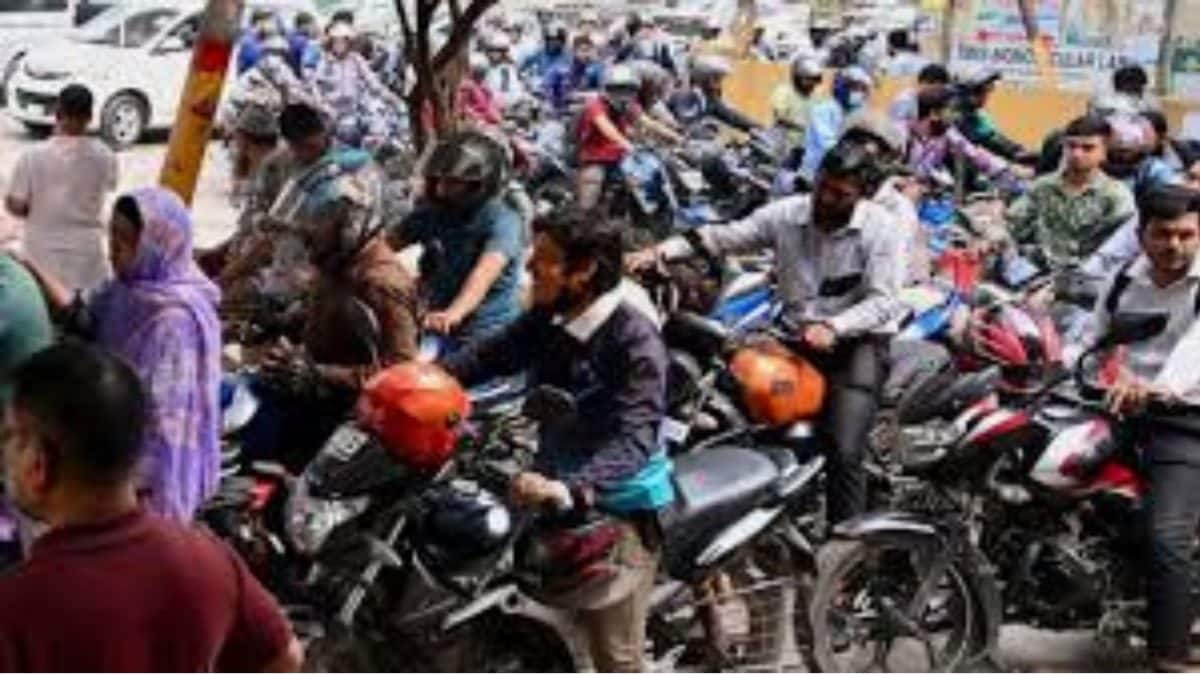
The standard narrative on Bangladeshi migration is a lazy, recycled tragedy. You’ve read the script: a desperate worker, crushed by "economic hardship" at home, braves the missiles of the Middle East because he has no other choice. It’s a story of victimhood that journalists love because it requires zero intellectual heavy lifting.
But it’s wrong.
If poverty were the primary engine of migration, the poorest 10% of Bangladeshis would be the ones on the planes to Riyadh and Doha. They aren't. They can’t afford the ticket, let alone the $3,000 to $5,000 "recruitment fee" extorted by middlemen. The people leaving are the lower-middle class—the strivers with enough capital to gamble. This isn't a flight from starvation; it’s a sophisticated, high-risk investment strategy in a country where the domestic ROI is broken.
The "Regional Conflict" Boogeyman
The media is currently obsessed with the idea that regional instability in West Asia should be a deterrent. They treat Bangladeshi workers like delicate investors who check Bloomberg terminals before deciding to move.
The reality? Geopolitical risk is a luxury concern. To a worker from Cumilla or Sylhet, a drone strike in a neighboring country is an abstract noise compared to the very real, very local sound of a debt collector knocking on his door in Dhaka.
The "conflict" narrative fails to account for the internal math of the Gulf Cooperation Council (GCC) economies. War, or the threat of it, often drives infrastructure spending and logistics demand. When the "expats" from Western nations flee at the first sign of trouble, it creates a vacuum. The Bangladeshi worker isn't ignoring the risk; he’s pricing it in. He knows that when the world gets nervous, the demand for the "essential" (read: exploited) labor that keeps cities running actually stabilizes.
The Remittance Trap: A National Ponzi Scheme
Bangladesh’s economy isn't being "saved" by remittances; it’s being addicted to them. We celebrate the $20 billion-plus annual inflow as a badge of honor. In reality, it’s a symptom of a systemic failure to create a domestic manufacturing base that can absorb its own youth.
Every time a skilled welder or an ambitious foreman boards a flight to Saudi Arabia, Bangladesh loses the very human capital it needs to build its own future. We are exporting our most motivated demographic and importing consumption power. This creates a "Dutch Disease" effect where the influx of foreign currency inflates local land prices and service costs, making it even harder for those who stay to start a business.
The competitor's view is that hardship "forces" them out. The sharper view is that the Bangladeshi state has outsourced its unemployment problem to the desert. By facilitating migration, the government avoids the political pressure to fix the abysmal "Ease of Doing Business" rankings at home. Why fix the power grid or the port bureaucracy when you can just send another 800,000 people abroad and let the Saudis pay their "wages"?
The Middleman Industrial Complex
Let’s talk about the dalals. These aren't just "unregulated agents." They are the backbone of a predatory shadow economy that thrives on the information asymmetry between a village and a construction site in Dubai.
The mainstream press laments the high cost of migration. They call for "better regulation." This is a fantasy. The high cost is the point. The recruitment fees represent a massive transfer of wealth from the rural poor to the urban political elite who hold the licenses for these agencies.
Imagine a scenario where a worker pays 400,000 BDT for a job that pays 30,000 BDT a month. He spends the first 14 months of his contract just breaking even. He isn't a worker; he is a debt-servant. If we actually "fixed" the recruitment process and made it transparent, the entire profit model of the Bangladeshi manpower sector would collapse. The "hardship" isn't an accident of the market—it’s the product.
Why the "Better Life" Narrative is a Lie
We need to stop pretending that migration is a ladder to the middle class. For the vast majority, it’s a horizontal move. They live in labor camps that would be condemned in any civilized nation, working 12-hour shifts in 45°C heat, only to return home five years later with a slightly better tin roof and a chronic back injury.
The real winners aren't the workers. The winners are:
- The GCC Employers: Who get flexible, disposable labor with zero collective bargaining rights.
- The Bangladeshi Banks: Who clip the wings of every dollar sent home through exchange rate spreads.
- The Real Estate Developers in Dhaka: Who build luxury apartments that the workers will never live in, funded by the liquidity those workers provide.
Dismantling the "Lack of Jobs" Argument
"There are no jobs in Bangladesh." I’ve heard this from every armchair economist from London to Singapore.
It’s a half-truth. There are no dignified jobs that pay a living wage for the unskilled. But more importantly, there is no path to social mobility for the rural youth within the country's rigid class structure. In the Gulf, the worker is still at the bottom, but he is at the bottom of a much wealthier pile.
He isn't going to West Asia because he can’t find work. He’s going because the social status of being an "expatriate"—even one who cleans toilets in a mall—is higher in his village than being a day laborer at home. We are fighting a psychological war, not just an economic one.
The Actionable Truth
If you are looking for a way to actually change this cycle, stop donating to "skills training" NGOs that prepare people to be better servants in foreign lands. That only deepens the dependency.
True disruption requires:
- Direct-to-Worker FinTech: Bypassing the dalal system by linking workers directly to employers through blockchain-verified contracts. If the middleman can't touch the money, the incentive to exploit vanishes.
- Aggressive Domestic Deregulation: Making it cheaper to start a small workshop in Bogra than it is to buy a visa to Qatar.
- Taxing the Agencies, Not the Workers: Shift the fiscal burden onto the recruiters who have enjoyed a decades-long tax holiday on their predatory fees.
The idea that Bangladeshis are "forced" back to West Asia by "hardship" is a comfortable lie that lets everyone—the government, the recruiters, and the consumers of cheap labor—off the hook. They aren't being forced; they are being harvested.
Stop pitying the migrant. Start questioning the system that treats human beings as your country's primary export.