Four thousand meters beneath the surface of the Pacific Ocean, there is a darkness so absolute it feels heavy. The pressure here is crushing, a relentless weight that would instantly flatten a human body. Down here, far beyond the reach of the sun, life moves in slow motion. Strange, ghostly fish drift over vast plains of abyssal mud. And scattered across this underwater desert, looking like nothing more than ordinary, soot-colored potatoes, lie trillions of rocky lumps.
They are called polymetallic nodules. They take millions of years to grow, accreting metallic minerals atom by atom from the seawater. Inside them sits a treasure trove of cobalt, nickel, copper, and manganese—the exact raw ingredients the modern world is starving for to build electric vehicle batteries, wind turbines, and data centers.
To some, these depths represent the final frontier of human ingenuity, a pristine bank vault waiting to be unlocked. To others, they are an ecological sanctuary that must never be touched. Right now, a quiet but ferocious geopolitical war is being waged over who owns the rights to this darkness.
The Midnight Gold Rush
Consider a hypothetical engineer named Elena. She spends her days in a brightly lit lab in California, designing the next generation of clean-energy storage. Elena wants to save the planet from carbon emissions. But every time she sketches a new battery design, she confronts a brutal calculation. The cobalt in her battery might come from mines in the Democratic Republic of Congo, where human rights abuses and child labor are well-documented horrors. The nickel might be processed in carbon-heavy plants in Indonesia, leaving mountains of toxic waste behind.
Elena’s dilemma is the dilemma of our entire civilization. We want a green future, but the dirt to build it has to come from somewhere.
This is where the Clarion-Clipperton Zone comes in. This massive fracture zone stretches across the Pacific between Hawaii and Mexico. It holds more nickel and cobalt than all known terrestrial deposits combined. For companies backed by powerful political interests, the calculus seems simple. Why dig up the land, displace communities, and chop down rainforests when we can just vacuum up rocks from the uninhabited ocean floor?
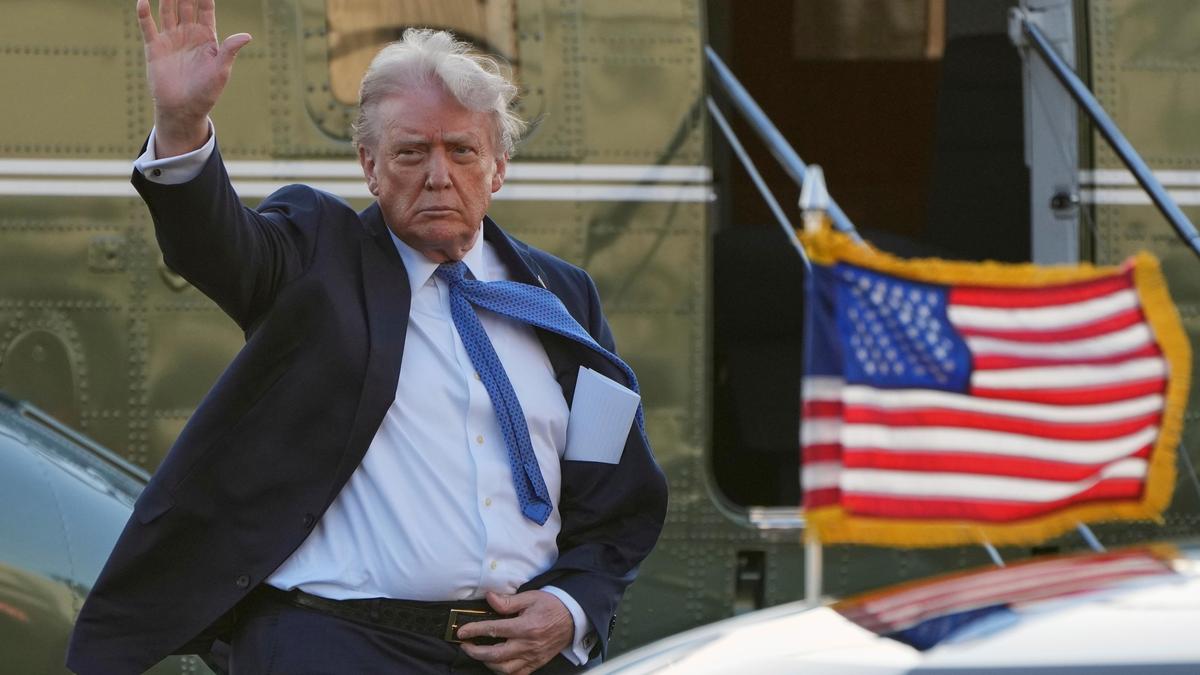
The temptation has reached the highest levels of American politics. Donald Trump’s administration championed a aggressive push to secure these deep-sea minerals, framing the issue as one of absolute national security. The logic is clear enough. The United States is currently lagging behind China in the race for critical minerals. China controls the processing pipelines for almost all the metals that power our smartphones, defense systems, and electric cars. For Washington, the bottom of the Pacific looks like a geopolitical escape hatch. A way to bypass China entirely.
But there is a massive roadblock standing in the way of this marine gold rush. And its name is international law.
The Man in the Way
Enter Michael Lodge. He is the Secretary-General of the International Seabed Authority, a low-profile but incredibly powerful United Nations-mandated body based in Kingston, Jamaica. The ISA is tasked with a seemingly impossible dual mandate: organizing and controlling all mineral-related activities in the international seabed for the benefit of humankind as a whole, while simultaneously ensuring the effective protection of the marine environment.
Recently, the ISA chief pulled the emergency brake on the American-backed momentum. Lodge declared the push to rush into deep-sea mining "unlawful" under the current international framework.
To understand why a bureaucrat in Jamaica can halt a superpower's industrial ambitions, you have to look at the legal architecture of our oceans. The United Nations Convention on the Law of the Sea dictates that the international seabed is the "common heritage of mankind." It belongs to everyone, and it belongs to no one.
The United States, crucially, has never ratified this treaty.
For decades, Washington has watched from the sidelines, refusing to sign away a degree of its sovereignty to a UN body. But now, American companies want the rocks. They are leveraging their political connections to demand access. Yet, Lodge’s message was unwavering. You cannot rewrite the rules of global governance just because you suddenly realize you need what is sitting on the ocean floor. If a country wants to play in the international seabed, it has to follow the international rulebook. No exceptions. No shortcuts.
The Invisible Stakeholders
When we talk about international law and mining permits, the conversation quickly dries up into a desert of acronyms and legal jargon. It is easy to lose sight of what is actually at risk.
Imagine the deep ocean not as a void, but as a slow-burning engine. The creatures that live there—anemones rooted to the nodules, blind crabs, delicate glass sponges—have evolved in an environment that has remained virtually unchanged for millennia. They do not understand the human concept of a geopolitical race. They do not know what a semiconductor is.
When a mining machine the size of a three-story house crawls across the seafloor, it does not just pick up nodules. It scrapes away the top layer of sediment. It creates massive underwater dust storms—plumes of silt that can travel for miles before settling. These plumes can choke the filter-feeding organisms that form the baseline of the deep-sea food web.
We are faced with an uncomfortable truth. To heal the atmosphere, we are considering scarred ocean floors. We are trading an environmental crisis we can see—smog, rising sea levels, scorching heatwaves—for an environmental crisis we cannot see, buried under miles of water.
Is it a fair trade? Nobody truly knows. The science is frustratingly incomplete. We know more about the surface of the moon than we do about the abyssal plains of our own planet. Scientists warn that destroying these ecosystems could disrupt global nutrient cycles or destroy unique genetic code before we even discover it.
The Fractured Consensus
But the real problem lies elsewhere. The tension isn't just between environmentalists and mining executives. It is a deep, structural rift between nations.
Small island states in the Pacific are caught directly in the crossfire. Some, like Nauru, have partnered with mining companies, hoping the economic windfall will save their economies from being swallowed by rising tides caused by climate change. They see the ocean as a lifeline, an economic engine to fund their survival. Other neighboring island nations, like Palau and Fiji, are leading the call for a moratorium. They argue that destroying the ocean to save the climate is a paradox that will ultimately destroy their way of life.
This is not a simple story of good versus evil. It is a tragedy of conflicting necessities.
If the United States and its corporate allies bypass the ISA, they risk fracturing the fragile consensus of international law entirely. It sets a dangerous precedent. If Washington can unilaterally decide to harvest the high seas without a ratified treaty, what stops Beijing, Moscow, or anyone else from claiming their own massive swaths of the ocean floor? The common heritage of mankind could quickly devolve into a chaotic, corporate land grab.
Consider what happens next. The ISA is under immense pressure to finalize a "mining code"—a massive, complicated set of regulations that would dictate exactly how, when, and where commercial mining can begin. The deadline is looming, and the debates inside the conference rooms in Kingston are growing increasingly hostile. Diplomats argue over percentages, environmental baselines, and liability clauses while the machinery to tear into the seabed is already being built and tested in shipyards around the world.
The Shadow of the Past
We have been here before. Human history is a long, repetitive script of discovering a new frontier, declaring it inexhaustible, and extracting it until it breaks. We did it with the forests of Europe, the gold veins of California, and the oil fields of the Middle East. Every single time, the pioneers believed they were driving progress. Every single time, they failed to see the true cost until the dust settled.
The deep sea is different only because it is hidden. If a company clear-cuts a mountainside in West Virginia, the destruction is visible on satellite imagery. It is broadcast on the news. If a company destroys a thousand square kilometers of the Pacific seabed, the surface of the water remains perfectly blue, glittering placidly under the tropical sun. The whales will still migrate. The waves will still crash on the beaches of Hawaii. The damage will remain entirely invisible to the human eye.
This invisibility is dangerous. It makes it easy to look at the political maneuvering of the Trump-backed mining lobby or the stubborn legal stances of Michael Lodge as mere abstract theater. It makes it easy to view the nodules as just a line item on a corporate balance sheet or a strategic asset in a defense briefing.
But they are more than that. They are the anchors of an ecosystem we barely comprehend.
The standoff between the drive for resource independence and the preservation of the deep ocean is reaching its tipping point. It forces us to look into a mirror and ask what kind of future we are actually trying to build. If we must degrade the most remote parts of our planet to sustain our high-tech, high-energy lifestyles, then perhaps the technology itself isn't as clean as we like to pretend.
The heavy machinery sits on the decks of exploration vessels, tested and ready, gently rocking with the ocean swells, waiting for a green light that international law refuses to give.