The heat in the wetlands of northern Bangladesh does not merely sit; it suffocates. It rises from the waterlogged paddies of Sunamganj, thick with the scent of damp earth and the heavy, metallic tang of the upcoming monsoon. In the weeks leading up to Eid al-Adha, this landscape transforms into a theater of high stakes. For the farmers here, livestock is not a hobby. It is a checking account on four legs. It represents tuition fees, medical bills, and the difference between a lean winter and a comfortable one.
Every year, millions of cattle and buffalo are brought to the bustling haats—the seasonal livestock markets—where buyers poke flanks, haggle over teeth, and judge the worth of a life by its meat. The destination for the vast majority is the sacred sacrifice.
But then came the white one.
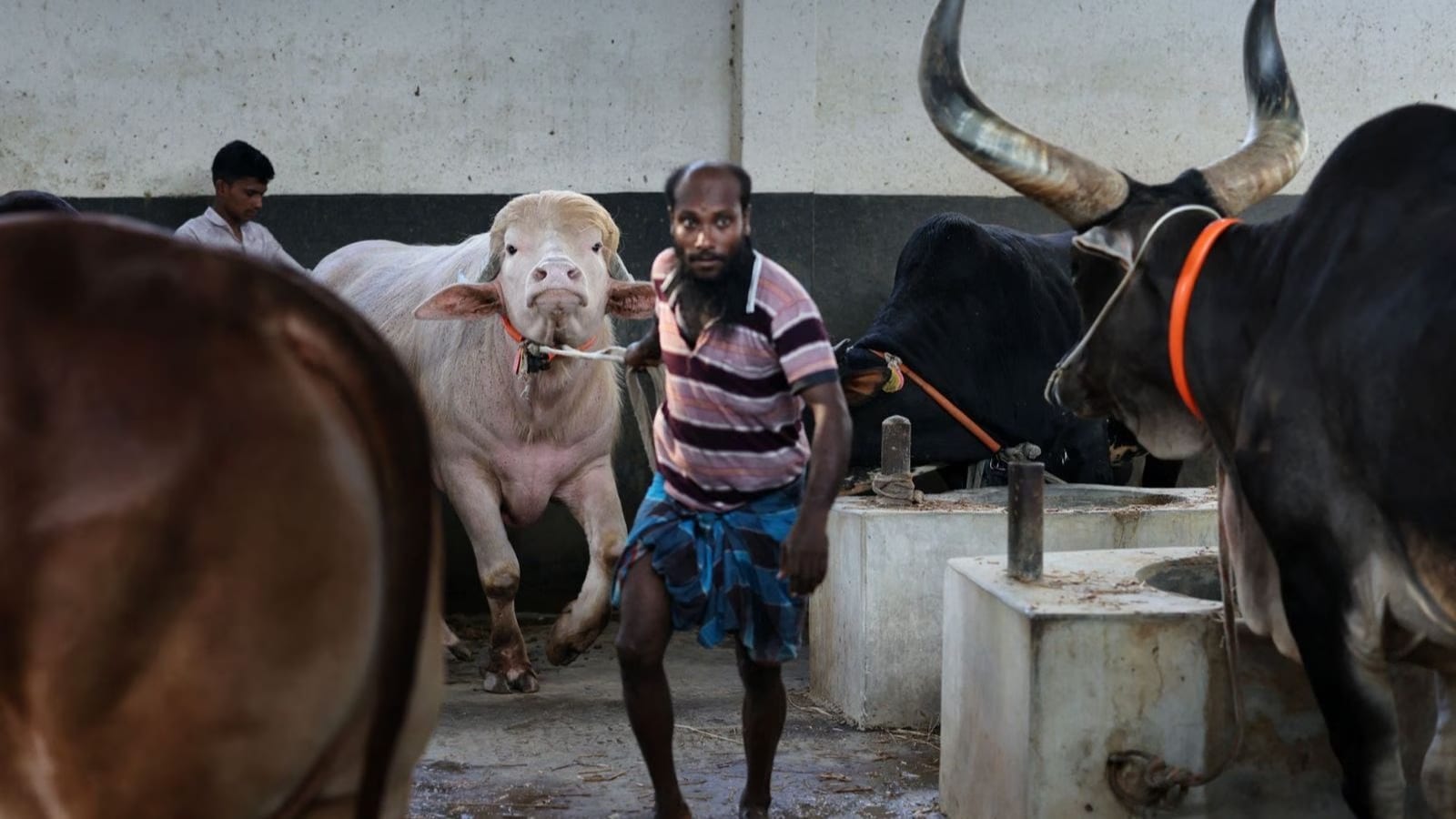
In a sea of deep charcoal and midnight-black water buffaloes, one animal stood out like a beacon of misplaced snow. He was an albino. His hide was a pale, pinkish-white, his eyes a startling, translucent shade, and his horns curved like ivory arches. He was massive, weighing in at nearly 800 kilograms. His owner, a local farmer, looked at this genetic anomaly and saw a nickname waiting to happen.
He called him Donald Trump.
The Economics of a Genetic Twist
Albinism in water buffaloes is an extraordinary rarity. It is a roll of the genetic dice that usually spells disaster in the wild. Lacking melanin, these animals burn under the relentless South Asian sun. Their eyesight is often compromised. In the brutal hierarchy of the herd, looking different makes you a target.
For a farmer, however, a unique animal is a lottery ticket. The owner expected the novelty to drive up the price at the market. He anticipated wealthy buyers from Dhaka looking for a status symbol for their holiday sacrifice. The initial math was simple: rarity equals profit.
What the marketplace did not account for was the internet.
A teenager with a smartphone snapped a video of the pale giant lumbering through the mud. Within forty-eight hours, the clip bypassed local village gossip and entered the global bloodstream of social media. The contrast was too sharp to ignore. Here was a creature named after an American billionaire, standing in a rural Bangladeshi pasture, looking entirely detached from reality.
The clicks turned into views. The views turned into shares. By the time the final week before Eid arrived, the buffalo was no longer just property. He was a digital celebrity.
Thousands of people began descending on the farm. They did not come with ropes and trucks to buy meat; they came with selfie sticks. Children poked at his pink nose. Content creators staged elaborate livestreams with the buffalo chewing cud in the background. The quiet homestead became an open-air amphitheater of the bizarre.
The Shift in the Wind
Consider the psychological friction this created for the owner. On one hand, a buyer stepped forward offering an astronomical sum—nearly 800,000 Bangladeshi taka ($6,800 USD)—to purchase the animal for the traditional sacrifice. That is life-altering money in the delta. It could buy new land, secure a family's future, or pay off decades of microloans.
On the other hand, a strange, collective sentimentality had taken root.
The public did not want Donald Trump to die. The comment sections of Facebook and TikTok, usually spaces of volatile debate, united under a singular, bizarre mandate: Save the white buffalo.
This is where the story shifts from a quirky news item into a deeper study of human behavior. Eid al-Adha is rooted in the concept of devotion and letting go of something valuable. Yet, when an animal acquires a name, a personality, and a global audience, the mechanics of the market break down. We are hardwired to protect the anomaly. We love the misfit.
The local government took notice. Officials realized that if this specific animal went to the chopping block, the backlash would be fierce. The digital crowd is fickle, but its rage is potent.
The owner faced a choice that defines the modern era. Do you take the cold, hard cash and ignore the digital noise, or do you listen to the ethereal voice of the crowd?
A Different Kind of Value
The decision came down like a sudden clearing of the monsoon clouds. The farmer announced that Donald Trump would be spared from the knife. He was withdrawn from the holiday market entirely.
Instead of being sold for meat, the buffalo was bought by a consortium that recognized his value lay alive, not dead. The plan shifted from a one-time feast to a long-term attraction. The animal would be kept for breeding, research into his unique genetics, and to satisfy the ongoing tourist boom that had developed around his pasture.
It was a triumph of sentiment over tradition, driven entirely by the strange physics of viral fame.
But the reality on the ground remains complex. While one pale buffalo roams free, the trucks continue to roll into Dhaka filled with thousands of standard, black buffaloes and brown cows. Their names are not recorded. Their videos are not shared. They fulfill the ancient cycle of the delta without fanfare.
Donald Trump, the albino buffalo of Sunamganj, owes his life to a glitch in his DNA and an algorithm that favored his pale coat. He sits now in the shade, protected from the sun that his skin cannot handle, watching the tourists line up up at the fence. He is a living monument to the moment a rural farming community collided with the unstoppable force of global internet culture, and the animal that was simply too bright to disappear into the dark.