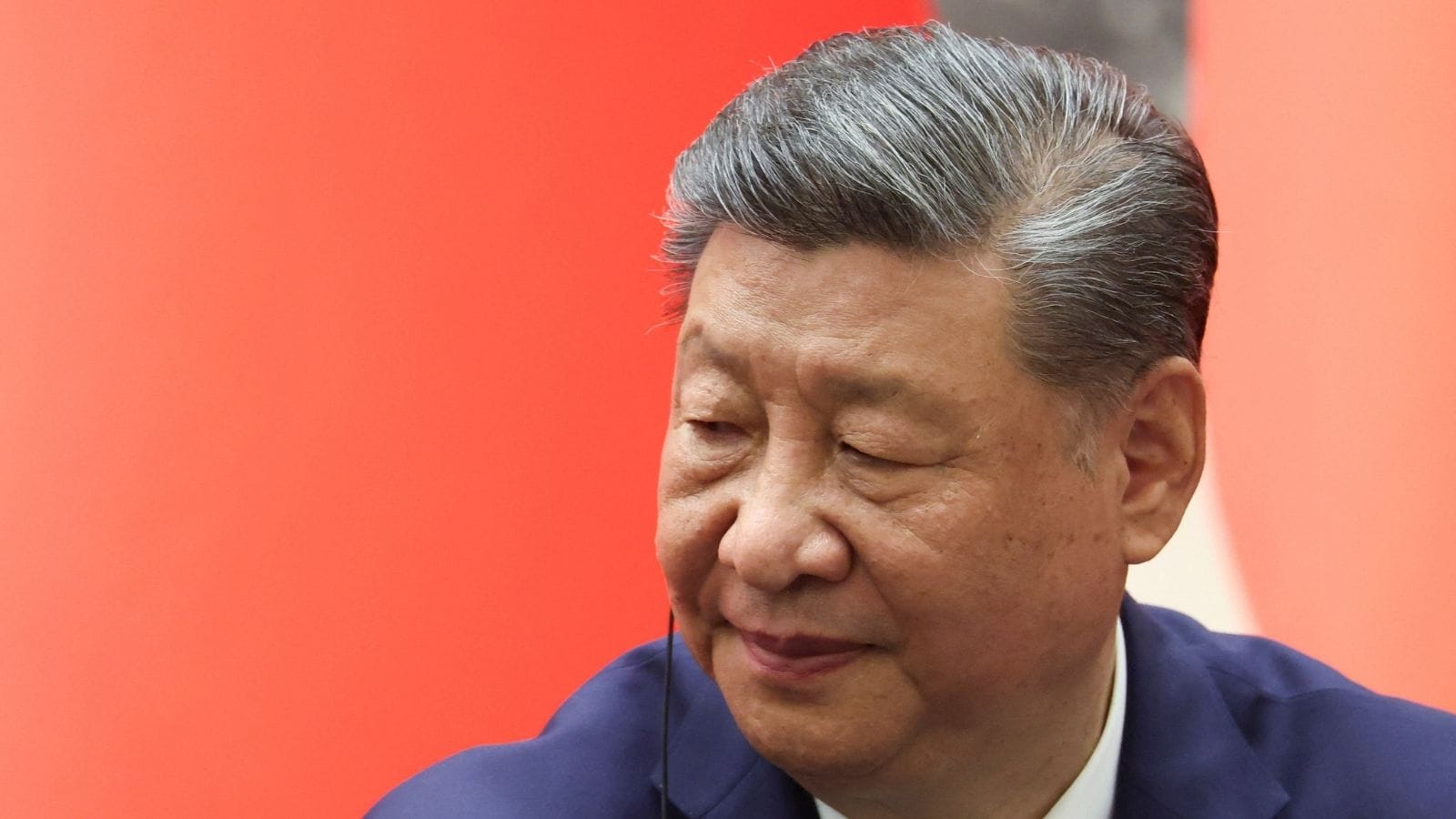
The prevailing media narrative treats every diplomatic itinerary out of Beijing as a desperate audition for the Oval Office. When analysts look at Xi Jinping packing his schedule for a punishing multi-nation tour, they automatically reach for the lazy consensus: China is panicking about a potential second Trump administration, rushing to shore up international alliances, and begging the Global South to sign a petition against American tariffs.
It is a comforting bedtime story for Western headline writers. It is also entirely wrong.
Beijing is not adjusting its posture to accommodate a volatile Washington. The calculus runs in the exact opposite direction. While American commentators obsess over personality politics and tariff threats, Chinese statecraft has moved past the point of treating American elections as an existential weather event. They are not trying to woo Donald Trump, nor are they building a coalition to stop him. They are operating on a multi-decade timeline where American domestic turbulence is treated as a permanent structural background noise rather than a primary driver of foreign policy.
The Fallacy of the Trump Panic Index
Every time a high-level delegation leaves Zhongnanhai, foreign policy pundits calculate the exact percentage of anxiety felt by the CCP leadership. I have sat in enough closed-door trade briefings in Beijing and Washington to watch analysts map out elaborate matrices of how Chinese officials react to American political theater. It is pure projection.
The lazy consensus assumes that foreign leaders wake up checking polls in Michigan and Wisconsin. They do not. When Xi embarks on a marathon diplomatic circuit, the objective is consolidation, not contingency planning for a Republican or Democratic White House. The meetings in Southeast Asia, Central Asia, or Latin America are not audition speeches for an audience in Washington. They are infrastructure investments. They are long-term currency swap agreements, supply chain lock-ins, and resource security pacts that function entirely independent of whoever happens to be sitting behind the Resolute Desk.
Look at the underlying data of trade volumes between China and the Global South over the past four years. While Western media hyperventilates over decoupling, Beijing has systematically integrated non-Western economies into a renminbi-denominated trade network that makes American secondary sanctions look increasingly like blunt instruments. You do not build alternative clearing systems and deep-water ports across three continents because you are worried about a tweet from Mar-a-Lago. You do it because you are preparing for a post-hegemonic financial reality.
Rewriting the Rules of Engagement
The conventional framing of "global leadership" is an American export. Washington assumes leadership means moral posturing, security umbrellas, and demanding fealty to a rules-based international order written in 1945. When China steps onto the world stage, it speaks a completely different language—one of non-interference, capital deployment, and physical infrastructure.
To understand why the mainstream media misses this, look at how they frame diplomatic visits. They treat them like high school popularity contests. Who shook whose hand? Who wore the better suit? Did they mention human rights? This is the political equivalent of reading tea leaves.
Real statecraft happens in the boring technical annexes of trade treaties. It happens when a state-owned enterprise in Shanghai signs a thirty-year mining concession in Africa or when a central bank agreement bypasses the SWIFT system entirely.
The Structural Reality Nobody Admits
Let us be honest about the downsides of this approach. China's strategy is not foolproof, and ignoring Washington carries massive risks. Beijing faces a punishing property crisis at home, youth unemployment numbers that terrify local planners, and a demographic cliff that no amount of industrial policy can easily reverse. Exporting overcapacity to the Global South is a brilliant short-term pressure valve, but it breeds local resentment. When local populations realize that Chinese industrial dumping is wiping out their domestic manufacturing base, the welcome mat starts to fray.
I have watched local officials in developing nations quietly panic over debt traps, even as they cut the ribbon on another gleaming highway funded by Beijing. The friction is real. But here is the nuance the Western press misses: developing nations do not care about Washington's lectures on debt diplomacy when the alternative from the West is a lengthy lecture on governance paired with zero capital. China shows up with a checkbook and a fleet of engineers. Washington shows up with a lecture and a conditional IMF loan.
If you want to know why Xi's foreign tours continue to yield results despite economic headwinds at home, look at that exact trade-off. It has nothing to do with Trump. It has everything to do with utility.
Stop Asking the Wrong Questions
If your analysis starts with "How will China handle Trump?", you have already lost the plot. The correct question is: "How has China insulated its economic engine so thoroughly that American political cycles barely register on its balance sheets?"
Trump will impose tariffs. He will threaten trade wars. He will demand concessions. Beijing already has the playbook for all of it, and it does not involve bending the knee or rushing to the negotiating table with panic in its eyes. They will absorb the shock, reroute the supply chains, double down on domestic technological self-sufficiency, and keep writing checks in currencies other than the dollar.
The next time you read a breathless headline about a high-stakes diplomatic tour designed to counter American influence, remember what is actually happening. They are not looking at Washington. They are looking past it.

