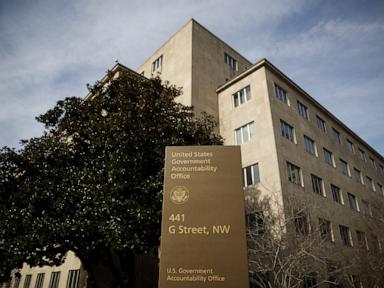
The Government Accountability Office dropped a staggering figure that exposed a chronic structural failure within the machinery of state. Nearly ten billion dollars vanished into a fiscal black hole of administrative leave, paying federal workers to sit at home rather than report to their desks. This money did not disappear due to natural disasters, secret military interventions, or emergency infrastructure repairs. It went straight into the bank accounts of personnel sidelined by protracted internal investigations, disciplinary stalemates, and institutional paralysis across various federal agencies.
Taxpayers fund a system where staying home with full pay and benefits has evolved into a default management strategy. When a federal employee faces allegations of misconduct, incompetence, or security clearance issues, leadership frequently chooses the path of least resistance. Instead of undertaking the arduous, legally fraught process of remediation or dismissal, agencies park these individuals on paid status. Months bleed into years. The paychecks clear every two weeks while offices remain understaffed and overburdened colleagues shoulder the slack. You might also find this related story insightful: Pricing Political Uncertainty Structural Mechanics Of Senate Prediction Markets.
To understand how federal employment accumulated this multi-billion-dollar liability, one must examine the legal scaffolding protecting government jobs. Civil service protections were originally designed to shield career bureaucrats from political whims and arbitrary firings during changes in administration. This historical firewall protected institutional memory and ensured professional continuity. Over decades, however, those safeguards metastasized into an impenetrable shield that insulates poor performance and alleged misconduct from swift accountability.
Management faces a Kafkaesque gauntlet when attempting to discipline a federal worker. The Merit Systems Protection Board and various federal employee unions enforce rigorous procedural hurdles. Supervisors must document every single infraction with surgical precision, overcoming high evidentiary bars that resemble criminal trials rather than administrative employment actions. Miss a single procedural deadline or fail to provide adequate counseling documentation, and the entire disciplinary case collapses upon appeal. As highlighted in latest reports by The New York Times, the implications are significant.
Faced with this administrative minefield, risk-averse agency leaders routinely choose administrative leave as an escape hatch. Sidelining an employee removes the immediate friction from the workplace. It quiets a troubled department and avoids immediate union grievances. Yet this administrative quietude carries an exorbitant price tag. The public absorbs the cost of paying double for a single position: one salary for the sidelined worker sitting at home watching television, and another salary or overtime pay for the replacement worker forced to pull double duty.
Investigations themselves routinely drag on past rational timelines. Internal watchdogs and human resources departments struggle with massive backlogs. Investigators move at a deliberate pace, bound by strict protocols designed to protect due process rights. Meanwhile, the clock ticks. A customs agent accused of minor procedural violations or an administrative specialist flagged for insubordination can draw full pay for three years while an inspector general's office crawls through a backlog of paperwork. By the time the investigation concludes, the total payout often exceeds the value of any alleged infraction by an order of magnitude.
Consider the psychological toll on the workforce left behind. Morale evaporates when remaining employees watch unproductive colleagues collect six-figure salaries for doing nothing. High-performing workers burn out, carrying the operational burden of empty desks while watching institutional accountability fail in real time. Talented professionals flee the public sector for private industry, disgusted by a system that rewards longevity and compliance over competence and output. The federal workforce risks becoming a sanctuary for those who master the art of navigating bureaucratic loopholes rather than delivering public service.
Legislative fixes have repeatedly missed the mark. Past reform bills attempted to cap administrative leave or mandate tighter reporting windows for internal probes. Agencies discovered ways around the constraints or simply dragged their feet on compliance reporting. When Congress tightens restrictions on one category of leave, agencies reclassify the time under alternative bureaucratic headings. The accounting changes, but the money continues to flow outward to idle workers.
Political appointees often inherit these stalled personnel battles from previous administrations. Eager to avoid congressional oversight hearings or bruising public relations scandals, incoming leaders frequently opt to let sleeping dogs lie. They inherit bloated payrolls and entrenched career employees who know every lever of the appeals process. Challenging a entrenched bureaucracy requires political capital and sustained attention that most short-tenured political appointees lack.
The financial hemorrhage also highlights a broader failure of internal oversight. Human resources departments within federal agencies operate with minimal external accountability. They measure success by compliance with procedural checkboxes rather than the efficient deployment of taxpayer funds. When an investigation stalls for twenty-four months, no manager loses a bonus, no agency head faces budget cuts, and no structural correction takes place. The budget absorbs the loss, rolled over into the next fiscal year's appropriations bill without a second thought from lawmakers distracted by partisan theatre.
Reform will remain elusive until Congress fundamentally restructures the civil service code. True accountability requires lowering the barriers to removing chronically unproductive workers while preserving essential protections for whistleblowers and political independence. It demands strict, enforceable statutory caps on paid administrative leave that automatically trigger termination or mandatory reassignment if investigations stall beyond a reasonable threshold. Until lawmakers muster the political courage to confront public sector unions and rewrite the foundational rules of federal employment, billions of taxpayer dollars will continue to subsidize administrative idleness behind closed doors.