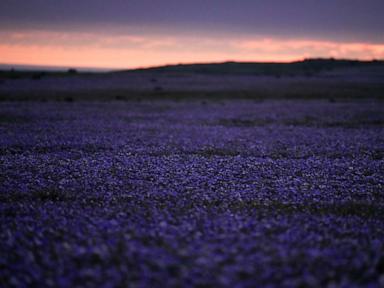
The flowering of the Atacama Desert represents a profound diagnostic window into extreme ecosystem resilience and hydro-meteorological threshold dynamics. Popular media frequently frames this phenomenon through the lens of aesthetic spectacle, describing a dormant wasteland transformed by a transient carpet of color. This characterization obscures the rigorous geophysical and physiological mechanics that govern hyper-arid botanical activation. Understanding the Atacama flowering event requires evaluating the specific precipitation triggers, the physiological adaptations of geophytes and therophytes, and the thermodynamics of seed dormancy release in one of the most hostile environments on Earth.
At the core of this phenomenon lies a fundamental constraint: water availability. The Atacama Desert, situated in northern Chile, is broadly classified as a hyper-arid core. Precipitation is virtually non-existent in normal cycles, with multi-year or multi-decade droughts serving as the baseline environmental state. When an anomalous moisture influx occurs, it is rarely uniform. The activation mechanism relies on a convergence of macro-scale atmospheric circulation anomalies and micro-scale soil physics.
The primary causal driver for the Atacama bloom is the El Nino Southern Oscillation. During specific El Nino phases, sea surface temperatures in the equatorial Pacific shift, altering atmospheric pressure gradients and pushing moisture-laden Pacific airmasses across the coastal range of northern Chile. When these maritime fronts encounter the cold Humboldt Current offshore, temperature inversions traditionally suppress rainfall. However, an intensified El Nino phase breaks this inversion layer, allowing frontal systems to deposit rainfall well above the historical threshold of two millimeters per year.
To trigger germination, a rainfall event must exceed a precise volumetric threshold. A light drizzle or heavy morning fog, known locally as camanchaca, is sufficient to sustain certain epiphytic lichens and specialized cacti, but it cannot penetrate the soil profile deeply enough to reach deeply buried seed banks. Quantitative field observations indicate that a minimum threshold of approximately fifteen to twenty millimeters of concentrated rainfall within a compressed temporal window is required to leach germination-inhibiting chemicals from seed coats and saturate the sub-surface soil layers.
This moisture trigger initiates a rapid sequence of biological responses governed by two distinct botanical strategies: therophytes and geophytes. Therophytes, or annual plants, bypass severe drought entirely by completing their entire life cycle—from germination to seed set—within a compressed window of six to eight weeks. Their seeds possess chemical germination inhibitors, primarily abscisic acid, embedded in the seed coat. Rainfall must be sufficient to leach these inhibitors away, signaling that water is finally abundant enough to support growth and reproduction before the soil dries out completely.
Geophytes, by contrast, rely on underground storage organs such as bulbs, corms, and tubers. These perennial species remain desiccated underground during multi-year droughts, expending virtually zero metabolic energy. Upon receiving thermal and moisture cues, they rapidly mobilize stored carbohydrates to drive rapid stem elongation and flowering. This strategy eliminates the high-risk gamble of seed germination, trading it for the preservation of established root structures that can survive thermal extremes and severe soil compaction.
The spatial distribution of the bloom is dictated by micro-topographical drainage patterns and altitudinal gradients. Water does not distribute evenly across the desert floor. Runoff from coastal hills collects in alluvial fans, dry riverbeds, and shallow depressions. Consequently, the bloom manifests as a complex patchwork rather than an expansive blanket. Areas with high soil salinity or compacted gypsum crusts remain barren, while sandy-loam depressions hosting accumulated seed banks explode into biological activity.
Soil chemistry within the Atacama presents an additional stressor. The substrate is alkaline, highly oxidized, and rich in perchlorates and nitrates, which inhibit most standard biological processes. Seeds adapted to this environment have evolved localized enzymatic repair mechanisms capable of withstanding high oxidative stress upon rehydration. When the moisture barrier breaks, cellular respiration spikes exponentially within hours, initiating rapid cell division before high solar radiation and rising ambient temperatures evaporate the scarce soil moisture.
The ecological cascade triggered by the bloom extends far beyond botany. The sudden proliferation of biomass introduces a massive influx of energy into a resource-starved trophic web. Specialized insect species, including endemic bees, beetles, and butterflies whose larvae may have remained dormant for years, emerge synchronously with their specific host plants. This narrow synchronization is critical; if an insect emerges even a week too early or too late, the reproductive cycle fails due to a mismatch with floral resource availability.
Avian and mammalian populations similarly adjust their foraging behavior in response to the transient resource pulse. Rodents experience rapid population booms driven by increased seed and vegetative availability, which in turn supports temporary migrations of carnivorous birds and mammalian predators into the hyper-arid core. This trophic compression demonstrates that the desert ecosystem is not static or dead during dry periods, but rather exists in a state of suspended animation, waiting for the precise environmental catalyst to unlock its biological capacity.
Evaluating the frequency and intensity of these bloom events provides a predictive framework for assessing broader climate variability in South America. As ocean-atmosphere interactions shift under changing global climate models, the frequency of extreme El Nino events is projected to fluctuate. An increase in intense, erratic rainfall events could overwhelm the adaptive capacity of annual seed banks, leading to premature germination followed by desiccation before seed set can occur, threatening the long-term viability of endemic Atacama flora.
Future observation protocols must move past descriptive phenology and focus on high-resolution soil moisture telemetry, seed bank density mapping, and quantitative tracking of pollinator emergence thresholds. Only through rigorous measurement of the physical variables driving soil saturation and metabolic reactivation can researchers accurately model the resilience of hyper-arid ecosystems against ongoing climatic instability.