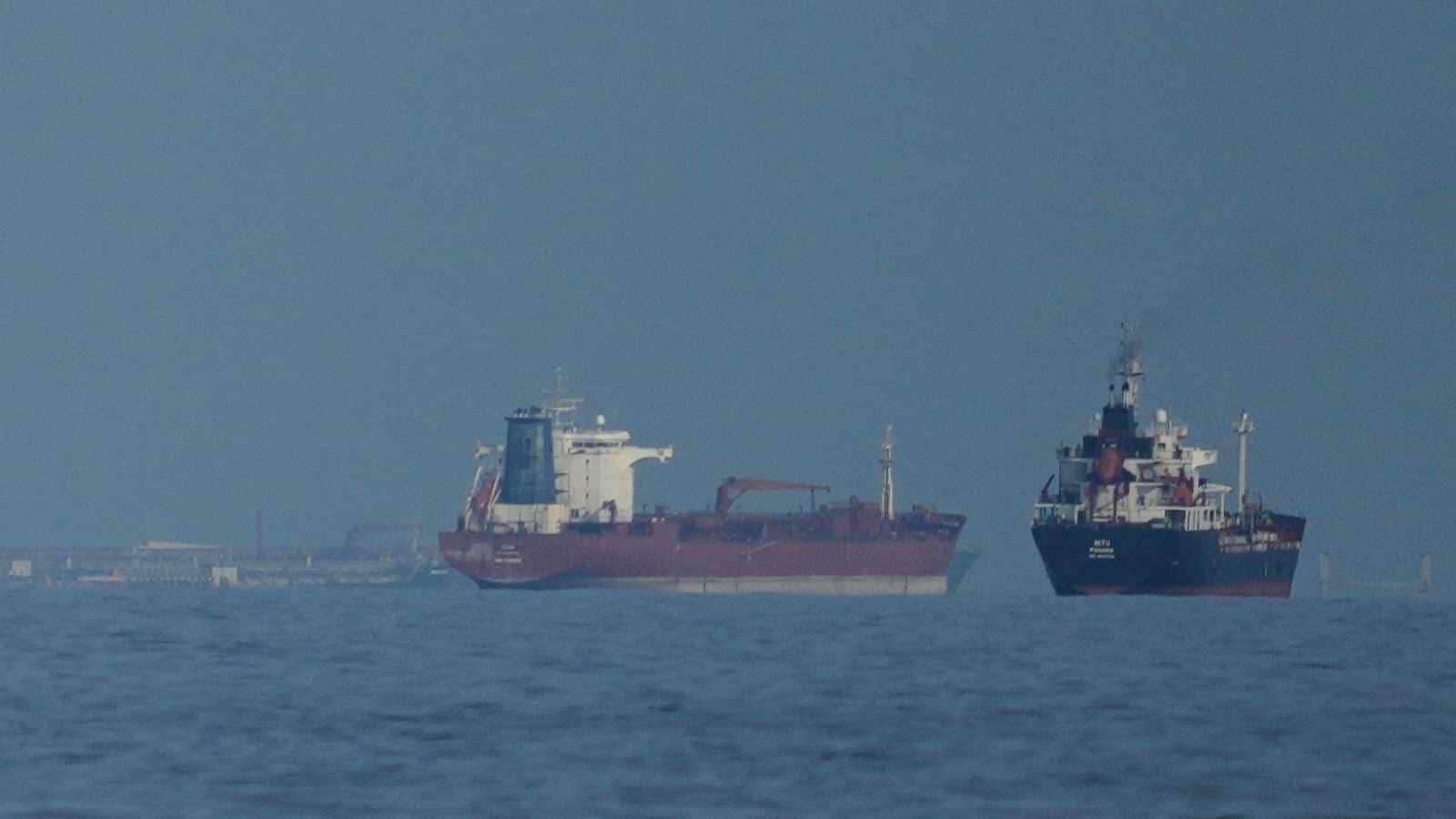
The headlines are screaming about a "failed blockade" in the Strait of Hormuz. They paint a picture of US-sanctioned tankers "defying" international law, slipping through the fingers of the most powerful navy on earth like ghosts in the night. It makes for great drama. It also happens to be a total misunderstanding of how global energy logistics and geopolitical leverage actually function.
The premise that these tankers are "passing through" despite a blockade is fundamentally flawed because there is no blockade. A blockade is an act of war involving the physical prevention of ships from entering or leaving a port. What we have instead is a complex, high-stakes game of financial whack-a-mole that the US is playing—and arguably winning—by keeping the "shadow fleet" exactly where it wants it: visible, but legally radioactive.
The Sanctions Friction Tax
Most analysts look at a sanctioned vessel moving oil and conclude the sanctions have failed. This is amateur hour. The goal of Treasury Department sanctions is rarely to achieve a zero-sum total halt of exports. That would be a catastrophic shock to global Brent crude prices that no sitting president wants to explain at the gas pump.
Instead, sanctions are designed to impose a massive "friction tax." When a tanker like the Young Yong or any of its blacklisted siblings moves through Hormuz, it isn't "getting away" with anything. It is operating in a world where:
- Insurance is non-existent: They cannot access the International Group of P&I Clubs. This forces them to use sovereign guarantees or sketchy, undercapitalized insurers that no legitimate port will trust.
- The discount is deep: Nobody buys sanctioned oil at market price. Iran has to shave $10, $15, or even $20 off every barrel just to find a buyer willing to take the reputational risk.
- The logistics are a nightmare: We aren't talking about simple port-to-port delivery. We are talking about Ship-to-Ship (STS) transfers in the middle of the night, turning off AIS transponders, and constant "flag hopping" where ships change their registry every few months to stay one step ahead of the paperwork.
I have watched commodities desks navigate these waters. They don't see these tankers as "defiant." They see them as distressed assets moving low-margin cargo. The US isn't "failing" to stop them; the US is successfully forcing Iran to burn its profit margins just to keep the lights on.
The Strait of Hormuz is Not a Toll Booth
The media loves to treat the Strait of Hormuz as a narrow gateway where the US Navy should be standing like a bouncer at a club, checking IDs. This ignores the United Nations Convention on the Law of the Sea (UNCLOS). Even for vessels under sanctions, the right of "transit passage" is a bedrock of international maritime law.
If the US began physically seizing every sanctioned tanker in the Strait, it would be a violation of the very international order it claims to protect. More importantly, it would trigger an immediate Iranian retaliation that could shut down 20% of the world’s oil supply.
The "lazy consensus" says the US is weak for letting these ships pass. The reality is that the US is calculated. It uses the Office of Foreign Assets Control (OFAC) as a scalpel rather than a sledgehammer. By letting the ships move, they keep the oil flowing (stabilizing global prices) while ensuring the revenue goes into a black hole of middleman fees, bribes, and steep discounts.
The Dark Fleet Mythos
We hear a lot about the "Shadow Fleet"—a ragtag collection of aging hulls used to bypass Western restrictions. Critics argue these ships are a sign of the West losing control.
Let's look at the data. These ships are often over 20 years old. They are poorly maintained. They are environmental disasters waiting to happen. By forcing Iran and Russia into the shadow fleet, the US has effectively segregated the "clean" global shipping market from the "dirty" one.
Think of it as a two-tier system:
- The Tier 1 Market: Modern ships, fully insured, transparent, and trading at premium prices.
- The Tier 2 Market: The "Rustbuckets." They move the sanctioned oil, but they are constantly breaking down, being seized by various authorities, or getting stuck in legal limbo.
If you are a legitimate shipowner, you aren't looking at the sanctioned tankers with envy. You’re looking at them as a cautionary tale. I’ve seen shipowners lose their entire business because a single vessel in their fleet was "tainted" by association with a sanctioned entity. The contagion is real, and it is the ultimate deterrent.
The Buyer’s Paradox
Why do countries like China keep buying this oil? The common narrative is that it proves US sanctions are toothless against Beijing.
Actually, it proves that China is the ultimate opportunist. They aren't buying sanctioned Iranian oil because they want to "help" Iran. They are buying it because they are the only ones with the balls (and the domestic refining capacity) to demand a massive discount.
Iran isn't "defying" the US; it is being exploited by its only remaining customers. If the US were to "blockade" these tankers, it wouldn't just be hurting Iran; it would be picking a fight with the Chinese energy grid. Washington knows this. The current arrangement—where Iran sells at a loss and China gets cheap, "tainted" energy—serves to keep Iran subservient to Beijing while keeping them broke on the world stage.
Breaking the Premise: The Wrong Question
People ask: "Why can't the US stop these tankers?"
The better question is: "Why would the US want to stop them entirely?"
If you stop 100% of Iranian exports, oil hits $150 a barrel. The global economy enters a recession. The US incumbent loses the next election.
If you let them export under heavy sanctions, Iran receives roughly 50-60% of the actual value of their resource after costs. They have enough money to prevent a total domestic collapse, but not enough to fund a full-scale regional war or a nuclear program without extreme domestic strain.
This is the "Cruel Equilibrium." It isn't a failure of policy. It is the policy.
The Tech Gap in Enforcement
We are moving into an era where "turning off the transponder" is a useless tactic. Companies like Windward and Orbital Insight use synthetic aperture radar (SAR) and AI-driven behavior analysis to track these "dark" ships from space, regardless of whether their AIS is on.
The US government knows exactly where these tankers are. They know when they do an STS transfer in the Malacca Strait. They know which front company in Dubai owns the hull this week. The "blockade" isn't happening on the water; it's happening in the swift-code ledgers of global banks.
When a tanker passes through Hormuz, it is just a piece of steel moving through water. The real action happens when that cargo tries to turn into usable currency. That is where the US hammer falls.
The Risk of Over-Performance
There is a danger in being too good at sanctions. If the US makes it truly impossible for "rogue" nations to sell oil, it accelerates the move toward an alternative financial system. We are already seeing the BRICS nations experiment with non-dollar settlements.
The current "leaky" sanctions regime is actually a safety valve. It allows enough "grey market" activity to prevent the total abandonment of the US-led financial system. It keeps the rebels within the orbit of the dollar, even if they are trying to hide from it.
Stop looking for a physical wall in the water. The wall is made of paperwork, risk premiums, and the fear of being disconnected from the New York clearinghouse. Every time a sanctioned tanker "successfully" passes through the Strait of Hormuz, it carries with it a cargo that has been devalued, delayed, and diminished by the very system it claims to be outrunning.
The tankers aren't the story. The profit margins are. And those margins are bleeding out in the middle of the ocean.