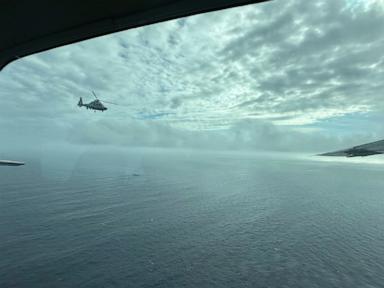
Manila has filed a formal diplomatic protest against Beijing following the military confirmation of a manned, floating structure equipped with an antenna inside the lagoon of Scarborough Shoal. The 6-meter by 6-meter platform, carrying six individuals, represents a dangerous tactical escalation in the South China Sea. This move directly mirrors the early stages of China's previous reef seizures, triggering fears that Beijing is testing the waters for permanent fortification just 124 miles from the Philippine mainland. By deploying a mobile, manned asset into the heart of the contested atoll, China is moving beyond mere blockades and systematically laying the groundwork for a de facto administrative outpost.
The Mischief Reef Playbook Reopened
To understand why a small floating raft has triggered emergency high-level meetings in Manila, one must look back to 1995. Thirty years ago, Chinese forces occupied Mischief Reef under the guise of building "fisherman's shelters" on stilts. Over three decades, those modest wooden shacks were dredged, expanded, and paved over. Today, Mischief Reef is a fully weaponized, missile-protected airbase featuring military-grade runways and radar arrays.
The arrival of this new manned platform at Scarborough Shoal—known locally as Bajo de Masinloc—follows the exact same script.
Armed Forces of the Philippines Chief of Staff General Romeo Brawner Jr. made the military's stance clear, stating that Manila will not allow a repeat of history where a small structure is left unchecked until it mutates into an artificial island. The strategic geography explains the urgency. Unlike the remote Spratly Islands, Scarborough Shoal sits directly opposite the main Philippine island of Luzon, positioned to bottleneck naval access to Manila Bay and spy on military installations hosting American forces.
The hardware observed on the platform indicates a clear operational shift. Satellite imagery captured by maritime analysis groups, including Stanford University's SeaLight project, initially spotted a highly reflective object near the reef flat at the lagoon's southern tip. Subsequent air force reconnaissance confirmed the presence of a high-gain antenna and a crew of six. This is not a weather buoy or a passive scientific instrument. It is a mobile monitoring and communications node designed to establish continuous, physical human presence inside a lagoon that China has legally no right to close off.
Gray Zone Warfare in the Lagoon
Beijing's immediate response followed its well-worn diplomatic defense. Chinese Foreign Ministry spokesperson Lin Jian dismissed Manila's protests, asserting "indisputable sovereignty" over the feature, which Beijing calls Huangyan Island. He framed the deployment as legitimate "scientific research."
This justification leverages what defense analysts call gray zone warfare—actions that deliberately hover just below the threshold of open military conflict to alter the status quo on the ground.
- The Mobility Tactic: Satellite data reveals that the structure is highly mobile. It was tracked at the entrance of the lagoon, then deeper inside, and subsequently vanished from satellite views within days. This disappearing act is designed to complicate legal documentation and evade physical interception by Philippine vessels.
- The Militia Screen: The floating asset does not operate in a vacuum. It is protected by a dense perimeter of Chinese Coast Guard hulls and maritime militia trawlers that have maintained a permanent blockade of the shoal since a tense naval standoff in 2012.
- Environmental Pretenses: Last year, Beijing declared a "national nature reserve" over the shoal. This environmental branding serves as a legal shield, allowing Chinese personnel to claim they are merely monitoring ecological health while actively barring Filipino fishermen from their traditional waters.
Scarborough Shoal Proximities:
[Philippines Coast] === 124 miles (200 km) ===> [Scarborough Shoal]
[China (Hainan)]     === 543 miles (874 km) ===> [Scarborough Shoal]
The 2016 Arbitral Tribunal ruling in The Hague dismantled China's sweeping historic claims under its self-styled "nine-dash line." The court specifically ruled that Scarborough Shoal is a traditional fishing ground for multiple nations and that China's blockade violated international law. Beijing simply ignored the verdict.
Testing the United States Mutual Defense Treaty
The timing of this deployment is a calculated geopolitical stress test. The structure materialized immediately following the first-ever joint maritime patrol conducted by the United States and the Philippines directly in the vicinity of Scarborough Shoal.
By inserting a manned platform into the lagoon immediately after American warships departed, Beijing is signaling that foreign military displays will not deter its incremental occupation. The move places Washington in a delicate position. Under the 1951 Mutual Defense Treaty, an armed attack on Philippine public vessels, aircraft, or armed forces in the South China Sea would trigger a U.S. military response.
A floating raft manned by six civilian-clad personnel does not constitute an "armed attack." It is a gray zone provocation specifically engineered to sit in the blind spot of formal defense treaties. If Manila attempts to physically tow the raft away, Chinese Coast Guard cutters are positioned to intervene with water cannons or ramming maneuvers, shifting the blame for escalation onto the Philippines. If Manila does nothing, China cements its physical jurisdiction inside the lagoon.
The Threat of a Permanent Outpost
Allowing Beijing to maintain a permanent presence inside Scarborough Shoal would fundamentally alter the security architecture of Southeast Asia. A permanent radar or signal intelligence facility on the shoal would give the People's Liberation Army an unblinking eye over northern Luzon, effectively monitoring all flights and naval deployments out of Subic Bay and Clark Air Base.
It would complete a strategic iron triangle, locking down the South China Sea alongside Beijing's existing bases in the Paracel Islands and the Spratlys.
Manila's strategy under President Ferdinand Marcos Jr. has shifted toward public transparency, aggressively broadcasting China's maritime maneuvers to building international pressure. Yet, diplomatic demarches and public exposure have their limits when facing a superpower willing to absorb reputational damage for territorial gain. Increased air and sea patrols have been pledged by General Brawner, but monitoring an occupation is not the same as stopping it.
The immediate challenge for Manila and its allies is developing a proportional, non-kinetic countermeasure to neutralise these mobile structures before they are anchored permanently into the reef flat. White-hull coast guard vessels must be equipped and authorized to cut barriers and intercept unauthorized platforms before they pass the threshold of the lagoon. The window to prevent Scarborough Shoal from becoming a heavily fortified Chinese military asset is closing, and a 6-meter floating raft may well be the point of no return.


:max_bytes(150000):strip_icc():focal(665x0:667x2)/gettyimages-50733149-2000-8b129a2475974982a915418ce92a73d8.jpg)