The Misdirected Outrage Over Border Engineering
The standard narrative surrounding infrastructure development in sensitive areas follows a predictable, emotionally charged script. A headline flashes about dynamite, ancient landscapes, and government overreach. The collective internet gasps. Activists mobilize, and the conversation immediately simplifies into a binary battle: heartless modernization versus sacred preservation.
This framing is entirely wrong.
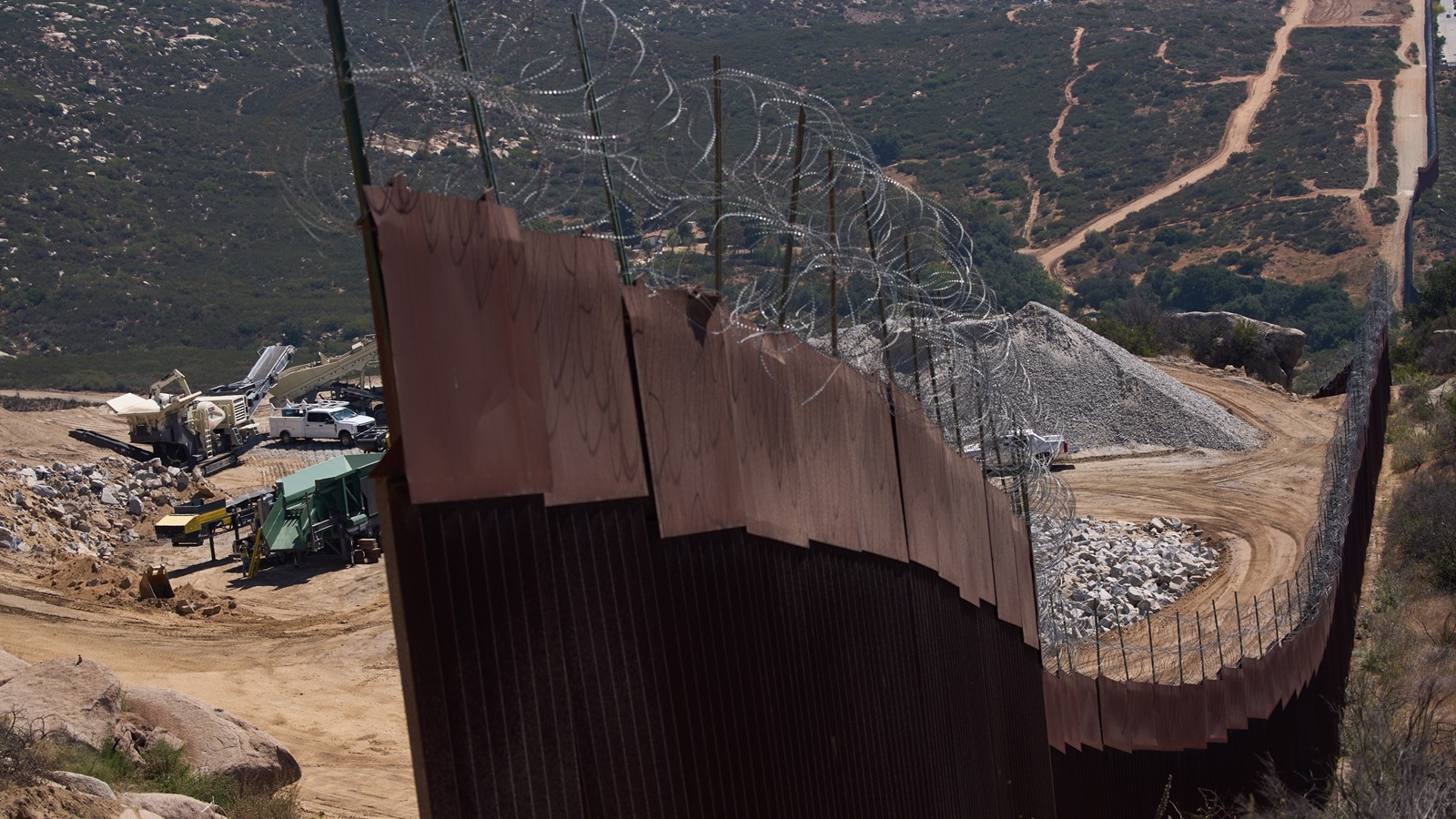
When border crews utilize controlled blasting on rugged terrain like Monument Peak or the surrounding desert ranges, the public discourse treats it as an act of cultural vandalism. Media outlets paint a picture of reckless destruction. But this outrage relies on a fundamental misunderstanding of civil engineering, geological necessity, and how public works projects actually function in the 21st century.
The lazy consensus insists that blasting is a choice driven by malice or impatience. The reality is far colder. Engineering dictates the tool, not politics. When you are dealing with lithified rock formations that defy standard excavation equipment, controlled blasting is often the most precise, lowest-impact method available to stabilize a slope or secure a perimeter.
The Mechanics of Controlled Blasting Versus Mechanical Excavation
To understand why the outrage is misplaced, look at the mechanical alternatives. The assumption is that crews could simply use heavy machinery—hydraulic excavators, pneumatic breakers, or massive rotary drills—to gently shave away the rock without the dramatic theater of an explosion.
This assumption ignores basic geology and physics.
Mechanical ripping of highly fractured, high-compressive-strength rock forces heavy machinery to operate at maximum capacity for weeks or months on end. The result?
- Continuous, low-frequency ground vibrations that propagate deeper into the surrounding strata, potentially destabilizing a wider radius of land.
- Massive, prolonged diesel emissions from fleets of heavy equipment idling and grinding against rock faces for half a year.
- Extensive topsoil disturbance and erosion caused by the constant movement of tracked vehicles over vulnerable desert crusts.
Now look at controlled blasting. It is an engineering discipline governed by precise seismic monitoring. Technicians drill narrow boreholes, load them with specific, calculated charges, and detonate them in millisecond delays.
$$\text{Peak Particle Velocity (PPV)} = K \left( \frac{D}{\sqrt{W}} \right)^{-\beta}$$
By controlling the scaled distance—the relationship between the distance from the blast ($D$) and the maximum charge weight per delay ($W$)—engineers strictly limit the vibration amplitude. The energy is directed entirely into fracturing a highly localized block of rock. The work that would take a fleet of bulldozers three months of continuous grinding and tearing to accomplish is executed in less than two seconds.
I have watched industrial projects burn through millions of dollars attempting to avoid the optics of blasting, only to cause twice the environmental footprint through prolonged mechanical excavation. Blasting looks violent on video. In terms of total environmental stress on a localized ecosystem, it is often the cleaner surgical option.
The Flawed Premise of Environmental Alternatives
A common question raised by critics is: Why can't the infrastructure simply route around these sensitive geological features?
This question betrays a total lack of understanding regarding linear infrastructure design. Whether you are building a highway, a pipeline, or a border security barrier, the route is constrained by geometry, topography, and legal jurisdictions.
If a barrier alignment must follow a specific ridge line to maintain a line of sight or to prevent immediate structural failure from flash flooding, deviating from that line isn't an option. Forcing a route down into a steep canyon or around a mountain shoulder doesn't solve the environmental problem; it multiplies it.
- Increased Footprint: Routing around a feature requires longer total mileage of construction, meaning more total acreage of habitat disruption.
- Hydrological Chaos: Altering natural drainage paths in arid environments leads to severe downstream erosion during monsoon seasons, destroying far more habitat than a localized rock cut.
- Structural Instability: Building on unstable, unblasted slopes increases the risk of massive landslides later, which requires even more invasive emergency remediation.
The hard truth nobody wants to admit is that infrastructure requires a footprint. Minimizing that footprint means taking the shortest, most efficient path, even if that path requires cutting through solid rock.
The Friction of Public Works and Bureaucratic Compliance
Every major construction project on public land operates under a dense thicket of regulatory oversight. The idea that crews are out in the desert blowing up mountains on a whim, completely detached from legal constraints, is a fantasy.
Even when specific waivers are invoked for national security or expedited border construction, the engineering standards do not vanish. The Bureau of Reclamation, the Army Corps of Engineers, and state-level environmental departments employ seismologists and structural engineers whose entire careers are dedicated to minimizing collateral damage.
These agencies use advanced pre-blast surveys. They map every significant geological fault, identify nearby cultural resources, and establish strict thresholds for ground movement. If a blast risks causing structural failure to a protected site outside the immediate right-of-way, the charge weights are reduced, or the method is altered. The process is bound by mathematics, physics, and liability.
The True Cost of Symbolism Over Substance
The hyper-focus on dynamite is a symptom of a larger cultural trend: prioritizing symbolic outrage over substantive analysis. An explosion makes for a viral video clip. It triggers an immediate emotional response that can be leveraged for fundraising, political posturing, and sensationalist journalism.
Meanwhile, the real, ongoing challenges of land management and infrastructure maintenance are ignored. We ignore the long-term impacts of erosion, the complexities of managing transboundary watersheds, and the actual economic trade-offs of construction methodologies.
If you want to critique border infrastructure, critique the policy, the cost-benefit analysis, or the strategic utility of the barrier itself. Those are legitimate debates. But stop pretending that the use of dynamite to clear a rock face is proof of an engineering failure or a rogue operation. It is standard, necessary civil engineering applied to difficult terrain.
The next time you see a headline decrying the destruction of a hillside via blasting, look past the dust cloud. Demand the seismic data. Look at the alternative excavation timelines. Evaluate the total environmental cost of a six-month mechanical grind versus a two-second detonation.
Stop letting dramatic visuals dictate your understanding of industrial reality.