The border between India and Pakistan is not just a line drawn on a map. It is a living, breathing scar. At night, seen from space, it glows with a fierce, orange streak—the result of thousands of security floodlights stretching across thousands of miles. It is one of the few man-made structures visible from orbit, a radiant monument to mutual suspicion.
But step away from the satellite views. Come down to the dirt.
Imagine a fisherman named Kabir. He lives in a small coastal village in Gujarat. Every morning, he takes his creaking wooden boat into the Arabian Sea, searching for nets full of pomfret to feed his children. The sea has no walls. There are no signposts in the water. One afternoon, a sudden current pushes his boat a few nautical miles to the west. A patrol boat approaches. Heavy boots step onto his deck. Handcuffs click. Just like that, Kabir vanishes into a prison cell in Karachi. His family back home doesn't know if he is alive or dead. They only know the breadwinner is gone.
This is the human collateral of a seventy-nine-year stalemate. It is the cost that never shows up on a government balance sheet, yet it is paid every single day by the poorest people in South Asia.
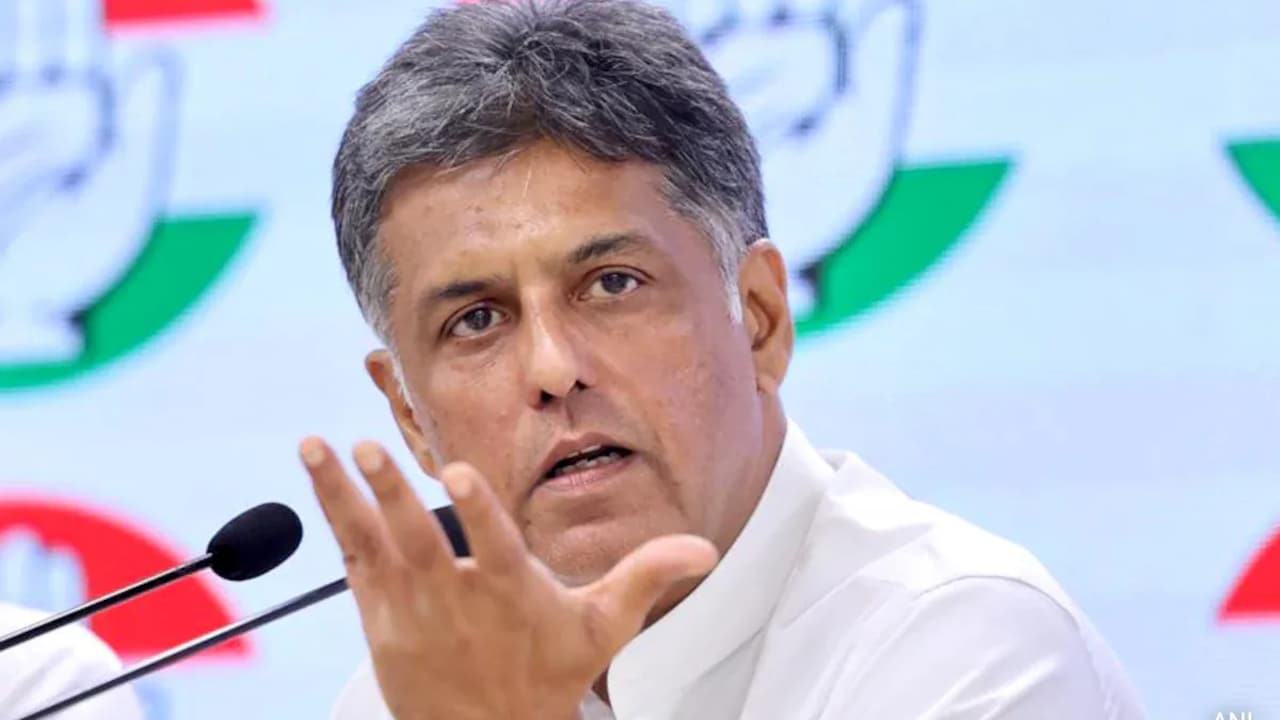
When Manish Tewari, a Member of the Indian Parliament, picked up his pen to write a joint letter to Indian Prime Minister Narendra Modi and Pakistani Prime Minister Shehbaz Sharif, he wasn't just engaging in a routine geopolitical exercise. He was attempting to pierce through decades of accumulated ice.
The Letter in the Bottle
Geopolitics is a game played by men in air-conditioned rooms, but its consequences are suffered by people who sweat for a living. For years, the official stance between New Delhi and Islamabad has been one of frozen hostility. Dialogue is dead. Trade is a memory. Cricket matches are political battlegrounds.
Tewari’s letter represents a desperate, necessary pivot. He didn't ask for a grand peace treaty. He didn't demand an immediate resolution to the complex territorial disputes that have triggered multiple wars. Instead, he asked for something far more fragile: humanity.
The core of his plea focuses on two specific groups of people who have become pawns in a game they never chose to play. The first are the fishermen, like our hypothetical Kabir, who regularly drift across unmarked maritime boundaries and find themselves locked away for years, long after their sentences have been served. The second are the elderly, the sick, and the divided families who simply want to see their loved ones before they die.
Consider what happens next when a state prioritizes posture over people. A bureaucratic inertia sets in. Consular access is delayed. Identity verification takes years. The prisons fill up with men whose only crime was following a school of fish.
The Price of the Closed Door
To understand how we got here, we have to look at the staggering economic and social ledger of this silence.
The World Bank once estimated that trade between India and Pakistan could easily top $37 billion if normal relations were established. Instead, it hovers near a fraction of that, forcing goods to be routed through third countries like Dubai or Oman. This artificial detour inflates the cost of basic commodities for ordinary citizens on both sides of the border. While politicians deliver fiery speeches, a mother in Lahore pays double for life-saving medicine manufactured in India, and a factory worker in Punjab loses his job because raw materials cannot cross a gate just twenty miles away.
This is a profound collective failure. We have normalized hostility to the point where advocating for basic human empathy is seen as a radical, almost subversive act.
The argument against opening doors is always anchored in security. It is a valid concern. The scars of state-sponsored terror run deep, and no nation can be asked to forget its martyrs. But true security is never achieved merely by building higher walls and cutting off lines of communication. Total silence does not deter an adversary; it only isolates the vulnerable.
The current policy of total disengagement has achieved exactly nothing. It has not stopped cross-border tensions, but it has successfully ensured that a grandfather in Amritsar cannot cross over to see his birthplace in Lahore one last time.
The Anatomy of an Unnatural Silence
We are talking about a region that holds nearly a quarter of the world’s population. It is a region plagued by climate vulnerability, water scarcity, and deep-seated poverty. Yet, the two largest nations within it behave like hostile neighbors who would rather let their own houses burn than share a bucket of water.
The mechanics of the current impasse are deliberately convoluted. When a fisherman is captured, he enters a legal black hole. Even after a court orders his release, his repatriation requires a diplomatic nod that can take months, sometimes years, to materialize. He becomes a bargaining chip, a line item to be traded when the political climate temporarily warms up, or retained when it cools down.
This is where the policy becomes cruel. It uses human suffering as a thermometer to test political waters.
Tewari’s initiative, backed by a rare consensus of civil society members and policymakers from various backgrounds, suggests a structured mechanism to handle humanitarian issues completely independent of political and military friction. The idea is simple: decouple human suffering from state diplomacy. Treat the prisoners, the divided families, and the religious pilgrims not as extensions of a hostile state, but as human beings who possess inherent rights.
It is an agonizingly slow process to change the minds of states. Nations are driven by momentum, and the momentum of the Indo-Pak relationship has been rolling downhill toward animosity for a generation. Breaking that momentum requires immense political courage. It requires leaders to look past the immediate applause of angry crowds and look toward the judgment of history.
The Sound of the Gate Closing
Go to the Wagah-Attari border crossing on any given afternoon. You will witness a bizarre, theatrical spectacle. Soldiers from both sides, dressed in elaborate uniforms with fan-shaped headdresses, stomp their boots, glare at one another, and slam iron gates shut with aggressive finality. Crowds on both sides cheer wildly, fueled by a manufactured nationalistic fervor.
It is a circus designed to celebrate division.
But when the crowds leave and the sun sets, the silence returns. It is a heavy, unnatural silence that hangs over the fields of Punjab and the waters of the Arabian Sea. In that quiet, the real cost of the closed gate becomes audible. It is the sound of a wife waiting by a window for a husband who went fishing three years ago. It is the sigh of an old man realizing he will never walk the streets of his childhood again.
We have tried the path of absolute silence, and it has broken the lives of thousands of ordinary citizens without making anyone safer. The letter sent to the prime ministers is not a sign of weakness. It is a reminder that even in the darkest chapters of geopolitical rivalry, the preservation of our shared humanity is the only victory that actually matters.
The orange line visible from space will continue to glow. The floodlights will remain turned on. But the true measure of these two nations will not be found in the strength of their borders. It will be found in their willingness to open a small, quiet door for the people trapped in the dark between them.