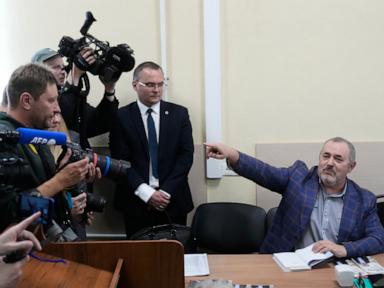
The video posted on Telegram was short. It featured a familiar face standing right in front of the Eiffel Tower in Paris. Boris Nadezhdin looked tired, but relieved.
"Good news: I'm alive and free," the 63-year-old Russian opposition politician told his followers. "Unfortunately, not in Russia for the time being."
Just like that, one of the last high-profile internal critics of Vladimir Putin who dared to remain inside the country vanished from Moscow's political grid. His exit marks another grim milestone for what is left of domestic political dissent in Russia. If you've been watching the tightening grip of the Kremlin, this departure shouldn't surprise you at all. It was inevitable.
The Anatomy of a Crackdown
How do you systematically erase a political opponent without putting them in a penal colony right away? You choke them with red tape, slap them with absurd legal charges, and make daily life untenable.
Nadezhdin learned this the hard way. Earlier this year, he announced his bid to run for the State Duma, the lower house of parliament. He wanted to campaign on an anti-war platform, demanding an end to the fighting in Ukraine alongside looser internet restrictions.
The Kremlin didn't just ignore him. They dismantled his campaign piece by piece:
- The Foreign Agent Label: The Ministry of Justice slapped him with the official "foreign agent" designation, designed to isolate political figures and ruin their public reputation.
- The Extremism Trap: A Russian court fined him roughly thirteen dollars over a 2023 online video clip that briefly displayed an image of the late opposition leader Alexei Navalny.
- The Ballot Ban: That minor fine for alleged extremist symbols was weaponized to legally disqualify him from the September parliamentary elections.
History doesn't repeat itself, but it rhymes loudly. Nadezhdin himself noted the grim parallels to other fallen opposition figures like Boris Nemtsov and Alexei Navalny when speaking to journalists weeks before his escape. He knew the stakes. He watched the walls close in.
Why the Kremlin is Panicking Over Token Opposition
You might wonder why Moscow bothered to crush a candidate who had zero mathematical chance of winning a rigged election anyway. Control isn't just about winning; it's about eliminating alternative narratives entirely.
Public fatigue with the war in Ukraine is creeping upward. Economic pain, combined with stubborn fuel shortages, creates an environment where even mild, token opposition feels dangerous to autocrats. When people are stressed about basic survival and soaring prices, a politician talking about peace and honest elections becomes a focal point for public discontent.
The authorities decided they couldn't risk it. Other opposition groups, like the liberal Yabloko Party, faced similar sabotage. Yabloko was allowed onto the ballot, but banned from running candidates in major urban strongholds like St. Petersburg where anti-war sentiment runs hottest.
Living to Fight Another Day
For months, leaving Russia wasn't even an option for Nadezhdin. He was trapped by an ongoing bankruptcy case and formal travel restrictions. Authorities even kept him under close surveillance after an interview on a popular YouTube channel where he admitted he wasn't young enough or healthy enough to seek martyrdom in a prison cell.
"If I were young and single, I'd go to prison without a second thought," he said during that interview. "But when you're not that young, not in great health and you've still got kids to raise, you can't help but think twice about it."
Now that he has slipped past the border guards and landed in France, Nadezhdin says he needs time to look around and figure out life going forward.
The space for internal dissent inside Russia is officially empty. Anyone who remains must choose between absolute silence or absolute risk.