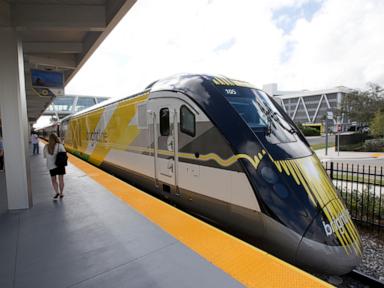
The headlines cheered. Another restructuring inked, another debt burden shaved, and the high-speed trains keep rolling down the Florida coast. Financial journalists popped metaphorical champagne, framing the court-supervised financial salvage operation as a gritty testament to private enterprise conquering America's notoriously hostile passenger rail environment.
They have it completely backwards.
Brightline surviving bankruptcy through a debt rework is not a triumph of market discipline. It is a monument to structural failure. When a capital-intensive infrastructure venture needs a judicial haircut before it can even mature, you are not looking at a resilient business model. You are looking at a high-stakes financial treadmill where investors keep paying to keep the lights on while the underlying economics remain fundamentally broken.
I have watched institutional sponsors pour billions into speculative rail ventures across congested corridors, expecting venture-capital growth curves from a steel-wheel asset class that obeys the laws of physics, civil engineering, and municipal bureaucracy. They treat a passenger train like a software-as-a-service startup, ignoring the brutal reality of maintenance capex, debt service, and rights-of-way acquisition costs.
Let us dismantle the comforting myths surrounding this recent financial acrobatics show, examine why private high-speed rail in the United States remains an oxymoron, and explain why keeping these trains running on restructured debt only delays an inevitable, harsher reckoning.
The Real Estate Subsidy Disguised as a Train Company
To understand why Brightline's debt required surgical intervention, you first have to understand what Brightline actually is. It is not a transportation company. It is a real estate development firm with a very expensive marketing prop.
The core financial thesis behind the Florida operation was never about selling tickets from Miami to West Palm Beach or Orlando. Ticket revenues alone could never service the crushing weight of the debt incurred to lay track, upgrade signaling, and buy rolling stock. The entire business model rests on vertical real estate development around the stations. You build luxury condominiums, office towers, and retail spaces adjacent to the terminals, capture the land value uplift, and use those windfalls to subsidize the steel tracks.
When that real estate flywheel slows down—when interest rates spike, construction costs soar, and commercial property demand softens—the math collapses. The trains themselves become loss-leaders for empty condos.
When financial analysts praise the company for keeping trains running post-bankruptcy, they ignore the fact that the restructuring merely transferred wealth from the previous layer of debt holders to the next. The fundamental cash-flow deficit from the core transit operation did not magically vanish because a bankruptcy judge approved a balance sheet haircut. The interest expense was reduced, but the physics of moving humans profitably across a suburban sprawl corridor remain unchanged.
The Myth of American High Speed
Let us address the linguistic sleight-of-hand that plagues this entire sector. Calling Brightline "high-speed rail" is an insult to anyone who has ever ridden the Shinkansen in Japan, the TGV in France, or the Fuxing Hao in China.
True high-speed rail operates on dedicated, grade-separated tracks designed for sustained velocities exceeding two hundred miles per hour, completely devoid of freight traffic interference and suburban grade crossings. Brightline maxes out around one hundred twenty-five miles per hour on its fastest stretches, sharing heavily congested rights-of-way with freight operators and navigating dozens of street-level crossings where motorists routinely test their luck against crossing gates.
This is not high-speed rail. It is upgraded diesel-powered intercity rail. There is nothing inherently wrong with that; regional passenger connectivity is desperately needed in the United States. But pricing and financing a regional rail project under the financial expectations of a high-speed technological revolution creates a fatal mismatch.
When you finance regional rail with high-yield debt and private equity return hurdles, you create a financial structure that demands exponential revenue growth in a linear, capacity-constrained physical environment. You cannot algorithmically scale a pair of steel rails. You cannot add virtual seats to a physical diesel locomotive. When ridership plateaus or operating costs climb due to inflation, weather disruptions, or mechanical maintenance, the debt service becomes an anchor around the company's neck.
What Bankruptcy Court Actually Does
There is a dangerous misconception that bankruptcy court is a morgue where dead companies go to be buried. In modern corporate restructuring, bankruptcy is often just an operating table where healthy organs are harvested, dead weight is amputated, and the patient is sewn back together with stronger thread for another lap around the track.
When Brightline reworked its debt in court, the equity holders and senior creditors engaged in a high-stakes game of financial poker. The creditors realized that liquidating trains and tracks for scrap value would yield pennies on the dollar. So, they chose the only rational alternative: swap debt for equity, extend maturities, write down principal, and pretend the horizon looks rosier.
This keeps the trains running, yes. But it alters zero fundamental operational realities.
Imagine a homeowner who takes out a predatory mortgage on a house that costs more to heat and maintain than their entire annual salary. When they default, the bank agrees to lower the monthly payment and stretch the loan out over forty years. Does that make the house a sound financial investment? No. It just delays the foreclosure.
The bankruptcy restructuring bought time. It did not buy profitability. By lowering the debt burden, the company avoids immediate liquidation, but it leaves the underlying cash-flow deficit intact. Every passenger ticket sold still fails to cover the fully allocated cost of capital, maintenance, and operation. The deficit is simply deferred, capitalized, or absorbed by patient capital willing to play a multi-decade patience game.
The Fallacy of Private Infrastructure Delivery
For decades, politicians and policy wonks have chanted a single mantra: private enterprise can build infrastructure better, faster, and cheaper than the government.
Brightline was held up as the poster child for this ideology. Look at how fast they laid track! Look at the sleek stations! Look at the private capital at work, sparing taxpayers the burden of public debt!
Except that narrative crumbles under the weight of actual balance sheet forensics. Private infrastructure delivery in the United States does not escape the laws of capital costs; it simply pays vastly higher interest rates than sovereign or municipal debt. While federal or state governments can borrow at rock-bottom municipal bond yields backed by the full faith and credit of taxpayers, private operators must tap high-yield debt markets, private equity funds, and expensive project financing.
When interest rates were near zero, this differential was manageable. Cheap money masked a multitude of operational sins. Investors chased yield anywhere they could find it, and private rail seemed like an exciting greenfield play.
Now that the era of free money is dead, the structural disadvantage of private rail financing has been brutally exposed. When your cost of capital is eight or ten percent instead of three or four percent, your revenue margins have to be miraculous just to break even. When they are merely mediocre—as passenger rail economics almost always are—you end up in bankruptcy court restructuring your debt.
The irony is thick. The champions of free-market infrastructure often rely on government-backed private activity bonds, tax-exempt municipal financing structures, and public right-of-way access agreements to make their projects pencil out. They socialize the risk, privatize the narrative, and then run to bankruptcy court when the private capital structure implodes under its own weight.
The Regulatory and Cultural Trap
Why do passenger rail projects struggle so intensely in the United States compared to Europe or East Asia? It is not merely a matter of engineering capability or population density. It is an unholy trinity of car-centric urban planning, hostile local municipal zoning, and exorbitant land acquisition costs.
In countries with successful rail networks, the government owns the right-of-way, plans the urban density around transit nodes decades in advance, and treats public transportation as an essential public utility rather than a profit-maximizing enterprise.
In America, a private company attempting to string high-speed rail across multiple counties has to negotiate parcel by parcel with hostile landowners, litigate environmental reviews for years, and fight local municipalities over grade crossings and noise complaints. Every delay adds millions in capitalized interest. Every legal challenge inflates the pre-operating debt load.
By the time the first revenue-generating train departs the station, the capital structure is already bloated with defensive debt incurred simply to survive the American regulatory gauntlet.
When a company reorganizes its balance sheet in bankruptcy, it cleanses the prior sins of land acquisition overruns and construction delays, but it does not inoculate the enterprise against future regulatory friction or ongoing maintenance shocks. A bridge washout, a signaling system failure, or a spike in fuel and insurance costs hits a restructured balance sheet just as hard as it hit the old one.
What Real Reform Looks Like
If we want functional, resilient high-speed and intercity passenger rail in the United States, we need to stop pretending that private equity wizards can outsmart the basic economic realities of transportation infrastructure.
Stop cheering for financial engineering. Bankruptcy court restructurings are not badges of honor; they are flashing red lights indicating that the initial financial architecture was fundamentally flawed.
If private enterprise wishes to build and operate passenger rail, it must do so with equity-heavy capitalization tables that do not buckle the moment revenue falls short of aggressive projections. Alternatively, policymakers must acknowledge that mass transit is a foundational public good—like interstate highways, air traffic control systems, and municipal water grids—that requires stable public investment and stewardship, not speculative debt-fueled gambles hoping for real estate appreciation bailouts.
The fact that Brightline's trains are still running is good news for commuters who depend on the service to get to work or visit family. But do not confuse the survival of the physical asset with the health of the business model.
The debt has been reworked. The lawyers have collected their fees. The investors have taken their haircuts. But the fundamental physics of the American rail market remain entirely unchanged, waiting quietly for the next economic downturn to test whether financial surgery was enough to save a patient built on shaky ground.