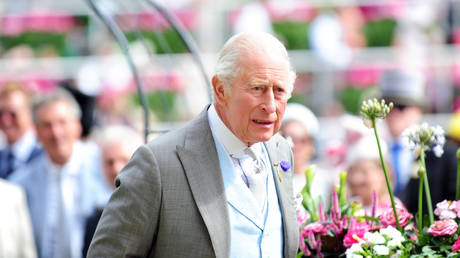
The golden age of unquestioning royalism is dead. If you look at the latest polling data drifting out of the UK, the institution of the British monarchy isn't just seeing a slight dip in popularity. It's facing a slow-motion existential collapse. For decades, the royal family relied on a steady baseline of public deference to stay secure. That deference has dried up.
Fresh numbers from an Ipsos poll show that support for keeping the monarchy has plunged to 55%, the lowest level the firm has ever recorded since it started tracking this metric 33 years ago. Think back to the long-term historical average of 71% support. That cushion is gone. Another recent survey by Savanta placed backing for the crown even lower, at just 45%. When less than half the country actively wants a king, you aren't looking at a minor PR hiccup. You're looking at a structural shift in how the nation views its own identity.
This isn't a random blip caused by a bad week in the tabloids. The decline matches long-term tracking from the National Centre for Social Research, whose British Social Attitudes survey has charted a downward slide from 86% support in 1983 down to a bare majority today. The trend line is clear, consistent, and pointing straight down.
The Generational Chasm Facing the House of Windsor
The real crisis for King Charles isn't the headline percentage. It's the terrifying demographic breakdown behind those numbers. The royal family has completely lost the younger generation, and there's no sign they're ever getting them back.
Among 18-to-34-year-olds, only 33% want to keep the monarchy. Let that sink in. Flip the script, and 45% of that same group would actively prefer an elected head of state. The rest are sitting on the fence, completely indifferent. Compare that to the older demographic, where 74% of citizens aged 55 and over remain staunchly monarchist. The palace is essentially running on a finite supply of aging supporters. As time does what time does, the math becomes brutal for the institution.
Monarchists used to comfort themselves with the theory that people naturally grow more royalist as they get older. The old idea was that you become a republican in university, get a mortgage, settle down, and suddenly start appreciating the stabilizing presence of a king. That theory is broken. Data shows that each successive generation is entering adulthood with a radically lower baseline of support than the one before it.
Younger people today don't look at the monarchy through a lens of fairy-tale romance or historical duty. They look at it through the lens of fairness, economics, and democratic accountability. In an era marked by a brutal cost-of-living crisis, skyrocketing housing prices, and broken public services, an unelected family living in taxpayer-funded palaces feels less like a proud national tradition and more like an absurd feudal relic.
The Andrew Effect and Public Disillusionment
Scandals aren't new to the House of Windsor, but the modern variety hits differently. The endless fallout surrounding Prince Andrew has done catastrophic damage to the family's moral authority. A YouGov poll revealed that over 90% of Britons view Andrew negatively. He is, by a massive margin, the most disliked member of the royal family.
The public anger doesn't stop with Andrew himself. It bleeds into how people view the entire operation. When campaign groups press for clarity on what King Charles or Prince William knew about Andrew's past behavior and when they knew it, the palace responds with stone-cold silence. That silence looks less like dignified royal reserve and more like a corporate cover-up.
When Queen Elizabeth II was alive, her personal popularity acted as an iron shield for the rest of her family. She was the nation's grandmother, a symbol of wartime duty, and an untouchable cultural icon. Charles simply doesn't command that level of affection. He inherited the throne, but he didn't inherit his mother's armor. Without her presence to smooth over the cracks, the public is judging the rest of the family on their own merits. The verdict isn't pretty.
Regional Fractures and Political Divides
The union itself is showing deep fractures when you look at how different parts of the UK view the crown. The National Centre for Social Research found that a staggering 59% of people in Scotland and 64% of people in Wales actually favor moving to an elected head of state. Support for the monarchy is heavily concentrated in England, particularly among older, right-leaning voters.
Look at the political split. Among Conservative party voters, 82% back the monarchy. For Reform UK supporters, that number sits at 77%. But look across the aisle at Labour voters, and the country is split right down the middle: 49% want to keep the king, while 48% want him gone. The institution is no longer a unifying force that transcends politics. It has become a partisan flashpoint.
This geographic and political polarization turns the monarchy into a liability for the survival of the United Kingdom itself. If the crown is seen as a purely English, right-wing obsession, it gives republican movements in Scotland and Wales an incredibly potent weapon.
The Myth of Royal Wealth and the Economic Reality
For years, the standard defense of the monarchy has been economic. Defenders love to claim that the royals bring in more money through tourism and the Crown Estate than they take from the taxpayer. It's a neat argument, but it's falling apart under modern scrutiny.
The public is starting to question the lack of transparency around royal wealth. Because the family is shielded from freedom of information laws, no one actually knows the full scale of their private fortunes or how much public money goes into keeping their sprawling estates secure. When the average citizen is choosing between heating their home or buying groceries, seeing millions spent on royal pageantry, state visits, and palace renovations feels deeply offensive.
People are also realizing that tourists don't visit London to see the King; they visit to see the buildings. Versailles still draws millions of paying visitors every year, and France got rid of its monarchy centuries ago. The idea that the tourism industry would collapse without a living monarch sitting in Buckingham Palace is a myth that younger, more cynical taxpayers simply don't buy anymore.
Survival by Inertia Rather Than Enthusiasm
Despite the historic drop in support, the monarchy does have one saving grace keeping it alive for now: institutional inertia.
Even though the National Centre for Social Research notes that only around half the country thinks the monarchy is important, a majority still hesitates when asked to pull the trigger on a republic. When forced to choose between the current system or an elected head of state, about 58% still lean toward keeping things as they are. Why? Because the alternative is terrifyingly vague.
British people look at the political chaos in nations with elected presidents and think twice. They worry about getting a politician they hate as a head of state. They worry about the endless cost of presidential elections. The monarchy survives not because the public loves Charles, but because they don't trust the political class to build something better.
The Palace Playbook Must Adapt to Survive
The House of Windsor cannot afford to sit back and hope this trend reverses itself. It won't. The current strategy of quiet survival isn't working against the tide of demographic change.
If Prince William wants to inherit a stable institution, the palace needs a radical shift in strategy. First, the family must embrace total financial transparency. Open the books, pay standard taxes on all private income, and voluntarily submit to the same public scrutiny that every other state-funded body faces.
Second, the "slimmed-down" monarchy needs to become a reality, not just a talking point. The public will no longer tolerate funding minor royals who offer nothing to national life. The operation needs to be small, professional, and strictly focused on charitable work rather than aristocratic privilege.
Finally, the royals must address their past and present scandals head-on. The era of covering up family secrets behind palace walls is over. If they don't answer the tough questions about accountability and privilege now, the British public will eventually answer those questions for them at the ballot box. The clock is ticking, and the numbers don't lie.


