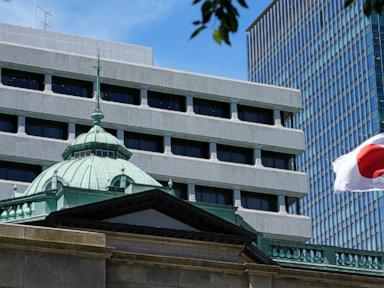
The morning air in Tokyo smells of roasted green tea and wet asphalt. For thirty-one years, a generation has grown up under the quiet, heavy blanket of an economic winter. In this winter, money stayed remarkably, almost unnaturally, cheap. You could borrow, build, and buy without ever fearing the ghost of climbing interest rates. That ghost was locked in a vault, buried beneath decades of stagnation, deflation, and cautious whispers from the central bank.
Until today.
The Bank of Japan just blinked. Or perhaps, finally woke up.
Governor Kazuo Ueda raised the benchmark interest rate to 1.25 percent. To an American or a European, that number sounds like a rounding error. A gentle breeze. But in Japan, this is seismic. It is the highest rate the country has seen since 1995. Back then, flip phones were a sciency novelty, the internet was a screeching dial-up tone, and many of the workers clocking into Tokyo offices today hadn't even been born.
Consider Kenji, a hypothetical forty-five-year-old mid-level manager at an electronics components manufacturer in Yokohama. Kenji represents millions. He bought his modest suburban home a decade ago with a variable-rate mortgage that hovered near zero. His monthly payments were as predictable as the sunrise. He budgeted his children’s cram school tuition, his aging mother’s medical care, and the occasional weekend bowl of ramen down to the last yen.
Kenji did not study central banking. He did not read monetary policy statements. He simply trusted the weather of his financial life to remain temperate.
Now, the barometer is dropping.
That 1.25 percent rate hike is not just an abstract number flashing on a Bloomberg terminal in New York or London. It is a quiet squeeze on kitchen table budgets across the archipelago. It is the cost of servicing a mortgage creeping upward, month by deliberate month. It is the end of an era where money was free, and the rude awakening of a world where capital actually demands rent.
Why did this happen? The official communiqué speaks of persistent inflation. It mentions rising import costs, a battered yen that has made everything from crude oil to wheat punishingly expensive to bring across the sea, and wages finally showing a pulse after decades of flatlining.
The numbers are stark. Japan’s core inflation has stayed above the central bank’s two percent target for months on end—a phenomenon that feels utterly alien to an economy that spent thirty years fighting the gravity of falling prices. For a long time, the Bank of Japan acted as the ultimate financial paramedic, pumping endless liquidity into the system, keeping borrowing costs pinned to the floor to jumpstart a lifeless heart.
But a paramedic cannot run the defibrillator forever without burning out the machine.
Prices at the neighborhood supermarket tell the real story. The square watermelons, the imported beef, the plastic packaging on convenience store bento boxes—everything costs more. The weakening yen acted as a tax on an island nation that imports nearly all of its energy and a significant portion of its food. When the currency loses its spine against the US dollar, ordinary life grows heavier.
So the central bank pivoted. Not out of malice, but out of necessity. They had to defend their currency. They had to normalize a broken monetary compass.
Markets reacted with a familiar, jittery spasm. Stocks flickered. Bond yields shifted. Currency traders recalibrated algorithms built on decades of cheap Japanese yen funding global risk assets. For years, global investors used the yen as a cheap funding currency—borrowing cheaply in Japan to buy higher-yielding assets elsewhere. That trade, known to finance geeks as the carry trade, is now getting a cold shower.
Yet the true drama is not happening on trading floors. It is happening in the quiet psychology of a nation accustomed to shrinking.
For three decades, Japanese consumers saved because spending today meant buying something that would likely cost less tomorrow. Deflation was a slow poison, but it was a familiar one. Inflation breaks that mental model. It forces urgency. It demands higher wages to keep pace with the cost of living. And crucially, it demands that savings accounts—which sat earning virtually zero percent interest while gathering dust—must either work harder or lose their purchasing power.
Think about the elderly couple living in a quiet neighborhood in Kyoto, subsisting on a fixed pension. For them, zero interest rates were a quiet theft, rendering their lifetime savings increasingly barren. Higher rates offer a glimmer of hope for savers, a microscopic reward for thrift. But they also signal a world changing faster than fixed incomes can adapt.
This is the great economic paradox of our time. Every policy tool is a blunt instrument. When you pull a lever to crush inflation, you squeeze the borrower. When you leave the lever alone, you crush the saver. There is no immaculate stabilization. There is only trade-offs, measured in human anxiety and adjusted balance sheets.
The Bank of Japan has stepped off a ledge it avoided for a generation. The 1.25 percent peak is modest by global standards, but its psychological weight is monumental. It signals that the era of permanent monetary emergency in the world's fourth-largest economy is drawing to a close.
As the sun sets over Tokyo tower, casting long shadows across concrete avenues choked with evening commuters, the neon signs hum with the same relentless energy. Kenji boards his train home, clutching the leather strap above his head, staring blankly at the digital ads scrolling past. He does not know what the next quarter’s monetary policy review will bring. He only knows that the arithmetic of his life just changed, and the abacus will never click the same way again.