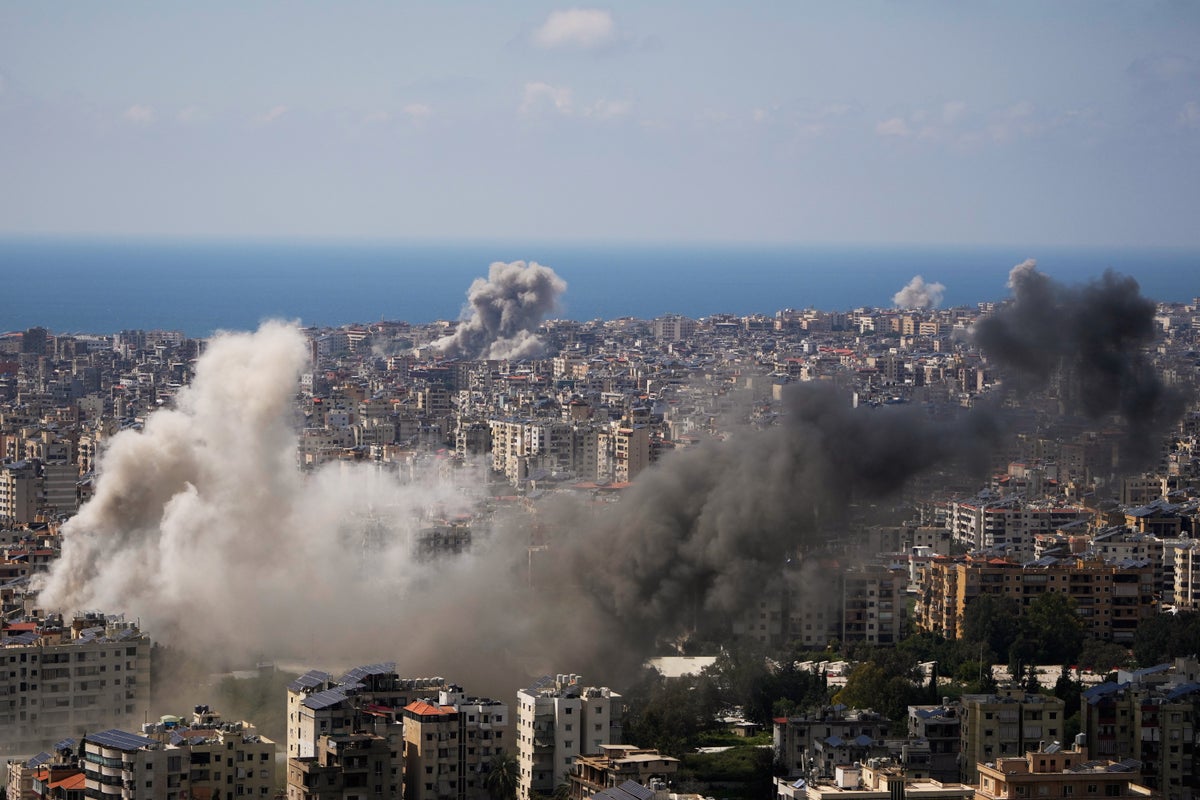
The financial lifeline holding Lebanon together is fraying under the weight of a sustained aerial campaign that has moved far beyond military targets. For the millions of Lebanese living in Dearborn, Paris, London, and Sydney, the current conflict is not just a sequence of tragic headlines but a systemic dismantling of their ability to protect their kin. While the immediate focus remains on the mounting casualty counts and the destruction of infrastructure in Beirut and the south, a more insidious crisis is taking hold. The diaspora, long the primary economic engine of the country, is finding its resources exhausted and its reach cut off by a combination of closed banking channels and the physical displacement of their families.
The strategy behind the current bombardment appears to be aimed at total social dislocation. It is an attempt to break the will of a population by making the cost of survival unbearable. For the expat, the horror is two-fold: the fear of losing a parent or sibling to a missile strike, and the crushing realization that the money they send home—the only thing keeping those families fed—can no longer find a way through the ruins.
The Bank of the Expat is Running Dry
Lebanon has operated as a "remittance economy" for decades. Even before the current escalation, the country’s formal banking sector had effectively collapsed in 2019, leaving citizens reliant on cash transfers from relatives abroad to survive hyperinflation. Now, that fragile system is being bombed into obsolescence.
When a neighborhood in Dahieh or a village in the Bekaa Valley is leveled, the local exchange offices and informal "hawala" networks go with it. Expats are no longer just sending money for groceries; they are now funding emergency evacuations, temporary rentals in overcrowded mountain towns, and black-market fuel for generators. The math is becoming impossible. A software engineer in Dubai or a doctor in Montreal can only stretch their salary so far when a one-bedroom apartment in a "safe" zone of Lebanon now commands six months of rent upfront in cash.
This isn't a humanitarian crisis in the traditional sense where aid agencies lead the charge. This is a private, family-funded rescue operation being conducted by millions of individuals. They are the ones buying the blankets. They are the ones paying the surgical bills. And they are doing it while watching their childhood homes disappear on a 24-hour news cycle.
Displacement as a Weapon of Attrition
The movement of over a million people within Lebanon’s borders is not an accidental byproduct of war. It is a logistical nightmare designed to strain the social fabric. When people flee the south, they don't just leave their homes; they leave their livelihoods. The agricultural heartland is burning, and the small businesses that once anchored these communities are gone.
From an analyst’s perspective, this creates a permanent state of dependency. The diaspora is being forced to subsidize a massive, displaced population with no clear end date. In previous conflicts, there was a sense of a "return" once the guns fell silent. This time, the level of destruction suggests that for many, there is nothing to return to. The infrastructure—the power grids, the water pumping stations, the schools—is being systematically degraded.
The Myth of the Safe Zone
The term "safe zone" is a cruel misnomer in the current Lebanese context. As the bombardment expands, the geographical area considered secure shrinks daily. This puts the diaspora in an agonizing position. Do they fund a family’s move to Beirut, knowing the city’s infrastructure is buckling under the weight of the displaced? Or do they tell their relatives to stay put and pray the next strike misses their street?
There is a psychological toll here that rarely makes the evening news. The "survivor’s guilt" felt by those abroad is being weaponized by the sheer scale of the need. Every WhatsApp message from home is a potential request for help that the sender may no longer be able to fulfill. The financial exhaustion of the diaspora will eventually lead to a total social collapse within Lebanon that no amount of international aid can fix.
The Complicity of Global Financial Systems
While the bombs are manufactured elsewhere, the financial isolation of the Lebanese people is a global phenomenon. Western banks, terrified of "de-risking" and anti-money laundering regulations, have made it increasingly difficult to move even small amounts of money into Lebanon.
An expat trying to send $500 to a starving aunt is often met with a wall of bureaucracy. They are treated with suspicion, their transactions flagged or blocked, while the very people they are trying to help are caught in the crossfire. The irony is staggering. The international community laments the humanitarian situation while maintaining a financial blockade that prevents the most efficient form of aid—direct cash transfers—from reaching those who need it most.
If we want to understand why the situation in Lebanon feels so hopeless, we have to look at this intersection of military force and financial strangulation. It is a pincer movement. On one side, the physical destruction of the land; on the other, the severance of the umbilical cord that connects the country to its most successful and loyal citizens abroad.
The Architecture of Eradication
We must be honest about what is happening on the ground. This is not a surgical operation. When you drop 2,000-pound bombs on densely populated residential blocks, you are not just hunting for militants. You are erasing the record of a people. You are destroying the archives, the local shops, and the generational homes that give a community its identity.
For the Lebanese expat, this is the ultimate "un-homing." They are watching the coordinates of their memories being deleted from the map. The physical loss is permanent. You can rebuild a bridge, but you cannot rebuild the specific social ecosystem that existed in a village that has been turned to dust.
The strategy of "total pressure" relies on the idea that the population will eventually turn on the political forces in their country. History, however, suggests the opposite. Displacement and trauma tend to radicalize or hollow out a society, leaving behind a husk that is easily manipulated by whoever provides the next meal. By targeting the diaspora’s ability to support their families, the current campaign is ensuring that the eventual "reconstruction" of Lebanon will be a decades-long process that many may simply choose not to participate in.
The Logistics of Despair
Consider the actual process of an expat trying to help. It starts with a frantic call. A home has been damaged. The family needs to move. The expat logs onto a transfer app, only to find the local pickup point in Lebanon has been closed because the building next door was hit. They try another service, but the fees have doubled due to the "risk." They finally get the money through, but the family can’t find a taxi because there’s no fuel.
This is the granularity of the crisis. It is a thousand small failures of logic and logistics that add up to a catastrophe. The diaspora is screaming into a void, trying to solve 21st-century problems with a toolkit that is being dismantled in real-time.
The Long-Term Economic Void
Even if a ceasefire were signed tomorrow, the economic damage is likely terminal for Lebanon’s middle class. The "mercy" mentioned by those on the ground isn't just about the absence of bombs; it’s about the presence of a future. When the expat stops believing that their money can make a difference, the final light goes out.
Many in the diaspora are now shifting their focus from "supporting" their families in Lebanon to "extracting" them. The goal is no longer to help them stay; it is to get them out. This brain drain will be the final blow to the Lebanese state. The teachers, engineers, and healthcare workers who remained are now looking for any exit strategy funded by their relatives abroad.
The result will be a country of the very old and the very poor, living in a landscape of ruins, entirely dependent on a diaspora that is itself becoming exhausted and disillusioned. The bridge is not just broken; the pillars are being pulled down.
The international community’s silence on this specific mechanism of destruction—the targeting of the civilian lifeline—is a choice. It is a choice to allow the total immiseration of a people under the guise of security. As long as the financial and physical avenues for support are blocked, the Lebanese diaspora is being forced to watch the slow-motion execution of their homeland, one wire transfer at a time.