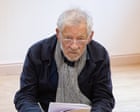
The coffee cup is heavy. Or maybe it just feels heavy when every eye in the room is calculating your capability before you even reach for the handle.
RJ Mitte knows that weight. Most people know him from the amber-tinted desert asphalt of Albuquerque, playing Walter White Jr. on a television screen that broadcasted his cerebral palsy to millions. But long before the cameras rolled, before the Emmys and the red carpets, there was just a kid navigating a world built for two-legged speed and standard-issue grips. A world where a doorway is not merely a passage between rooms, but a silent, unyielding judgment about whether you belong there at all.
We talk about inclusion as if it were a polite invitation handed out at the door. We treat it like a charity checkbox or a corporate compliance metric, something to be measured in ramps built and policies updated. But true opportunity is entirely different. It is messy. It is inconvenient. And above all, it is rare.
Disabled or not, everyone deserves an opportunity.
The phrase sounds flat when printed on a corporate banner. It sounds like the kind of platitude that gets applauded in a hotel ballroom and forgotten by Monday morning. Yet, when Mitte speaks those words, they carry the scars of a thousand micro-rejections. They carry the frustration of a society that looks at a physical difference and instantly subtracts competence.
Consider what happens next in an audition room.
A casting director sees the crutches or hears the speech pattern. The mind of the observer—trained by decades of Hollywood homogenization—begins to race. Will this actor hit their mark? Will they slow down the shooting schedule? Can the audience handle the reality of a human body that does not conform to a billboard?
Before a single line of dialogue is spoken, an invisible wall goes up. It is not always malicious. Often, it is born of ignorance, wrapped in the soft wool of low expectations. People assume protection is kindness. They assume limitation is a permanent state of being rather than a temporary environmental failure.
Mitte’s career was never handed to him on a silver platter, despite the massive success of the show that made him a household name. In many ways, the entertainment industry is the most unforgiving mirror of our cultural biases. For over a century, disability on screen was a trope. It was a tragedy to be cured, a villainous disfigurement, or an inspiring punchline. Actors with actual disabilities were locked out of their own stories, replaced by able-bodied performers wearing prosthetics or mimicking tremors for awards bait.
When Mitte landed his breakout role, he did not just play a teenager with cerebral palsy. He played a teenager with agency, anger, hunger, and complex moral flaws. He played a person.
That shift matters. Representation is not about being seen; it is about being understood as fully human.
Think about the architecture of our daily lives. We design transit systems that break down, hiring practices that screen out non-traditional resumes, and social structures that demand uniformity. Then we act surprised when a massive segment of the population remains on the sidelines. We call it an achievement gap. We call it a labor shortage. We call it an unfortunate statistical reality.
We rarely call it what it is: a systemic failure of imagination.
When we deny someone a real shot at a career, a creative endeavor, or a leadership role because of a preconceived notion of what strength looks like, we rob ourselves. We miss out on resilience forged in fire. We miss out on perspectives that have had to question every single physical and social barrier from the moment of birth.
Think about how a person with a disability moves through a city. Every curb cut is a negotiation. Every broken elevator in a subway station is an abrupt halt to a day's ambitions. This constant friction demands an extraordinary expenditure of cognitive and physical energy just to reach the starting line. By the time an individual with a disability sits down for a job interview or steps onto a soundstage, they have already run an obstacle course that most people cannot fathom.
And yet, the narrative persists that they need our help.
They do not need our pity. They need our absence from their way. They need the structural barriers dismantled so they can compete on equal terms.
Mitte’s advocacy goes far beyond the glittering lights of Hollywood. He has spent years working with organizations that fight for inclusive employment, adaptive sports, and true systemic access. He understands that a single famous actor changing the paradigm does not fix the underlying machine. As long as millions of capable human beings are sidelined by lazy assumptions, the entire culture remains impoverished.
There is a quiet revolution happening in boardrooms, classrooms, and creative studios around the world. It is driven by individuals who refuse to accept the low ceiling built for them by others. They are building their own tables. They are writing their own scripts.
They are proving that capability is not measured by the symmetry of a stride or the clarity of a vocal cadence. It is measured by grit. It is measured by the refusal to stay quiet in a room designed to keep you out.
The coffee cup is still heavy. But the hand holding it is stronger now. And the door, slowly, is beginning to swing off its hinges.