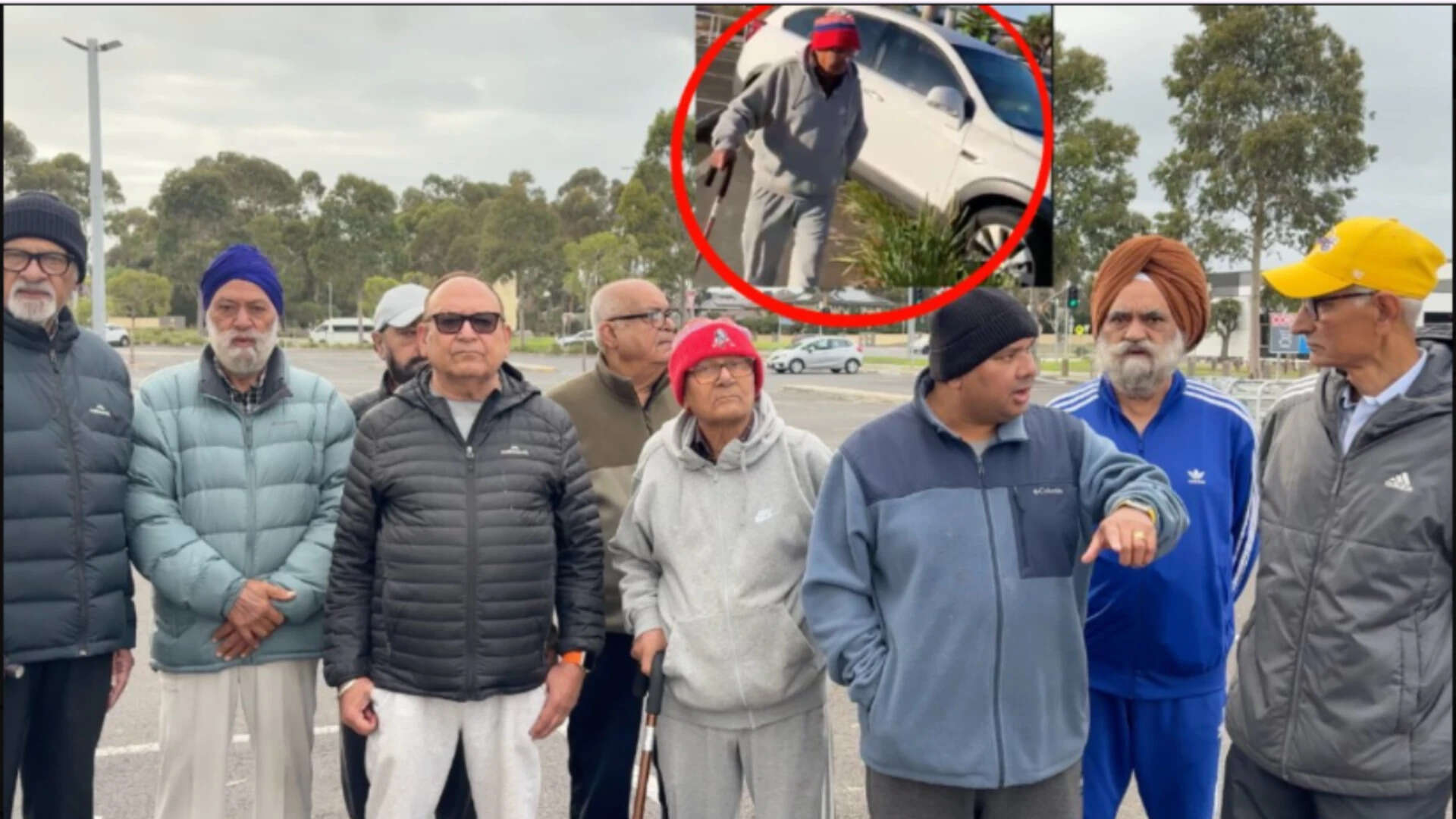
A quiet suburban street in Melbourne recently became the staging ground for a violent intersection of road rage and systemic bigotry. When a woman steered her vehicle directly at an Indian-Australian man, screaming for him to "go back where you came from," it was not merely an isolated traffic dispute. It was a physical manifestation of a hardening fringe in Australian society. This attack highlights a jagged reality for the diaspora: the veneer of multicultural harmony is often thin, and for some, it is non-existent.
The incident occurred with startling speed. The victim, a member of the local Indian-Australian community, was targeted while going about his daily life. Witnesses describe a scene where a vehicle was used not as transportation, but as a weapon of intimidation. The verbal abuse that accompanied the assault provided the motive, grounding the violence in a specific, exclusionary ideology.
The Weaponization of the Commute
In the legal world, we often distinguish between a "crime of passion" and a premeditated act. But there is a third, more insidious category growing in the urban sprawl: the opportunistic hate crime. This occurs when a mundane interaction—a merge, a red light, a parking spot—serves as the catalyst for a dormant prejudice to explode.
When a car becomes a tool for an ethnic-based attack, the power dynamics of the street shift. The victim is not just facing an angry driver; they are facing a multi-ton projectile fueled by a sense of racial entitlement. In this Melbourne case, the perpetrator didn't just want to win a road dispute. She wanted to erase the victim’s right to occupy public space.
The "go back" rhetoric is a tired, century-old refrain. Yet, its persistence in 2024 suggests that the integration narrative we tell ourselves is missing a few chapters. We see a recurring pattern where the aggressor views themselves as a self-appointed border guard, patrolling their neighborhood for anyone who doesn't fit a specific, outdated image of an Australian.
Suburban Radicalization and the Echo Chamber
Why does this happen in a city that prides itself on being a global melting pot? The answer lies in the breakdown of social cohesion at the fringes. While the city center celebrates Diwali and Lunar New Year, certain outer suburbs are becoming pressure cookers of economic anxiety and digital misinformation.
Investigating the "why" requires looking at where these aggressors spend their time online. There is a direct pipeline from fringe social media groups to the steering wheel. When people are constantly told that their "way of life" is under threat by immigration, a simple traffic delay becomes a spark. The Indian-Australian man in Melbourne wasn't an individual to his attacker; he was a symbol of a perceived grievance.
The Failure of the Deterrent
Australia has strict laws regarding hate speech and aggravated assault. However, the prosecution of these crimes often hits a wall of "evidentiary nuance." If a perpetrator claims they were simply stressed and the racial slurs were an "accidental" byproduct of anger, the hate-crime enhancement sometimes gets dropped in favor of a standard assault charge.
This legal softening is a mistake. It signals to the community that while the violence is bad, the motivation is excusable. To stop the trend of vehicular intimidation, the judicial system must treat the racial element as the core of the crime, not an optional footnote.
The Myth of the Isolated Incident
Every time a video of a racist tirade goes viral, the public response follows a predictable script. There is a flurry of outrage, a statement from a local MP about "not who we are," and then a return to the status quo. This cycle ignores the cumulative trauma inflicted on migrant communities.
For every attack that makes the news, dozens more go unreported. These are the micro-aggressions, the hissed comments at the supermarket, and the drivers who cut off "foreign-looking" motorists just to see them flinch. The Indian-Australian man who was targeted in Melbourne is now part of a growing database of people who no longer feel safe in their own postcodes.
The psychological impact of being told to "go back" while staring down the hood of a car is profound. It creates a state of hyper-vigilance. You start checking your mirrors not for safety, but for hostility. You wonder if the car behind you is just a neighbor or a threat.
Realities of the Diaspora Experience
The Indian-Australian community is one of the most successful and highly educated cohorts in the country. They are doctors, engineers, business owners, and essential workers. Yet, as this attack proves, professional success is no shield against a bumper bar and a bigot.
There is a dissonance here. On one hand, the government actively recruits skilled migrants to fill labor gaps and bolster the economy. On the other, it often fails to provide the social infrastructure to protect these same people from the backlash that its immigration policies occasionally trigger in the disenfranchised.
- Economic Contribution: Indian-Australians contribute billions to the GDP.
- Social Fabric: They represent one of the fastest-growing demographics in Victoria.
- The Risk: Without intervention, high-profile attacks will lead to a "brain drain" where talent seeks safer harbors elsewhere.
The Melbourne attack is a warning shot. It reveals a crack in the Australian "fair go" that cannot be papered over with multicultural festivals.
Moving Beyond the Viral Video
We have reached a point where filming an attack is the only way to get a police response. The victim in this case was fortunate (if you can call it that) that there was enough evidence to bring the story to light. But a society that relies on citizens being amateur cinematographers to ensure justice is a society in trouble.
We need a shift in how local councils and police forces engage with "low-level" racial harassment. Often, a victim will report verbal abuse only to be told that "no crime has been committed yet." This wait-and-see approach allows the aggressor to escalate, emboldened by the lack of consequences. The woman in the Melbourne attack likely didn't wake up one day and decide to use her car as a weapon. There was almost certainly a history of unchecked smaller incidents that led to this moment.
The Role of the Bystander
In many of these recorded attacks, there are people standing by, paralyzed or indifferent. The "bystander effect" is intensified when race is involved. Some fear becoming targets themselves; others aren't sure if what they are seeing "counts" as a hate crime.
True social change happens when the aggressor feels the weight of the entire street against them, not just the victim. If the woman in the car knew that every person on that block would testify against her, she might have kept her foot on the brake.
A Policy of Zero Tolerance
If Australia wants to remain a top destination for global talent, it must address the "street-level" safety of its migrant populations. This isn't about being "woke" or "politically correct." It is about the basic right to move through the world without being hunted by a neighbor in a hatchback.
The Melbourne incident should serve as a catalyst for a national registry of hate-motivated driving offenses. If you use a vehicle to threaten someone based on their ethnicity, you should lose the privilege of driving that vehicle. Permanently. A car is a lethal instrument. Using it to enforce a racist worldview is an act of domestic terror, regardless of whether the victim survives or not.
The victim in Melbourne did nothing to provoke the attack other than existing in a space someone else felt they owned. That sense of ownership is the root of the problem. Until we dismantle the idea that some Australians are "more Australian" than others, the roads will remain a battleground.
Local law enforcement must stop treating these cases as "misunderstandings" or "road rage." They are targeted assaults. They are messages sent to an entire community. When the message sent is "you don't belong," the response from the state must be a thunderous "yes, they do—and you don't belong on our roads."
The investigation into the Melbourne woman continues, but the damage to the community's sense of security is already done. It takes seconds to drive a car into a person, but it takes years to rebuild the trust that a society is actually looking out for everyone.
Demand better from your local representatives. Demand that hate-crime legislation be applied with the full force of the law. Anything less is an invitation for the next driver to turn their frustrations into a felony. The streets belong to everyone, or they belong to no one. Stop the car. Address the hate. Don't look away.