The death toll from the current Ebola outbreak in the Democratic Republic of the Congo has surpassed 2,325, officially marking it as the most lethal instance of the disease in the nation’s history. Behind this grim milestone lies a frantic and failing race against a virus that is doubling its reach every three weeks. While international bodies announce fresh injections of capital, the reality on the ground in the eastern provinces is far grittier. This is not merely a medical challenge. It is a total systems failure where the virus exploits a vacuum of infrastructure, deep-seated local mistrust, and a regional conflict that has rendered traditional containment strategies nearly impossible to execute.
For decades, international responses to Ebola relied on a playbook developed in more stable environments. The formula was consistent: identify, isolate, trace, and treat. When that blueprint encounters the realities of North Kivu or Ituri, it disintegrates. The Bundibugyo strain now circulating represents a unique danger. Unlike previous iterations that were met with rapid vaccine deployments, this particular variant lacks any approved prophylactic or specific therapeutic intervention. Without a medical silver bullet, the response is forced back onto the most basic, labor-intensive interventions—safe burials and early isolation—which are the very things most likely to trigger community pushback in regions where state authority is viewed with suspicion.
Consider the role of geography and conflict. In a hypothetical scenario, a health team attempts to move into a remote village in the Ituri province to conduct contact tracing. They are met not just by the fear of a mysterious, hemorrhagic illness, but by the presence of armed groups who view the arrival of "outsiders"—even those in medical scrubs—as an intrusion or a tactical threat. When the roads are crumbling or entirely nonexistent, and when the local population has been displaced repeatedly by militia violence, the concept of "contact tracing" becomes a mathematical impossibility. The virus moves faster than the teams, and every village missed becomes a new ignition point for a fresh wave of infection.
The economic fallout is equally devastating. Maternal mortality is spiking, not because of the virus itself, but because the terror of the clinic has driven women away from prenatal care and professional birth assistance. Fear acts as a secondary vector for death. When people are too afraid to seek help for malaria, cholera, or childbirth complications, they stay home. If they are harboring an undiagnosed Ebola infection, they are more likely to inadvertently expose their families. When they are suffering from other, curable ailments, they are dying in silence, inflating the hidden death toll of this crisis far beyond the official case counts.
Medical professionals are bearing the brunt of this exposure. At least 155 health workers have contracted the virus, with nearly a third of those infections proving fatal. This is the ultimate indicator of a fractured system. Hospitals in the region were already operating on shoestring budgets before the outbreak, plagued by chronic staffing shortages and supply chain collapses. The redirection of meager resources toward the Ebola response has left other essential health services to wither. This creates a feedback loop of neglect: when a hospital loses its ability to treat basic infections because its staff is quarantined or its resources are diverted to emergency containment, the public loses its remaining shred of trust in the facility.
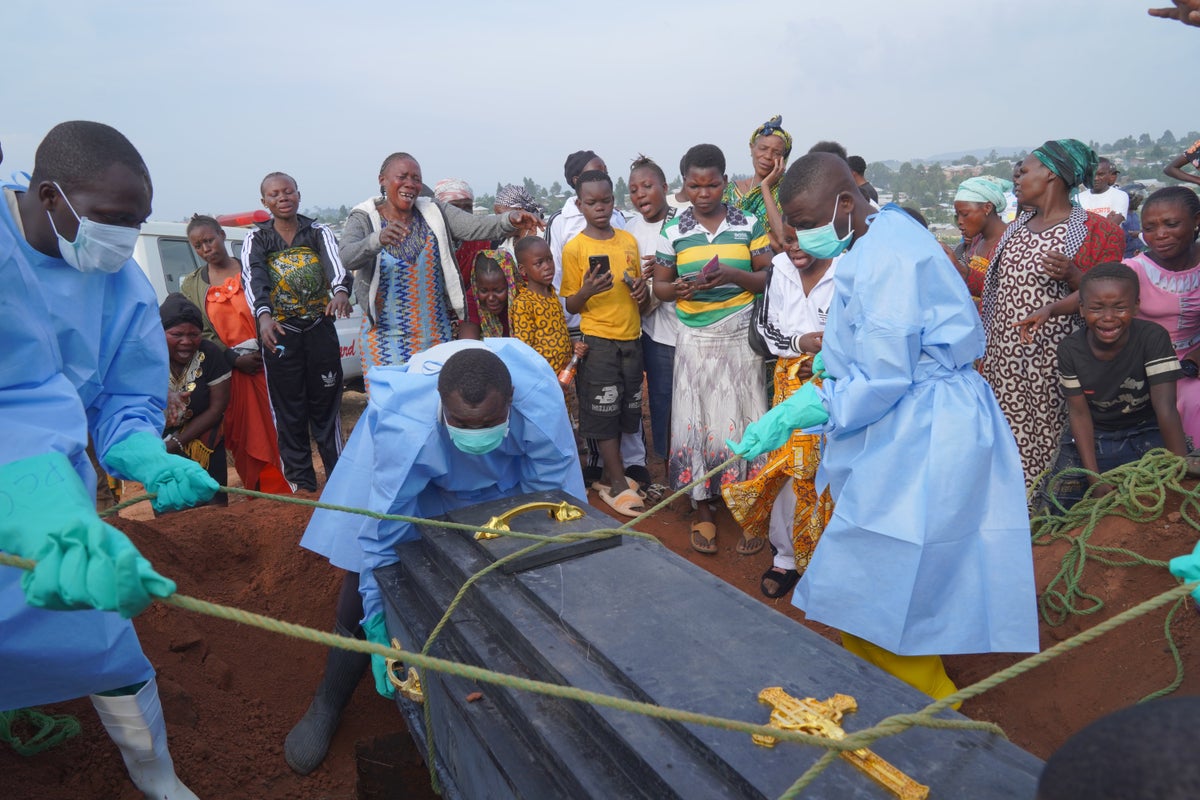
The international community’s response, characterized by the allocation of millions in emergency funding, assumes that money can overcome the friction of the terrain. While funding is necessary for the procurement of supplies and the payment of personnel, it cannot buy the local trust required to stop a funeral from becoming a super-spreader event. In many communities, traditional burial rites are non-negotiable cultural expressions of love and respect. When foreign teams arrive to impose "safe, dignified" burials, they are often perceived as a violation of these sacred duties. Without deep, sustained engagement from local leaders—not just international coordinators—these medical protocols remain alien and unwelcome.
We are currently observing the limits of modern epidemiological theory when it is divorced from the reality of active, low-intensity warfare. When a virus kills a victim every half hour, the focus shifts to the macro-data of infection rates and mortality statistics. Yet, the true story is found in the micro-struggles of the families who are forced to choose between the safety of a hospital and the sanctity of their traditions. The virus is, quite literally, winning because it is more agile than the bureaucracy tasked with containing it.
The strategy of "chasing" the virus—responding after the infection has already moved through a community—has failed. To reverse this, there must be a radical shift toward proactive, community-based surveillance that relies on local informants and community-led health solutions rather than centralized, top-down directives. If the response continues to be defined by the arrival of planes carrying aid packages while the underlying conflict and social friction remain unaddressed, the death toll will continue to climb. The current trajectory suggests that the Bundibugyo strain will continue to outpace the existing medical infrastructure for the foreseeable future. The system requires an immediate pivot from containment-focused medicine to a model that stabilizes the basic social order of the affected provinces. Anything less is merely delaying an inevitable outcome.