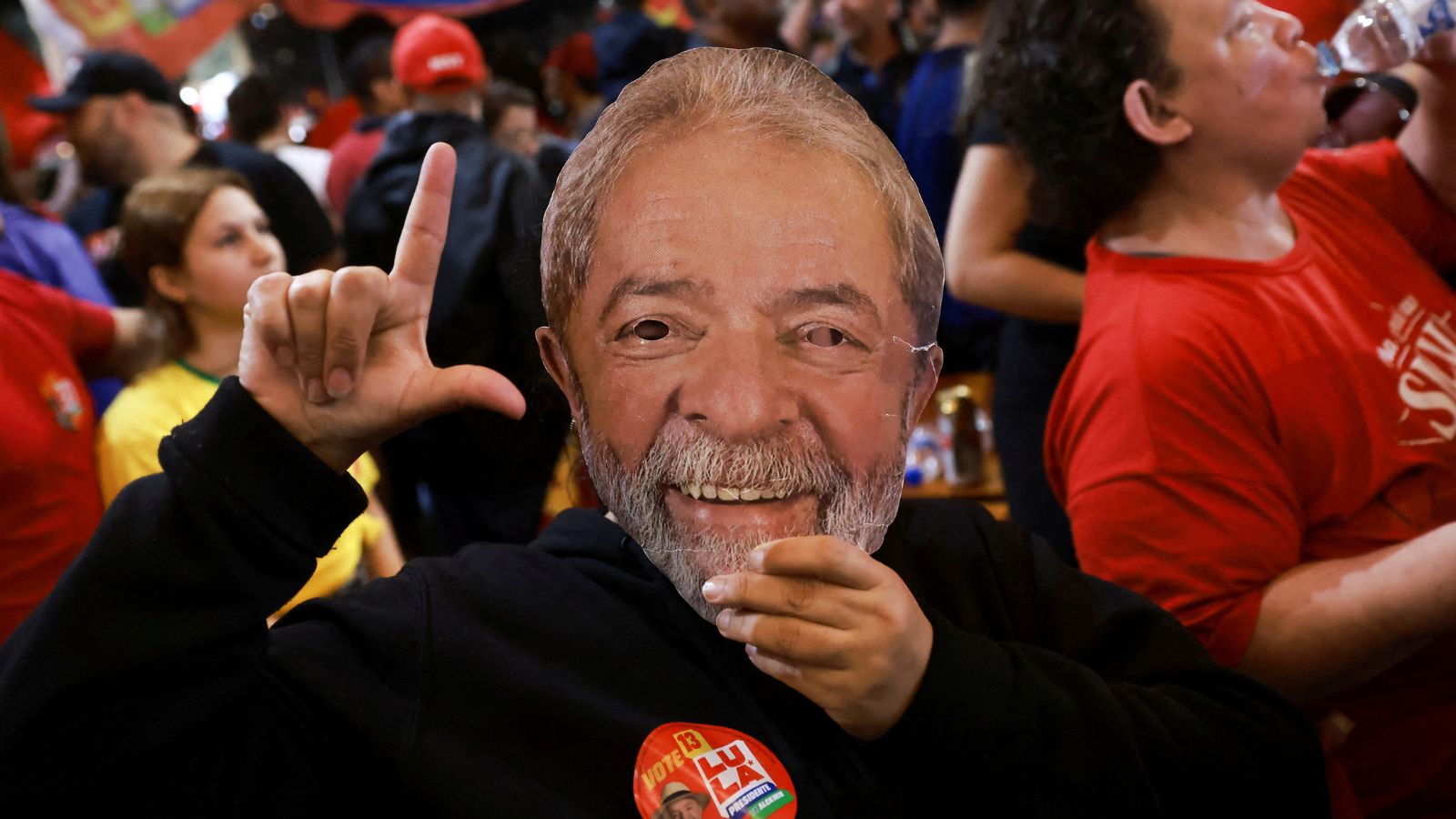
Luiz Inacio Lula da Silva did not reach the Brazilian presidency for a fourth time through sentimentality or sheer luck. While romanticized biographies trace a neat arc from a seven-year-old shoeshine boy in the impoverished Northeast to the Planalto Palace, the reality of Lula’s political journey is far colder, sharper, and more calculated. He survived five decades of military repression, electoral defeats, corruption scandals, and 580 days in a federal prison cell by mastering the ruthless mechanics of Brazilian coalition politics—known locally as presidencialismo de coalizão.
To understand how a former lathe operator without a college degree became the most durable political force in modern Latin American history, you have to look past the populist mythology. You have to examine the machinery he built, the ideological compromises he swallowed, and the structural vulnerabilities of the country he governs.
The Myth of the Self-Made Outsider
The origin story is indisputably real, and Lula has weaponized it brilliantly for forty years. Born in 1945 in Caetés, Pernambuco, he was the seventh of eight children abandoned by an illiterate, abusive father. His mother, Eurídice Ferreira de Melo—known forever in Brazilian political lore as Dona Lindu—packed her children onto the back of a pau-de-arara (an open-air flatbed truck used by economic migrants) and endured a thirteen-day journey south to the industrial belt of São Paulo.
In São Paulo, young Lula worked as a street vendor, a shoeshine boy, and an office messenger before entering a technical training program to become a metalworker. At nineteen, a mechanical press crushed his left little finger during a night shift. Doctors amputated the digit because the factory clinic lacked the resources or inclination to save it.
That missing finger became his most potent political branding tool. It was physical proof that he bled like the working class.
Yet the standard narrative skips a critical detail. Young Lula was not a radical firebrand. When his brother Frei Chico first tried to recruit him into the union movement in the late 1960s, Lula resisted. He wanted to play soccer, drink beer, and keep his head down. He only entered union politics after his first wife, Maria de Lourdes, died alongside their unborn son due to inadequate public healthcare. Even then, when he became president of the Steelworkers' Union of São Bernardo do Campo and Diadema in 1975, he initially operated within the boundaries tolerated by Brazil's military dictatorship.
The Birth of the ABC Strikes
Everything changed between 1978 and 1980. Inflation was eating workers' wages alive, and the military regime was doctoring official cost-of-living statistics to suppress pay raises. Lula realized the old union model—begging labor courts for crumbs—was dead.
He organized massive wildcat strikes in the ABC region, the industrial heartland surrounding São Paulo where multinational automakers like Volkswagen, Ford, and Mercedes-Benz operated. Tens of thousands of workers walked off the job, defying military bans on strikes. Lula stood on sound trucks without a script, speaking in the raw, ungrammatical Portuguese of the factory floor. He didn't quote Karl Marx. He talked about the price of beans, meat, and bus fare.
In 1980, the regime arrested him under the National Security Law, holding him for 31 days. By locking him up, the generals handed him national martyrdom. Months earlier, Lula and a coalition of unionists, left-wing intellectuals, and liberation theology Catholics had founded the Workers' Party (PT).
The PT was an anomaly in Brazilian history. Traditional Brazilian parties were top-down clubs for wealthy landowners and urban elites. The PT was built from the bottom up, funded by member dues and rooted in grassroots activism. For the next twenty years, however, that purity kept Lula out of power.
Three Losses and the Great Ideological Pivot
Lula ran for president in 1989, 1994, and 1998. He lost every single time.
In 1989, during Brazil's first direct presidential election after the dictatorship, he lost narrowly to Fernando Collor de Mello, a telegenic right-wing aristocrat backed by the country's dominant media conglomerates. In 1994 and 1998, he was crushed in the first round by Fernando Henrique Cardoso, a brilliant sociologist whose Real Plan had finally tamed Brazil’s hyperinflation.
By 2001, Lula was fifty-six years old and looked like a perpetual runner-up. The Brazilian middle class and international financial markets viewed him as a dangerous radical who would default on foreign debt, nationalize industries, and turn Brazil into a socialist state. Every time Lula rose in the polls, the Brazilian currency, the real, plummeted.
Lula and his chief strategist, Duda Mendonça, made a cold-blooded decision. If they could not beat the establishment, they would reassure it.
In June 2002, Lula published the famous Letter to the Brazilian People. Written largely by technocrats Antonio Palocci and Marco Aurélio Garcia, the document pledged that a PT government would honor all international contracts, maintain budget surpluses, and keep inflation under control. To drive the point home, Lula picked José Alencar—a wealthy conservative textile magnate—as his vice-presidential running mate. He traded his worker's coveralls for tailored suits, trimmed his shaggy beard, and smiled for the cameras. "Lulinha Paz e Amor" (Little Lula, Peace and Love) was born.
It worked. In October 2002, Lula won the presidency with over 52 million votes.
The Golden Years and the Dirty Engine Underneath
Lula's first two terms (2003–2010) coincided with a historic global commodities boom driven by China's insatiable appetite for Brazilian iron ore, soybeans, and oil. Money flooded into the treasury. Lula used that windfall to execute a dual strategy that baffled orthodox economists on both the left and the right.
On one hand, he maintained strict fiscal discipline. He appointed Henrique Meirelles, a former BankBoston executive, to run the Central Bank, keeping interest rates high to appease Wall Street and Faria Lima (São Paulo's financial district).
On the other hand, he launched massive wealth-redistribution programs. The crown jewel was Bolsa Família, a conditional cash-transfer program that gave poor families monthly stipends provided they kept their children in school and vaccinated. Combined with aggressive increases to the real minimum wage and expanded access to university education, Bolsa Família helped lift tens of millions of Brazilians out of extreme poverty. By the time Lula left office in December 2010, his approval rating stood at an astronomical 87 percent.
Behind the scenes, however, the PT had made a Faustian bargain with Brazil's political reality.
Brazil's Congress is notoriously fragmented, often featuring more than twenty political parties with no ideological cohesion. No president can pass legislation without cobbling together a multi-party majority. Historically, presidents did this by handing out lucrative cabinet ministries and state-owned enterprise directorships to allied parties.
Lula's inner circle took this systemic dysfunction a step further.
Mensalão and Lava Jato
In 2005, the Mensalão (big monthly allowance) scandal erupted. Investigators revealed that the PT had been funneling millions of dollars from state-owned companies and slush funds to pay monthly bribes to congressional deputies in exchange for their votes. Lula denied knowing anything about the scheme, apologizing to the nation while throwing top aides—including his powerful chief of staff, José Dirceu—under the bus. Voters forgave him, re-electing him easily in 2006.
The rot went deeper. Under Lula and his handpicked successor, Dilma Rousseff, a cartel of Brazil's largest construction conglomerates systematically overcharged Petrobras, the state-run oil giant, by billions of dollars. The excess profits were kicked back to politicians across the ideological spectrum—including the PT, the centrist MDB, and the center-right PP—to finance lavish election campaigns and personal fortunes.
When federal judge Sergio Moro and a team of prosecutors in Curitiba launched Operation Car Wash (Lava Jato) in 2014, the entire political class began to collapse.
The economic fallout was catastrophic. Brazil plunged into its worst recession in a century. Dilma Rousseff was impeached in 2016 over budget accounting maneuvers, though everyone in Brasília knew the real reason was her inability to shield Congress from Car Wash investigators.
Lula was next.
Prison, Annulment, and the Resurrection
In July 2017, Judge Sergio Moro convicted Lula of corruption and money laundering. The core accusation centered on a beachfront triplex apartment in Guarujá, allegedly refurbished for Lula by the construction firm OAS in exchange for Petrobras contracts.
In April 2018, after an appeals court upheld the conviction, Lula surrendered to federal police in São Bernardo do Campo. Surrounded by thousands of weeping supporters, he gave a defiant speech before being flown to Curitiba. He was locked in a 15-square-meter room on the fourth floor of the Federal Police headquarters.
At seventy-two years old, his political career looked finished. Barred from running in the 2018 presidential election under Brazil's Clean Slate Law, Lula watched from his cell as Jair Bolsonaro—a far-right former army captain who praised the military dictatorship and promised to wipe out the PT—swept into power.
Then, the hunters became the hunted.
In 2019, investigative outlet The Intercept Brasil published leaked Telegram messages between Judge Moro and lead prosecutor Deltan Dallagnol. The messages revealed that Moro had secretly coached the prosecution, suggested investigative strategies, and actively worked to prevent the PT from winning the 2018 election. The illusion of judicial impartiality shattered.
In 2021, Brazil's Supreme Federal Court annulled Lula's convictions, ruling that Curitiba lacked jurisdiction over the cases and later declaring Moro legally biased. Because the statute of limitations had expired on the alleged crimes by the time the cases were transferred to Brasília, Lula was never retried. He walked out of prison not legally exonerated on the merits, but cleared on procedural and due-process grounds—a distinction his supporters celebrated as vindication and his enemies condemned as impunity.
The Broad Front Strategy of 2022
To defeat Jair Bolsonaro in 2022, Lula reached back into his 2002 playbook, only this time the compromises were far steeper. Bolsonaro controlled the state apparatus, enjoyed fierce loyalty from the military and evangelical churches, and flooded social media with disinformation.
Lula realized the PT could not win alone. He assembled a massive "Broad Front" (Frente Ampla) spanning from socialists to dyed-in-the-wool neoliberals. In a move that shocked veteran political observers, Lula chose Geraldo Alckmin as his vice-presidential candidate. Alckmin was a founder of the center-right PSDB and Lula's bitter rival in the 2006 presidential race—a man who had once accused Lula of leading a criminal enterprise.
On October 30, 2022, Lula defeated Bolsonaro by less than two percentage points—50.9 percent to 49.1 percent—the tightest margin in Brazilian democratic history. At seventy-seven, he became the first person ever elected to a third non-consecutive term as president of Brazil.
The Reality of a Fourth Term
When observers refer to Lula securing a fourth term in the 2026 electoral cycle—or tallying the four distinct presidential mandates won by his movement—they are confronting a fundamentally altered political landscape. The Brazil of the 2020s bears almost no resemblance to the booming, optimistic nation Lula presided over in 2008.
The structural headwinds facing an octogenarian Lula are severe:
- A Hostile, Right-Wing Congress: Unlike his first two terms, where he could buy loyalty with ease, the post-Bolsonaro Congress is dominated by the conservative Centrão (Big Center) and hard-right lawmakers. These legislators control roughly a quarter of the federal discretionary budget through mandatory parliamentary amendments, stripping the presidency of its traditional fiscal leverage.
- The Evangelical Shift: During the 2000s, Lula enjoyed strong support among working-class Pentecostal and evangelical Christians. Today, the evangelical movement accounts for roughly a third of Brazil's population and operates as a disciplined conservative voting bloc deeply suspicious of the PT's social agenda.
- Fiscal Constraints: There is no Chinese commodities super-cycle to bail out spending. Brazil's public debt-to-GDP ratio hovers dangerously high, and global bond markets punish any hint of fiscal irresponsibility with immediate currency depreciation and capital flight.
- The Succession Vacuum: Lula's greatest political achievement is also his party's biggest liability. By centralizing all charisma, authority, and decision-making within himself for four decades, he starved the Brazilian left of a viable heir. Figures like Finance Minister Fernando Haddad lack Lula's intuitive connection with the masses, leaving the PT dangerously dependent on one aging man's stamina.
The Mechanics of Endurance
Western commentators frequently misunderstand Lula by trying to slot him into neat ideological boxes. They either paint him as a saintly champion of the global South or a corrupt populist strongman. Both caricatures miss the point.
Lula is, above all else, a master negotiator forged in the brutal crucible of factory-floor union bargaining. In a union strike, you do not get everything you demand. You calculate how much pain the factory owner can take, how long your workers can go without a paycheck, and precisely when to shake hands and sign a deal that keeps both sides alive to fight another day.
He applied that exact mentality to the Brazilian presidency. He traded radicalism for stability in 2002. He traded cabinet seats for legislative votes in 2005. He traded ideological purity for survival by partnering with Geraldo Alckmin in 2022. Every time the Brazilian elite wrote his political obituary, Lula found a new coalition, a new narrative, and a new leverage point.
Yet the very tactics that kept him in power have trapped him in a permanent defensive crouch. Governing through sprawling, contradictory coalitions means constantly watering down reforms to satisfy conservative allies while risking alienation from his progressive base. Brazil remains deeply polarized, its institutions strained, and its economic growth sluggish. Lula proved beyond any doubt that he knows how to win the Brazilian presidency against impossible odds, even as the country he conquered grows steadily harder to govern.