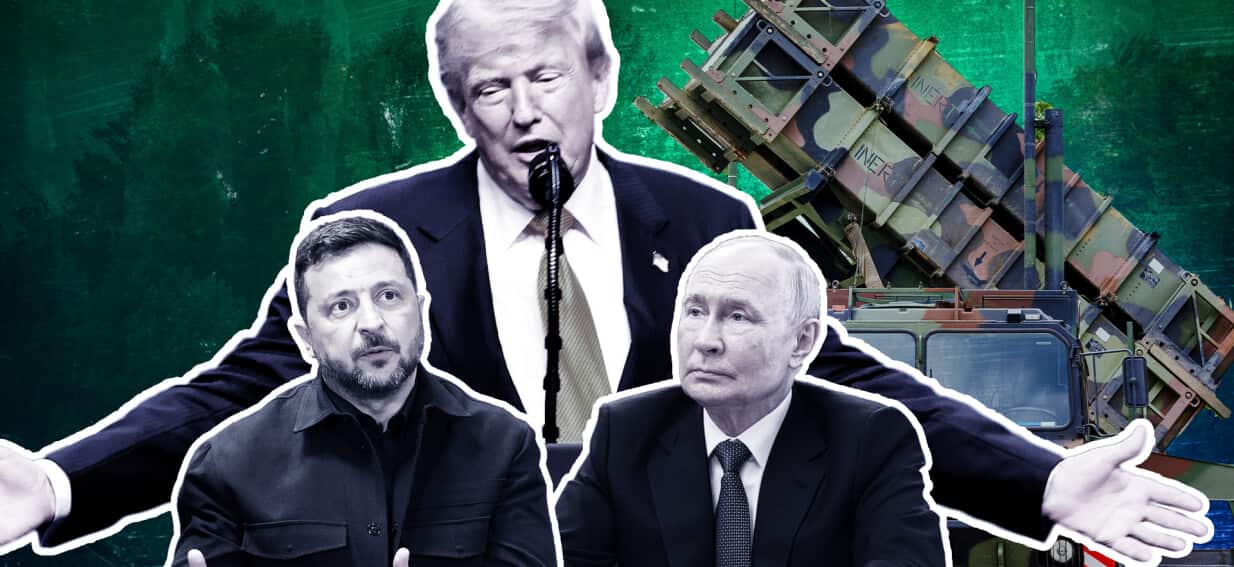
The traditional premise of the North Atlantic Treaty Organization has always rested on a single, comforting assumption. If an enemy crosses the border of a member state, the full, crushing weight of the United States military will arrive to drive them back. For decades, this collective defense guarantee was treated as an absolute law of geopolitics.
That absolute law is dead.
The question of whether Washington will defend its allies in an attack can no longer be answered with a simple affirmative. The reality is far more transactional. Under the current administration, the American commitment to Article 5 has been quietly but systematically transformed from a blanket guarantee into a conditional service agreement. Behind the public handshakes and the carefully negotiated communiqués of the July 2026 Ankara Summit, Washington is executing a deliberate, bureaucratic retreat from the leadership of Western defense.
European capitals are not preparing for a hypothetical shift in American policy. They are actively scrambling to survive it.
The Illusion of the Ironclad Guarantee
During the closing hours of the Ankara Summit, international leaders signed off on a declaration reaffirming their ironclad commitment to collective defense. The public rhetoric painted a picture of unified resistance against revisionist powers. But the theater of diplomacy cannot conceal a fundamental structural fracture.
Article 5 of the Washington Treaty has only been invoked once in history, and that was to assist the United States after the terrorist attacks of September 11, 2001. It is a historical irony that European officials frequently mention in private corridors. The treaty itself does not dictate an automatic military response. It binds members to take such action as they deem necessary, a legal loophole that gives any president wide discretion.
The current administration has made it clear that this discretion will be used as financial leverage. The term burden-sharing has been permanently replaced in Washington’s vocabulary by a more aggressive concept called burden-shifting. The United States is no longer asking Europe to chip in more for its own security. It is actively handing over the keys to the defense infrastructure and stepping back.
A deep sense of transactional diplomacy now governs the White House. The administration has repeatedly signaled that if a nation does not meet specific defense spending metrics, the expectation of American intervention evaporates. During recent campaign stops and security briefings, the language has turned explicitly hostile toward nations deemed to be freeloading. The underlying message is unmistakable. Security is a commodity, and those who do not pay the premium cannot expect the protection plan to clear.
The Quiet Command Decoupling
While political commentators fixate on executive statements and social media posts, the true dismantling of the traditional alliance is happening within the unglamorous machinery of military bureaucracy. This is not a sudden, dramatic withdrawal. It is a death by a thousand administrative cuts.
In early 2026, the Department of War introduced a doctrine termed NATO 3.0. The framework explicitly rejects the post-Cold War model of the alliance, which focused on international stabilization missions, peacekeeping, and out-of-area operations. Instead, the new doctrine demands a return to raw hard power, but with a radical twist. European nations must take the absolute lead in conventional deterrence, while the United States recalibrates its resources toward the Western Hemisphere and the Indo-Pacific.
This strategic pivot is accompanied by a silent operational retreat. The United States has begun declining to backfill hundreds of critical service positions across various joint installations. When an American intelligence analyst, logistics coordinator, or communications specialist finishes their tour at a base in Europe, their slot is increasingly left vacant. European partners are told to fill the gap themselves.
The operational commands are shifting too. Leadership of Joint Force Command Norfolk is transitioning toward British control, while Joint Force Command Naples is being handed over to Italy. These are the nerve centers that would plan and direct a continent-wide conventional war. For the first time in modern history, British and Italian four-star generals will hold primary operational responsibility for a European conflict.
The Pentagon is retaining control of Maritime Command, keeping a firm grip on oceanic supply lines, but the message to the continent is clear. The ground war belongs to Europe. If a regional power decides to test the borders of Eastern Europe, the first, second, and third lines of defense will have to be entirely European. American airpower and nuclear capabilities remain a theoretical umbrella, but the conventional vanguard is being systematically decommissioned.
The Three Point Five Percent Friction
The primary metric of this new transactional relationship is gross domestic product. For years, the agreed-upon benchmark was 2%. That number is now a historical relic. Following intense American pressure at previous summits, the alliance established a trajectory toward a 3.5% defense spending requirement for core requirements, with long-term goals reaching 5% by the mid-2030s.
A handful of frontline states have met or exceeded these benchmarks out of sheer existential necessity. Poland, the Baltic states, and the Nordic nations have transformed their economies to feed their defense sectors, buying up armor, artillery, and advanced surveillance systems at an unprecedented clip. But the view from Western and Southern Europe is vastly different.
Spain, for instance, remains far below the target, drawing sharp rebukes from American defense officials. The tension boiled over when the Department of War explicitly stated that annual alliance dues and intelligence-sharing capabilities would become directly contingent on meeting these fiscal goals. If a country fails the upcoming force posture review, American contributions to its localized infrastructure will drop.
This has triggered a furious domestic debate within European capitals. To hit 3.5% or 5% of gross domestic product spent purely on hard defense items requires a fundamental dismantling of the European social contract. Governments must choose between funding healthcare, pensions, and green energy initiatives, or buying fleets of fifth-generation fighter jets and stocking vast warehouses of artillery ammunition. It is a political nightmare for democratic leaders who face restive electorates unfamiliar with the harsh realities of wartime economies.
The Fracturing of Sub-Surface Logistics
The doubt surrounding American intervention has created a dangerous secondary effect. It has broken the baseline of strategic trust required to execute complex, multi-national military operations. When a crisis erupts, military forces depend on immediate, unquestioned access to airspace, refueling infrastructure, and deep-water ports.
That access can no longer be taken for granted. Recent global flashpoints have exposed deep ideological rifts between Washington and its European counterparts. When the United States launched unilateral retaliatory strikes in the Middle East following the collapse of regional interim agreements, several major European allies refused to grant overflight rights or allow American bombers to launch from their soil. The refusal deeply angered Washington, leading to a series of closed-door warnings that allies cannot expect American protection if they deny the United States the use of logistical nodes during a wider conflict.
There are structural disputes closer to home as well. Bureaucratic standoffs over territorial claims and maritime access routes in northern waters have strained relations with long-standing partners. When an alliance spends more time arguing over sovereignty and trade barriers than conducting joint anti-submarine drills, the collective readiness of the force degrades.
This logistical friction extends directly into the defense industrial base. Fearing a complete abandonment by a future American administration, the European Union has implemented the Security Action for Europe program, which earmarks billions of euros for domestic procurement. The program explicitly prioritizes local European content rules, favoring continental manufacturers over American defense giants.
Washington has reacted with predictable fury. The Department of War formally warned that restricting American defense contractors from competing for European tenders would trigger swift economic retaliation. The United States argues that this protectionism undermines NATO interoperability. The Europeans counter that they cannot rely on weapons systems that require spare parts and software updates from a superpower that might decide to switch off the supply chain during a political dispute.
The Reality of a Fragmented Continent
The ultimate consequence of this strategic shift is the fragmentation of European security into mini-lateral defense clusters. Instead of looking to Brussels or Washington for a unified strategy, nations are forming smaller, hyper-focused coalitions based on immediate geography and shared fear.
The United Kingdom, Poland, and the Baltic states are forging deep, integrated defense arrangements designed to act as a tripwire against eastern aggression. In the south, Mediterranean members are focusing their dwindling resources on maritime security and migration tracking, largely disconnected from the concerns of the northern frontier. This fragmentation plays directly into the hands of potential adversaries, who prefer dealing with a patchwork of regional coalitions rather than a monolithic bloc backed by the world's premier nuclear power.
European militaries are discovering that replacing American capabilities is not a matter of simply writing checks for new hardware. The United States has historically provided the invisible scaffolding of Western defense. This includes advanced satellite reconnaissance, high-altitude drone surveillance, global logistics command systems, and strategic airlift capabilities.
If a European coalition had to deploy a massive conventional force tomorrow without American assistance, they would find themselves blind and stationary within weeks. The continent has plenty of well-trained soldiers and sophisticated factories, but it lacks the connective tissue required to fight a prolonged, high-intensity industrial war. Building those independent strategic enablers will take decades of sustained, uninterrupted investment.
Time is the one commodity Europe does not possess.
The era of the unexamined American security guarantee is over. Washington has changed the terms of the contract, and the fine print states clearly that survival is a local responsibility. The question is no longer whether the United States will show up when the alarms sound. The question is whether Europe can build a credible machine to defend itself before the sirens start.