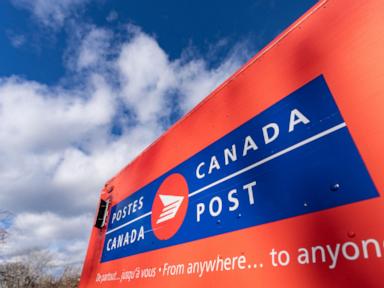
Canada Post is quietly accelerating a shift away from door-to-door mail delivery to salvage its crumbling balance sheet. While the Crown corporation frames these moves as "modernization," the reality is a desperate struggle against a $748 million annual loss and a letter-mail volume that has plummeted by more than 60% since its peak. The transition to community mailboxes (CMBs) is no longer a pilot project or a suggestion—it is the only lever left for a postal service that is bleeding cash while trying to compete with global logistics giants.
The shift isn't just about convenience or digital trends. It is about the math of the "last mile." Delivering a single letter to a suburban doorstep costs significantly more than dropping fifty letters into a centralized hub. As the federal government avoids the political fallout of a total service overhaul, Canada Post is forced to implement death-by-a-thousand-cuts to its traditional service model.
The Financial Sinkhole of the Last Mile
To understand why your mail carrier is disappearing from your front porch, you have to look at the numbers. Canada Post operates one of the largest retail networks in the country, yet its core product—paper mail—is becoming a relic. In 2006, the average household received dozens of letters a month; today, that number is closer to two.
The cost of maintaining a fleet of vehicles and a massive labor force to visit every individual door in Canada is astronomical. Industry analysts point to the fixed-cost trap. Even if you don't receive a single letter, the carrier still walks the route. By moving to community mailboxes, Canada Post can reduce the number of stops a carrier makes by 80% or more. This isn't just a minor saving. It is the difference between a sustainable business and one that requires a massive taxpayer bailout every fiscal year.
The Amazon Effect and the Parcel Pivot
The corporation is trying to transform into a parcel-first company. However, they are late to the party. While Canada Post was focusing on protecting its monopoly on letter mail, companies like Amazon, FedEx, and UPS were building sophisticated, tech-heavy logistics networks.
Canada Post’s infrastructure was built for thin envelopes, not bulky boxes. Retrofitting this system requires billions in capital expenditure at a time when the company is already drowning in debt. The move to end home delivery is a frantic attempt to free up labor and resources to focus on the lucrative package market. But there is a catch: parcel delivery is a high-stakes, low-margin business where efficiency is everything. Door-to-door delivery is the enemy of efficiency.
The Hidden Social Cost of Centralization
When a crown corporation cuts service, the impact isn't felt equally. For a tech-savvy professional, a walk to a community mailbox is a minor inconvenience. For a senior citizen with mobility issues or a person living with a disability, that walk can be an insurmountable barrier.
This is the central tension of the Canada Post debate. Is the postal service a fundamental public utility or a competitive business?
If it is a utility, then service must be maintained regardless of cost. If it is a business, then door-to-door delivery was dead the moment the first email was sent. The Canadian government has tried to have it both ways, demanding the post office remain self-sufficient while also blocking the radical changes needed to make that happen. This political stalling has created a "zombie" service—one that is too expensive to maintain but too vital to kill.
The Infrastructure Gap
Critics of the community mailbox rollout often point to the lack of maintenance and security. In many urban centers, CMBs have become targets for theft and vandalism. Unlike a secure slot in a front door, a standalone box in a dimly lit park is a vulnerable target for organized mail theft.
Moreover, the physical placement of these boxes often ignores local geography. In winter, snow-clearing around CMBs is a constant source of friction between the post office and municipalities. When the path to the mailbox is blocked by a five-foot snow drift, the "convenience" of the post office disappears.
The Labor Union Standoff
You cannot talk about Canada Post without talking about the Canadian Union of Postal Workers (CUPW). This is one of the most militant and organized unions in the country, and they view the end of door-to-door delivery as a declaration of war.
From their perspective, every community mailbox installed is a step toward job losses. They argue that carriers provide a "wellness check" for vulnerable Canadians and that the postal service should expand into postal banking to stay profitable. The logic is that since the infrastructure and staff already exist, the post office should offer basic financial services to rural and underbanked communities.
While postal banking works in countries like France and Japan, the Canadian market is dominated by the "Big Five" banks. The startup costs for Canada Post to enter the highly regulated financial sector would be massive. It is a high-risk gamble that many in the federal government are unwilling to take. Instead, the focus remains on cutting the most expensive part of the operation: the walk from the sidewalk to your door.
Why the Hybrid Model is Failing
Currently, Canada is a patchwork of delivery standards. Some neighborhoods have CMBs, others have door-to-door delivery, and rural areas have a mix of everything. This inconsistency is a logistical nightmare.
Running two different delivery systems side-by-side creates massive overhead. It means training staff for different routes, maintaining different types of equipment, and dealing with a public that feels the "zip code lottery" is inherently unfair. Why should a homeowner in an older neighborhood get front-door service while someone in a new development has to drive to the end of the block?
This inequality is the primary reason Canada Post is pushing for a total transition. They need a standardized delivery model to implement the level of automation required to compete with private couriers. Without it, they are essentially running an 18th-century service in a 21st-century economy.
The Real Estate Equation
Another overlooked factor is the value of Canada Post’s physical real estate. Many sorting facilities and post offices are located on prime urban land. By centralizing delivery and moving to CMBs, the corporation can eventually shutter smaller, inefficient sorting offices and sell the land.
For an organization desperate for liquidity, these property assets are a gold mine. However, selling off the "crown jewels" is a one-time fix. It doesn't solve the underlying problem that the core product—stamps and envelopes—is no longer a viable business model.
The Technology Deficit
While private competitors are experimenting with autonomous delivery drones and AI-driven route optimization, Canada Post is still struggling with basic tracking accuracy. The legacy systems used by the corporation are often decades old, held together by expensive maintenance contracts and a "if it ain't broke, don't fix it" mentality.
The problem is that the system is broke.
Every time a carrier has to walk up a flight of stairs to deliver a flyer that will go straight into the recycling bin, the corporation loses money. Private companies like Intelcom or DHL don't have the "universal service obligation" that Canada Post does. They can cherry-pick the most profitable routes and ignore the rest. Canada Post, by law, must deliver to every address in the country. This mandate is becoming a lead weight.
The Junk Mail Addiction
Ironically, the only thing keeping the post office afloat right now is "Admail"—the stacks of flyers and coupons most people find annoying. This paper waste accounts for a significant portion of the corporation’s revenue.
But even this is a dying revenue stream. As grocery chains move their weekly specials to apps and digital platforms, the volume of flyers is shrinking. When the junk mail stops, the justification for daily delivery to every home in Canada evaporates completely.
The Impossible Mandate
The Canadian public wants a 1950s level of service at a 2026 price point. This is an impossible expectation.
The federal government’s role in this has been one of cowardice. Successive administrations have kicked the can down the road, afraid to be the ones who "killed the post office." By refusing to allow Canada Post to fully modernize or by placing moratoriums on mailbox installations for political gain, they are ensuring the corporation's eventual bankruptcy.
There is no world where door-to-door mail delivery survives the next decade. The costs are too high, the volumes are too low, and the alternatives are too efficient. The only question remains how messy the final transition will be.
The slow-motion collapse of home delivery is a symptom of a larger identity crisis. Canada Post is a relic of a time when the physical movement of paper was the heartbeat of the nation. Now, it is a logistics company with an expensive legacy debt. To survive, it must stop pretending it can provide 20th-century personal service in a market that only values speed and cost.
The era of the "friendly neighborhood postman" is over, replaced by a steel box at the end of the street. It is cold, it is inconvenient, and it is the only way the mail keeps moving.