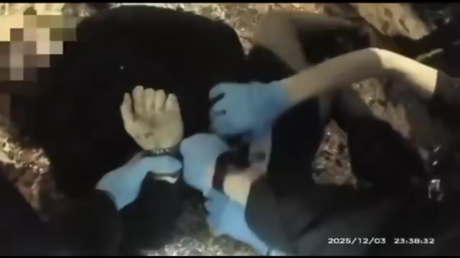
The fatal stabbing of 18-year-old finance student Henry Nowak in Southampton, and the subsequent release of police body-worn camera footage, has exposed a systemic failure in British law enforcement. When Hampshire police officers arrived at the scene, they did not see a dying teenager bleeding internally from five catastrophic knife wounds. Instead, blinded by a weaponized accusation of racism manufactured by his killer, Vickrum Digwa, they saw a suspect. They handcuffed Nowak as he took his final, agonizing breaths, dismissing his pleas for medical help with a casual deflection.
The tragedy is not merely an isolated incident of poor judgment. It represents a institutional crisis where the fear of procedural non-compliance and racial controversy has paralyzed fundamental police intuition.
When Protocol Replaces Perception
The timeline of the encounter reveals a catastrophic failure of basic situational awareness.
Upon arriving at the residential street in Southampton, officers were met by 23-year-old Vickrum Digwa. Digwa, who had just used a 21-centimeter blade to pierce Nowak’s legs and heart, immediately deployed a tactical lie. He claimed he was the victim of a racially aggravated assault, alleging that Nowak had shouted racial slurs and knocked off his turban.
The response from the officers was immediate and unidirectional.
- The Killer: Stood by, unhandcuffed, unsearched, and treated with accommodating deference.
- The Victim: Grabbed by the wrists, forced to sit up, and placed in steel handcuffs as his blood pressure plummeted.
The bodycam footage captures a chilling exchange that will remain a permanent stain on the history of British policing. As Nowak lay on his back, repeatedly stating that he had been stabbed and could not breathe, an officer responded.
"You've been stabbed? Whereabouts? Don't think you have, mate."
The sheer cognitive dissonance required to utter those words while a citizen dies at your feet points to a deeper malaise. The officers did not check for wounds; they did not administer immediate trauma care. They administered caution. They read Nowak his rights. By the time the handcuffs were locked into place, the teenager lost consciousness. He died in police custody on a cold British pavement, treated as a criminal while his murderer watched.
The Weaponization of Identity
What occurred on that street was the execution of a systemic exploit.
During the trial at Southampton Crown Court, the prosecution dismantled Digwa’s defense, labeling the racism allegation a "wicked lie about a dying man." Prosecutor Nicholas Lobbenberg KC noted that Digwa knew exactly which lever to pull to shift the operational focus of the responding officers. Racism was his trump card. He understood that in the contemporary climate of British public service, an allegation of a racial slur possesses an operational gravity that can momentarily eclipse the physical evidence of a violent crime.
This is the institutional blind spot. Over decades, British police forces have been heavily scrutinized regarding racial bias. While institutional accountability is necessary, the operational byproduct has been a culture of acute risk-aversion. Officers are so thoroughly conditioned to avoid the optics of racial insensitivity that the mere utterance of an identity-based grievance can distort their assessment of physical reality.
In this instance, the optics of a minority male claiming a hate crime overrode the physiological signs of shock, trauma, and asphyxiation exhibited by a white teenager. The system was successfully gamed by a killer who used institutional anxiety as a shield.
The Myth of the Sacred Weapon
The case also forces an uncomfortable, long-delayed examination of the legal exemptions surrounding bladed articles in public spaces.
Digwa claimed he carried the knife as part of his Sikh faith. However, the trial revealed a far darker reality. Digwa was indeed wearing a small, traditional kirpan around his neck, which fully satisfied his religious obligations. The 21-centimeter weapon used to murder Henry Nowak was an entirely separate, massive offensive weapon. The prosecution revealed that Digwa slept with an arsenal of weapons in his bedroom; he was a man fascinated by blades, who used religious cover to walk the streets armed.
The sentencing judge, Judge Mousley KC, noted that while practicing Sikhs are permitted to carry a ceremonial blade, that privilege carries immense societal responsibility. The Hampshire Police Federation later clarified that the murder weapon was absolutely not a standard kirpan.
Yet, the reluctance of authorities to question individuals carrying large blades under the banner of religious exemption creates an unpoliced gray area. Street-level officers lack the training, the confidence, or the legal backing to differentiate between genuine religious practice and armed criminality. This regulatory cowardice leaves young people exposed to preventable violence.
The Exploitation of Tragedy
Following Digwa’s sentencing to life in prison with a minimum term of 21 years, the political response was swift, predictable, and entirely disconnected from the core failure.
Prime Minister Keir Starmer expressed horror at the video but immediately pivoted to a generic lecture on "tackling the horror of knife crime." This rhetorical retreat completely ignores the specific, terrifying variable of the case. Henry Nowak did not just die of a knife wound; he died because the police handcuffed him instead of saving him. To frame this exclusively as a knife crime issue is an act of political cowardice designed to protect state institutions from scrutiny.
On the other end of the political spectrum, populist figures have seized upon the tragedy to advance narratives of "two-tier policing." Reform UK leader Nigel Farage called for "pure cold rage," weaponizing the failure to stoke broader racial divisions.
This political crossfire leaves the Nowak family isolated in their grief. Outside the courthouse, Mark Nowak, Henry’s father, explicitly rejected the attempts to turn his son’s death into a culture war.
"This is not a case about Sikhism. This is not a case about racism. This is a case about murder. Henry did not die with dignity. He did not die with the care he deserved."
The father’s indictment is devastating because it avoids abstract political philosophy. It focuses on the concrete, undeniable reality: the British state failed in its most fundamental duty of care.
The Cost of Institutional Paralysis
The Independent Office for Police Conduct is currently conducting an investigation into the actions of the Hampshire officers. They have been given three months to deliver their findings. Meanwhile, rank-and-file officers are facing a severe backlash, with reports of doxxing and death threats directed at falsely identified personnel, forcing at least one officer to flee his home.
The fallout is messy, dangerous, and completely indicative of a system broken at the foundational level.
We are left with a policing culture so terrified of being called biased that it has lost the capacity to recognize a dying human being. If officers can look at a bleeding, suffocating teenager and conclude, "I don't think you have been stabbed, mate," because the man standing next to him claimed his feelings were hurt, then the concept of public protection has been thoroughly hollowed out.
The fix is not more diversity seminars, nor is it more inflammatory political rhetoric. The fix is a brutal, unsparing return to operational reality. Police officers must be trained to prioritize arterial bleeding over verbal allegations. They must be empowered to secure a scene based on physical triage rather than identity politics. Until the home office addresses this underlying institutional paralysis, the streets will remain dangerous, the public trust will continue to erode, and more families will watch their children die under the boot of state incompetence.