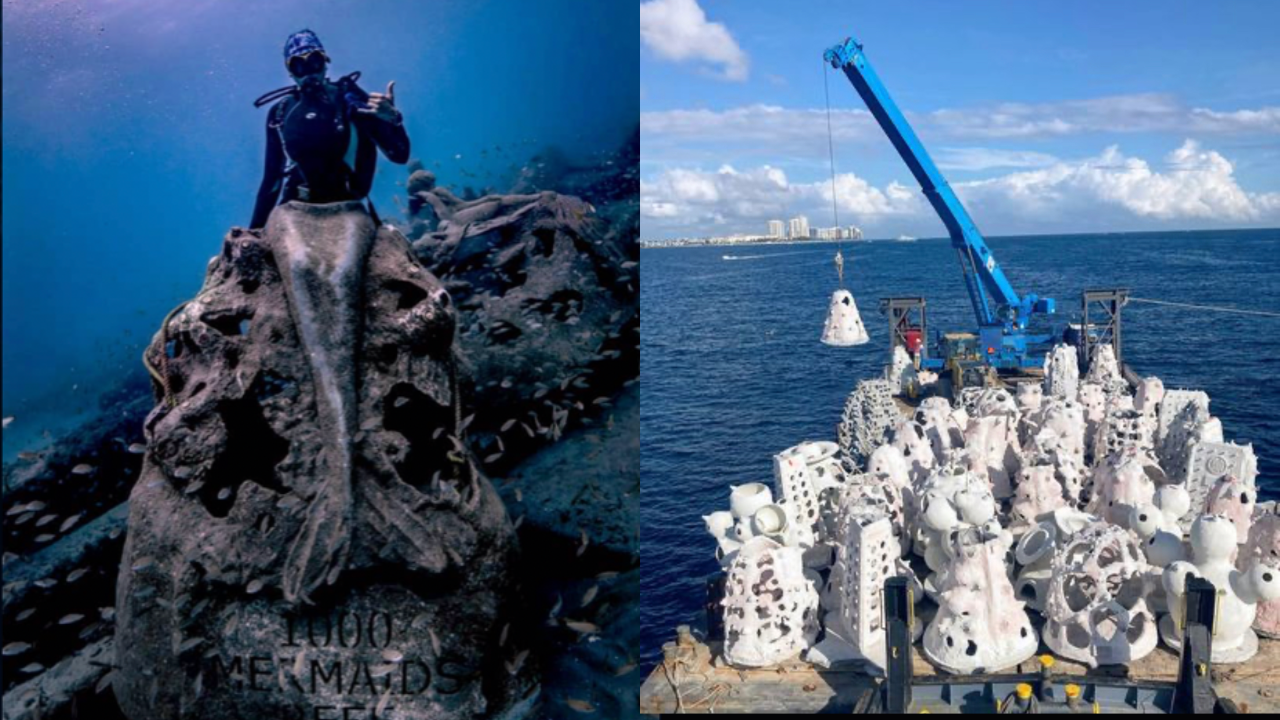
Since 2019, more than 300 sculpted reef modules and concrete mermaids have been lowered into the Atlantic Ocean off the coast of South Florida. Spearheaded by Ocean Rescue Alliance International alongside engineering partners like Reef Cells, the initiative is officially known as the 1000 Mermaids Artificial Reef Project. It blends public eco-art with marine conservation. The installations span Palm Beach County and Broward County, utilizing heavy pH-neutral concrete structures designed to offset the devastating decline of natural coral reefs.
Spend enough time talking to old-school marine biologists and coastal engineers, and you will hear a different tone entirely. Beneath the glossy PR campaigns about mermaid body casts and underwater photo ops lies a fierce debate over the commercialization of the seafloor. Can whimsical public art truly heal a dying marine ecosystem, or is this just another corporate-sponsored distraction masking deeper systemic failures in coastal management? You might also find this connected coverage insightful: Why Foreign Policy Orthodoxy is Failing the Realpolitik Test.
The Mechanics of Underwater Art
Traditional artificial reefs are utilitarian by design. Think of tumbled limestone boulders, recycled concrete rubble, or decommissioned military ships sunk intentionally to create benthic habitat. They are ugly, brutalist, and effective.
The 1000 Mermaids project shifted this baseline entirely. Artists take physical body casts of real people to mold concrete figures—mermaids, mermen, vintage diving suits, and sea life—weighing anywhere from 2,200 to 5,500 pounds. These massive modules are engineered with textured surfaces, internal cavities, and complex micro-habitats that invite fish, spiny lobsters, and eels to take up residence. As discussed in detailed articles by TIME, the effects are notable.
Crucially, the project relies on a patented system called Coral Lok. Developed by architectural sculptor Chris O'Hare, this mechanical plug system allows conservationists to secure nursery-grown coral fragments directly into the artificial substrate without using toxic underwater epoxy or chemical adhesives.
It sounds pristine on paper. Yet, every marine intervention introduces a trade-off.
Balancing Tourism and Trophic Reality
Proponents argue that these artificial sites relieve heavy recreational pressure from battered natural reefs. Natural formations across the Florida Reef Tract have suffered catastrophic degradation over the past decade, battered by warming waters, severe bleaching events, and the relentless march of Stony Coral Tissue Loss Disease. When recreational divers and snorkelers crowd natural ledges, fins snap fragile staghorn and elkhorn colonies.
By pulling casual tourists toward shallow nearshore installations like the Guardians of the Reef deployment off Hollywood Beach—sunk in just ten feet of water—municipalities can capture tourism revenue while giving natural ecosystems breathing room.
Skeptics remain unimpressed by the numbers. Three hundred modules spread across several discrete sites represent a minuscule footprint in an ocean stretching for thousands of square miles. Critics point out that while a concrete mermaid makes for an incredible social media post, it cannot replicate the complex, millions-of-years-old ecological connectivity of a functioning natural barrier reef.
Furthermore, public art installations run the risk of turning fragile marine habitats into underwater amusement parks. When human vanity meets marine restoration, the boundary between conservation and commercial spectacle blurs dangerously.
The Long Game for Coastal Defense
Florida’s coastlines face an existential threat. Rising sea levels and intensifying hurricane seasons demand immediate structural defense. Natural coral reefs reduce wave energy by up to ninety-seven percent during major storm events. Concrete mermaids will never absorb storm surge with the porous, wave-dissipating complexity of a healthy staghorn thicket.
Yet, as stopgap measures go, these engineered reefs do offer measurable ecological recruitment. Over time, coralline algae, sponges, and hard corals colonize the pH-neutral concrete. The art disappears beneath layers of living biomass.
The project's leadership acknowledges that the sculptures are only a tiny fraction of the physical mass required to turn the tide. Their primary utility is psychological. They capture public imagination, secure municipal funding, and force inland populations to look directly at the consequences of coastal neglect.
The concrete mermaid is neither a miracle cure nor a cheap gimmick. It is a desperate, creative negotiation between a dying ocean and a culture that refuses to let it vanish quietly into the dark.