The escalation of Israeli airstrikes across Beirut and southern Lebanon has moved beyond tactical skirmishes into a systematic dismantling of the country’s logistical spine. By targeting bridges, arterial roads, and the dense urban fabric of the capital’s southern suburbs, the Israeli Defense Forces (IDF) are executing a strategy designed to sever the physical and psychological links between the population and the militant organization, Hezbollah. This is not merely a reaction to border fire. It is a calculated effort to force a total collapse of the status quo, even if it means pushing Lebanon’s already fragile civilian infrastructure to the brink of a generational failure.
The immediate impact is visible in the plumes of smoke over Dahiyeh, but the long-term damage is being done in the south. When a bridge over the Litani River falls, it doesn't just stop a missile launcher from moving. It stops food, medicine, and fleeing families. It creates a vacuum. This is the "Why" that many surface-level reports miss: the kinetic action is secondary to the strategic isolation of the battlefield.
The Architecture of Isolation
Israel’s air campaign has shifted from "surgical" strikes on high-value targets to a broader "interdiction" strategy. In military terms, interdiction is the act of delaying, disrupting, or destroying enemy forces before they can reach the battle. In the context of Lebanon, this translates to the destruction of civilian-use infrastructure that doubles as a transit route for Hezbollah’s logistics wing.
The destruction of bridges in the south serves a dual purpose. First, it complicates the resupply of frontline fighters with fresh munitions. Second, it creates "kill zones" by funneling all remaining traffic onto a handful of predictable routes. This makes any movement—civilian or otherwise—extremely high-risk. For the analyst, the pattern is clear. The IDF is essentially redrawing the map of Lebanon, carving it into isolated pockets where movement is impossible without being spotted by drone surveillance.
This isn't a new playbook, but the intensity is unprecedented. During the 2006 war, the destruction was widespread, yet the speed of the current campaign suggests a more desperate timeline. Israel is betting that by making the cost of Hezbollah’s presence unbearable for the Lebanese state, the domestic pressure will eventually force a diplomatic retreat that military action alone cannot achieve.
The Myth of Precision in Urban Warfare
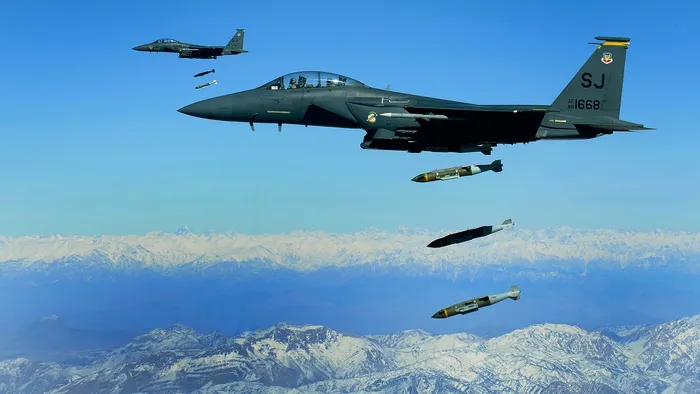
The term "precision strike" is often used to sanitize the reality of urban bombardment. While modern munitions like the GBU-39 Small Diameter Bomb are indeed accurate to within meters, the "collateral" reality in a city as dense as Beirut is anything but precise. When an apartment block is leveled because a basement was suspected of housing a command center, the entire neighborhood’s ecosystem dies with it.
The power grids, water lines, and internet cables that run through these streets are not easily repaired in a country that was already bankrupt before the first bomb fell. We are seeing the "de-development" of Lebanon. This is a process where the modern conveniences of a mid-tier economy are systematically stripped away, returning the population to a state of primitive survival.
The IDF maintains that it warns civilians to evacuate through Arabic-language social media posts and SMS alerts. However, as an analyst on the ground can tell you, an evacuation order given ten minutes before a strike in a city choked with traffic and debris is often a legal formality rather than a life-saving measure. The "How" of these strikes involves a sophisticated blend of signals intelligence and AI-driven target selection, but the human result remains the same: a displaced population with nowhere to go.
The Failed Logic of Internal Pressure
A recurring theme in Israeli military circles is the idea that the Lebanese people will eventually turn on Hezbollah if the pain becomes great enough. This is a gamble with a poor historical track record. In many cases, the destruction of national infrastructure serves to deepen the dependence of the local population on the very groups the strikes are meant to weaken.
When the central government cannot provide bread or clear the rubble, the party with the most organized grassroots network steps in. In southern Lebanon, that is Hezbollah. By blowing up the bridges, Israel may be inadvertently strengthening the social contract between the militia and its base, who see the group as their only shield and provider amidst the ruins.
Furthermore, the "Lebanese state" is a phantom entity in this conflict. The Lebanese Armed Forces (LAF) remain largely on the sidelines, underfunded and politically paralyzed. They lack the air defense capabilities to contest the skies and the political mandate to disarm Hezbollah. By hitting state infrastructure—like the bridges maintained by the Ministry of Public Works—Israel is punishing a government that has virtually no control over the fighters initiating the conflict.
The Regional Logistics Chain
To understand why the strikes are hitting where they are, one must look at the "Syrian Corridor." Lebanon does not produce its own long-range missiles; they are imported. The strikes on the Masnaa border crossing and various bridges are intended to shut down the land bridge from Iran, through Iraq and Syria, into Beirut.
The Geography of the Blockade
- The Litani River Crossings: Vital for preventing the movement of heavy weaponry into the "Blue Line" zone.
- The Coastal Highway: The primary artery for fuel and food, now a gauntlet of potential strikes.
- The Bekaa Valley Routes: The traditional smuggling heartland, currently under constant aerial surveillance.
If Israel succeeds in completely sealing these routes, Hezbollah will be forced to rely on its existing stockpiles. The question is how long those stockpiles can last under a high-intensity expenditure rate. Conservative estimates suggest the group has enough hardened, underground storage to continue operations for months, even under a total blockade. This suggests that the bridge-blowing campaign is a long-term play, not a quick fix.
The Economic Death Spiral
Before this latest round of violence, Lebanon was already grappling with one of the worst financial collapses in modern history. The currency had lost 98% of its value. Now, the physical destruction of the transport sector is the final nail in the coffin.
Tourism, the last remaining spark of the Lebanese economy, is non-existent. The port of Beirut, still scarred from the 2020 explosion, is operating under a cloud of fear. When insurance premiums for shipping to the Levant skyrocket, the cost of every imported calorie rises. This is a siege in everything but name. The goal is to make the "Hezbollah tax" so expensive that the Lebanese middle class—or what’s left of it—demands an end to the hostilities at any cost.
However, the risk of this strategy is the total "Somalization" of Lebanon. If the central state collapses entirely, Israel will be left with a failed state on its northern border. History shows that failed states are far more difficult to manage than organized adversaries. A vacuum in Lebanon wouldn't just be filled by "moderates"; it would be filled by more radical, less predictable actors who have nothing left to lose.
Intelligence Gaps and the Fog of War
The IDF claims high confidence in its target list, but war is rarely that clean. Every "missed" strike that hits a purely civilian convoy or a Red Cross station erodes the international legitimacy of the operation. In the age of instant mobile uploads, the optics of a burning bridge or a flattened bakery are more powerful than any IDF spokesperson’s PowerPoint presentation.
There is also the question of Hezbollah’s "Ghost Infrastructure." For decades, the group has built a parallel Lebanon beneath the surface. Deep-bore tunnels, fiber-optic lines buried in concrete, and hidden bunkers mean that while the "visible" Lebanon is being destroyed, the "military" Lebanon remains largely operational. The strikes on bridges might stop a truck, but they don't stop a fighter moving through a tunnel.
A War Without an Exit Ramp
The current trajectory is one of maximum pressure with no clear diplomatic off-ramp. Israel has signaled that it will not stop until its displaced citizens can return to the north. Hezbollah has signaled it will not stop until there is a ceasefire in Gaza. These two positions are currently irreconcilable.
In the middle sits the Lebanese civilian, watching the bridges that connect their life to the world turn into twisted metal and dust. The strikes are stepping up because the political goals are not being met. When the military cannot achieve a breakthrough on the ground, it often resorts to punishing the infrastructure that makes life possible.
The real story isn't just that a bridge was hit today. The story is that the very idea of Lebanon as a functioning, connected country is being systematically erased to see if the rubble will eventually scream for mercy.
Calculate the cost of rebuilding a single reinforced concrete bridge in a sanctioned, hyper-inflationary economy. Now multiply that by the dozens of crossings already neutralized. You aren't looking at a temporary military setback; you are looking at the permanent architectural scarring of a nation.
You should investigate the specific types of munitions being used in the Bekaa Valley to determine if the goal is temporary displacement or permanent denial of return.