Keir Starmer is leaving Downing Street because his own party no longer believed he could win, turning what should have been a historic tenure into a cautionary tale of modern political mortality.
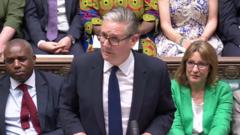
His final appearance at Prime Minister’s Questions (PMQs) was packaged as a dignified valedictory. Behind the warm tributes, the tears of Chancellor Rachel Reeves, and the carefully curated gallery of citizens whose lives were touched by his legislative record, lies a cold reality: Starmer was ruthlessly pushed out by a parliamentary party panicked by local election drubbing and flatlining economic promises.
By Monday, Andy Burnham will take the reins without having faced a single democratic vote from the British public in a general election, nor a single question at the dispatch box, as parliament slips conveniently into a six-week summer recess. This is not a seamless transition. It is an emergency evacuation of a leader whose style of governance proved too fragile for the crises he was elected to solve.
The Illusion of the Levers
In his final exchange, Starmer mounted a passionate defense of his two years in office, claiming that his administration did indeed "pull the levers" to stabilize the economy, cut NHS waiting lists, and tackle child poverty.
The defense was necessary because, for much of his premiership, the prevailing narrative was that the machinery of state was jammed. Starmer’s legalistic, process-driven approach to government was designed for stability, but it frequently translated into paralysis.
- The Economy: While Starmer pointed to stabilization, voters felt only the lingering squeeze of the cost-of-living crisis. His caution prevented the bold, transformative investment his backbenchers craved.
- Public Services: NHS waiting lists may have ticked downward, but the systemic collapse of social care and emergency medicine remained glaringly unresolved.
- The Legislative Legacy: Landmark victories like Ronan’s Law and the imminent Hillsborough Law are genuine achievements, but they are acts of historical correction and safety regulation rather than engines of future prosperity.
The harsh truth is that Starmer pulled the levers, but the gears of the British state had rusted deeper than his dry, managerial style could handle. He treated government like a complex court case to be meticulously prepared, forgetting that politics requires the raw, communicative energy to bring a skeptical public along with you.
Burnham's Soft Launch and the Accountability Gap
While Starmer stood in the line of fire for the 64th and final time, his successor was notably absent from the chamber. Andy Burnham, the "King of the North" who bypassed the traditional parliamentary ladder by dominating Manchester’s mayoral office, is inheriting the crown without the immediate trial by fire that usually tests a new prime minister.
The government’s tactical maneuvering to block an opposition vote that would have delayed the summer recess is a telling sign of the anxiety within No 10. By ensuring parliament rises on Thursday, the Labour business managers have shielded Burnham from PMQs until September.
+------------------+-----------------------------+-----------------------------+
| Feature          | Keir Starmer                | Andy Burnham (Incoming)     |
+------------------+-----------------------------+-----------------------------+
| Style            | Legalistic, cautious, dry   | Populist, emotive, regional |
| Base of Support  | Party center, Whitehall     | Red Wall, local government  |
| Main Weakness    | Lack of narrative charisma  | History of policy shifts    |
+------------------+-----------------------------+-----------------------------+
This six-week buffer is a double-edged sword. While it gives Burnham time to organize his cabinet and draft a policy reset, it denies the public immediate accountability. Kemi Badenoch’s jibe that Burnham was "scurrying away for the summer" hit a nerve because it highlighted the democratic deficit of the transition. The country is getting its third prime minister since the summer of 2024, yet the electorate remains a spectator to the internal dramas of the ruling party.
The Fragile Truce of a Bitter Party
The applause that echoed through the Commons chamber on Wednesday afternoon disguised deep, unresolved fractures within the Labour Party. The MPs who stood to applaud Starmer are the very same individuals who whispered in corridors, leaked to journalists, and ultimately made his position untenable after the May local elections.
They wanted a savior, and they believe Burnham’s more populist, emotionally intuitive brand of politics can win back the working-class voters who deserted them for Reform UK or stayed home in disgust. But changing the figurehead does not rewrite the fiscal math.
Burnham will face the exact same constraints that broke Starmer's premiership: a stagnant productivity rate, soaring debt interest, and public services that require billions just to keep the lights on. The honeymoon will be brutally short. If Burnham cannot deliver tangible improvements to the average wage packet and local GP wait times by the winter, the same internal machinery that chewed up and spat out Keir Starmer will begin grinding once again.
.jpg?width=1200&auto=webp&trim=0%2C0%2C0%2C0)