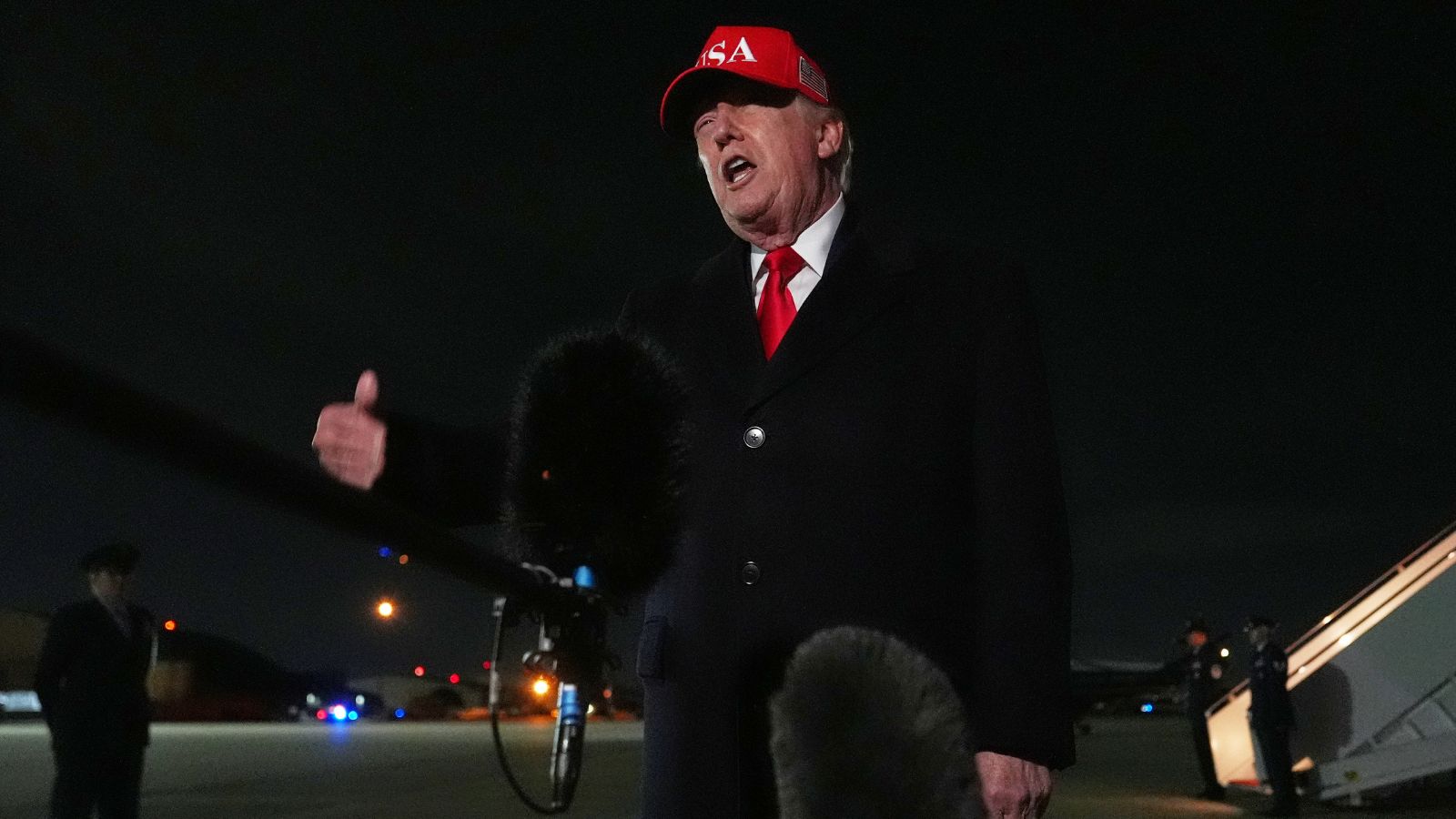
The United States has effectively abandoned the diplomatic table, opting instead for a scorched-earth economic strategy designed to break the Iranian state without firing a single shot. Donald Trump’s recent dismissal of future negotiations signals a fundamental shift in American foreign policy from "maximum pressure" to total isolation. By declaring he is indifferent to whether Tehran returns to the bargaining table, the President has stripped away the pretense of seeking a "better deal." The administration is now betting everything on a naval and financial blockade intended to starve the Iranian economy until the internal structural integrity of the Islamic Republic collapses.
This is not a temporary stalemate. It is a deliberate, long-term siege that treats the global financial system as a battlefield. While the world watches for missile launches or naval skirmishes in the Strait of Hormuz, the real war is being fought in bank ledgers and insurance registries. The U.S. is no longer asking for behavior change; it is enforcing a reality where Iran ceases to exist as a functional participant in the modern world.
The End of the Diplomatic Illusion
For years, the geopolitical consensus suggested that sanctions were a precursor to a grand bargain. The logic was simple: apply enough pain, and the target will eventually trade its nuclear ambitions for relief. That logic is now dead. By signaling that he "doesn't care" if negotiations resume, Trump has removed the incentive for the Iranian leadership to moderate its stance.
This move creates a dangerous vacuum. When a cornered power realizes that no amount of concession will lift the pressure, its survival instinct shifts from diplomacy to defiance. The U.S. is banking on the idea that the Iranian public will blame their own government for the resulting poverty. However, history suggests that external blockades often allow authoritarian regimes to consolidate power by branding all internal dissent as foreign-backed treason.
The Mechanics of the Modern Blockade
A 21st-century blockade doesn't require a ring of steel around every port. It requires a ring of lawyers around every bank. The U.S. Treasury Department has become the most effective military wing of the American government, using the dominance of the dollar to dictate who can eat and who can trade.
- Secondary Sanctions: These are the primary weapons. Any entity—be it a French bank or a Chinese shipping firm—that does business with Iran is immediately cut off from the U.S. financial system.
- The SWIFT Disconnect: By forcing the removal of Iranian banks from the global messaging system for financial transactions, the U.S. has made legal trade nearly impossible.
- Insurance Blacklisting: Ships cannot sail without insurance. By targeting the maritime insurers, the U.S. has effectively grounded the Iranian tanker fleet, forcing them to use "ghost" vessels with turned-off transponders.
The Energy Weapon and the China Factor
The success of this blockade hinges almost entirely on one variable: oil. Iran’s budget is a house of cards built on petroleum exports. In previous decades, a total cutoff of Iranian crude would have sent global prices screaming toward $150 a barrel, causing a political nightmare for any sitting president.
But the world has changed. The American shale revolution has turned the U.S. into a net exporter, providing a cushion that didn't exist during the 1979 oil crisis or the 2012 sanctions regime. Washington can now afford to keep Iranian oil off the market because Texas and North Dakota can fill the gap.
However, China remains the wildcard. Beijing has continued to purchase "teapot" batches of Iranian crude through a labyrinth of front companies and ship-to-ship transfers in the South China Sea. If the U.S. truly intends to "press ahead" with a total blockade, it will eventually have to sanctioned Chinese state banks. This would escalate a regional Middle Eastern conflict into a global economic war between the world’s two largest superpowers.
Domestic Desperation as a Strategic Goal
The "how" of this strategy is rooted in the degradation of the Iranian rial. When a currency loses 70% of its value in a matter of months, the social contract dissolves. The U.S. strategy isn't just about stopping nuclear centrifuges; it is about making the cost of living so high that the Iranian middle class—the very people who might otherwise favor Western-style democracy—is forced into a state of primal survival.
Medical supplies provide a grim example of how this works. While the U.S. claims humanitarian goods are exempt, the reality of the banking blockade means that Western pharmaceutical companies cannot receive payment from Iranian hospitals. The result is a shortage of specialized drugs for cancer and rare blood diseases. From a cold, analytical perspective, this is intended to create a level of domestic heat that the regime cannot ignore. From a human perspective, it is a slow-motion catastrophe.
The Hardliners’ Paradox
Paradoxically, the U.S. blockade strengthens the very people it claims to oppose: the Islamic Revolutionary Guard Corps (IRGC). As the legal economy dies, the black market thrives. The IRGC, which controls vast swaths of Iran's borders and underground trade routes, becomes the only entity capable of bringing goods into the country.
The blockade has turned Iran into a "smuggler's state." When the state is the only smuggler, the state becomes more powerful, not less. We are seeing the destruction of the private sector in Iran, leaving only the government-affiliated conglomerates standing. This is the great irony of the current American posture: it destroys the Iranian moderates and empowers the paramilitaries.
Beyond the Nuclear Horizon
The U.S. has expanded its list of demands far beyond the 2015 JCPOA. The blockade is now tied to Iran’s ballistic missile program, its influence in Yemen and Syria, and its domestic human rights record. By making the list of demands so long, the administration has ensured that no single negotiation can ever be successful.
This suggests the "blockade" is the permanent policy. It is no longer a means to an end; it is the end itself. The United States is effectively trying to "contain" Iran in the same way it contained the Soviet Union, hoping that over decades, the system will simply rot from within.
Why Regional Allies Are Shifting
While Washington remains defiant, regional players like Saudi Arabia and the UAE have begun a quiet de-escalation with Tehran. They realize that they are the ones who will pay the price if the blockade leads to a hot war. If Iran feels it has nothing left to lose, it can easily target the desalination plants and oil refineries of its neighbors.
The "I don't care" attitude from the Oval Office doesn't translate well in Riyadh or Dubai. For them, a desperate Iran is a dangerous Iran. We are seeing a divergence where the U.S. is getting more aggressive while its local partners are looking for backdoors to keep the peace.
The Risk of Miscalculation
History is littered with blockades that ended in unintended bloodshed. When the U.S. froze Japanese assets and cut off their oil in 1941, the goal was to stop their expansion in Asia. The result was Pearl Harbor.
Economic warfare is still warfare. By removing the diplomatic exit ramp, the U.S. has left Iran with a binary choice: total surrender or asymmetric retaliation. Given the ideological bedrock of the Iranian leadership, surrender is the least likely outcome. This leaves a future defined by cyber-attacks on Western infrastructure, drone strikes on shipping, and the further enrichment of uranium toward weapons-grade levels as a final act of defiance.
The U.S. is betting that its economic gravity is stronger than Iran's ideological will. It is a massive gamble that assumes the rest of the world will continue to honor a dollar-centric blockade that they increasingly view as a threat to their own sovereignty. If the blockade fails to trigger a regime change or a massive internal revolt, the U.S. will be left with a radioactive adversary that has been completely decoupled from the global community—and has absolutely no reason to play by its rules.
Pressing ahead with the blockade without a clear diplomatic objective is not a strategy; it is a siege. And sieges, by their very nature, end only when one side starves or the walls are breached. Washington has decided it can wait as long as it takes, regardless of who gets caught in the crossfire.