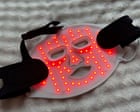
Red light therapy masks do not deliver the miracle transformations advertised by social media influencers, but they are not entirely useless science fiction either. The reality sits in a frustrating, heavily marketed middle ground. While low-level light therapy possesses genuine clinical backing for collagen production and inflammation reduction, the consumer-grade masks flooding the market frequently lack the power output, LED density, and precise wavelengths required to replicate clinical trial results. Buyers are spending hundreds of dollars on underpowered hardware, expecting dermatologist-level outcomes from devices that often mimic the specs of a basic reading light.
To understand why this tech took over the skincare market, look at the economics of the beauty industry. Top-tier clinical lasers and office-based light panels cost thousands of dollars. They run at specific irradiances measured in milliwatts per square centimeter. Manufacturers realized they could package cheap light-emitting diodes into a plastic shield, market it as an at-home luxury item, and capture a multi-million dollar direct-to-consumer gold rush.
The Photobiomodulation Illusion
The human body reacts to specific wavelengths of light. This is an undeniable biological fact known as photobiomodulation. When red light between 630 and 660 nanometers, or near-infrared light around 830 nanometers, hits the skin, it penetrates the tissue to reach the mitochondria. This triggers an increase in adenosine triphosphate production, giving cells more energy to repair themselves and stimulate collagen.
The math breaks down when transferring this science to an at-home device.
Clinical success depends entirely on dose. Dose is a product of power output and time. Most consumer masks run on small rechargeable batteries or low-voltage USB connections. They simply do not pump enough energy into the skin during a standard ten-minute session to match the cellular disruption achieved by a medical-grade panel. A hypothetical consumer using a standard hundred-dollar Amazon mask might need to wear the device for four hours a day just to hit the energy density used in a successful peer-reviewed study. Nobody is doing that.
Furthermore, many brands refuse to publish their irradiance data. They hide behind vague marketing terms because revealing their actual power output would expose how weak the hardware truly is.
Wavelength Accuracy and the Supply Chain Problem
Not all LEDs are created equal. The manufacturing of these components involves a wide variance in quality control. A high-end medical device uses tightly calibrated chips that emit light at exactly 633 nanometers. A cheap consumer mask sourced from mass-production factories often uses chips with a wide variance, meaning the light could actually sit at 610 or 680 nanometers.
At those off-target wavelengths, the biological response drops off significantly.
Device Grade       Wavelength Accuracy    Typical Irradiance
Medical Panel      +/- 5nm                50 - 100 mW/cm²
Premium At-Home    +/- 10nm               20 - 45 mW/cm²
Budget Mask        +/- 30nm or unlisted   < 10 mW/cm²
The consumer sits on their couch, bathed in a bright red glow, assuming the device is working. It looks identical to the medical version. Your eyes cannot distinguish between a highly precise 633-nanometer therapeutic wavelength and a cheap red LED from a holiday decoration string. The industry thrives on this visual trickery.
The Problem With Hard Plastic and Fit
Skin absorbs light best when the source is close to the tissue and striking it at a perpendicular angle. This introduces a glaring design flaw in the popular hard-shell plastic masks shaped like futuristic faces.
Human faces are not uniform. A mask that sits snugly against one person's nose might hover two inches away from their cheeks or forehead. Because light energy diminishes rapidly over distance, the areas of the face where the mask does not make close contact receive a fraction of the intended dose. Flexible silicone masks solve part of this distance issue by strapping tightly to the skin, but they introduce a different compromise. To maintain flexibility, these devices often use smaller, less powerful diodes spread further apart, creating uneven coverage.
Compliance is the Real Factor
There is a reason people swear their skin looks better after buying these devices. It is rarely the light alone.
When someone invests three hundred dollars into a skincare gadget, their behavior changes. They start washing their face more consistently. They apply their expensive serums with religious regularity. They sit still for fifteen minutes every night, lowering their cortisol levels. This placebo effect, combined with a sudden surge in overall skincare discipline, yields noticeable improvements in skin texture and brightness. The expensive light mask gets all the credit, while the basic routine adjustments did the heavy lifting.
Dermatologists see the results of this cycle daily. Patients arrive boasting about their at-home light routines, yet clinical assessments often show minimal changes in deep wrinkle reduction or structural skin elasticity compared to what can be achieved with prescription retinoids or in-office treatments.
Regulatory Loopholes and Marketing Claims
The regulatory environment for these devices is incredibly permissive. The US Food and Drug Administration clears most of these masks through the 510(k) pathway. This does not mean the FDA tested the mask and found it effective at erasing wrinkles. It simply means the manufacturer proved their device is substantially equivalent to another safe light device already on the market. It means the mask won't burn your face off or blind you. It is a safety clearance, not an efficacy endorsement.
Brands use this FDA clearance as a shield in their advertising, implying a level of government validation that does not exist. They couple this with before-and-after photos taken under wildly inconsistent lighting conditions. A slight shift in the angle of an overhead bulb or a change in the camera's white balance can make skin look dramatically smoother, creating an illusion of progress that vanishes under scrutiny.
To get any actual value out of at-home photobiomodulation, consumers must ignore the lifestyle branding and shop strictly by technical specifications. Look for companies that openly publish their irradiance numbers measured at operational distances, detail their wavelength tolerances, and utilize flexible designs that maximize skin contact. If a brand spends more money on influencer sponsorships than it does on providing raw engineering data, the product is likely a glowing piece of plastic designed to extract cash rather than rebuild collagen. Turn away from the aesthetic appeal of the glow and demand the data sheet.