The upcoming centennial of Route 66 in 2026 is being sold as a triumph of American nostalgia, but the reality on the ground is a desperate scramble for survival. While state tourism boards prepare to toast a century of the "Mother Road," the actual pavement tells a story of fractured economies and a frantic attempt to commodify a ghost. We are witnessing the final transformation of a 2,400-mile artery into a curated museum exhibit, stripped of its original grit to satisfy the demands of international bus tours and Instagram feeds.
The road is not a singular entity anymore. It is a collection of bypassed ruins, reconstructed diners, and gift shops selling the same made-in-China magnets from Chicago to Santa Monica. To understand why this matters, one must look past the neon signs and investigate the economic mechanics keeping these small towns on life support. Recently making waves recently: Two Hundred Feet Above the Tarmac Where Ordinary Seconds Stretch Forever.
The Myth of the Open Road
When Cyrus Avery pushed for a highway linking the Great Lakes to the Pacific in 1926, the goal was utility, not sentiment. It was a path for the displaced during the Dust Bowl and a logistics vein during World War II. Today, that utility is gone. The Interstate Highway System—specifically I-40, I-44, and I-55—rendered the old road obsolete decades ago.
What remains is a series of "business loops" and decaying frontage roads. The survival of these stretches depends entirely on a manufactured brand of Americana. International travelers, particularly from Germany, China, and the United Kingdom, now account for a massive percentage of the road’s revenue. They come seeking a version of America that arguably stopped existing around 1965. More information into this topic are explored by The Points Guy.
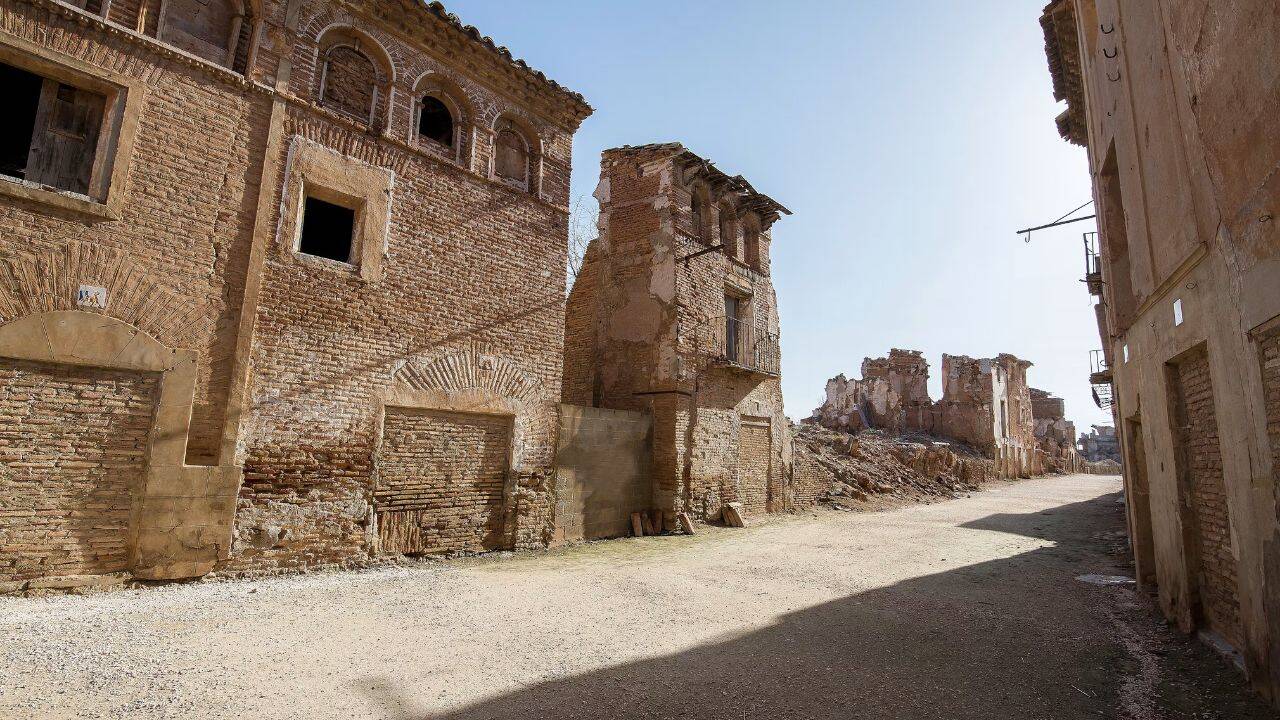
This creates a strange tension. Local business owners must choose between authentic decay and profitable artifice. In places like Seligman, Arizona, or Pontiac, Illinois, the "experience" is polished to a high sheen. But drive ten miles in either direction and you find the structural rot that the tourism brochures omit. Collapsed motels and rusted gas pumps are not just "vintage" aesthetics; they represent the total economic abandonment of rural America.
Capitalizing on the Centennial
Money is pouring in, but it isn't going where you might think. Federal grants and state allocations for the 2026 celebrations are largely earmarked for "beautification" and marketing. This means new statues and commemorative plaques, while the actual roadbed remains a patchwork of potholes and gravel.
The business of Route 66 is now a battle of intellectual property and regional branding. Towns compete to claim they have the "most authentic" diner or the "oldest" gas station. This competition is fierce because the margins are razor-thin. A vintage motel in New Mexico might charge $150 a night for the privilege of sleeping on a saggy mattress under a neon sign, but the cost of maintaining that neon—often thousands of dollars in specialized glasswork—eats the profit whole.
The Preservation Trap
Preservation sounds noble, but it often acts as a straitjacket. In many jurisdictions, getting "Historic Route 66" status brings strict regulations that make it nearly impossible for a small business owner to modernize their facilities. If you can’t add modern HVAC or high-speed internet because of historical zoning, you can’t attract the modern traveler who, despite wanting a "retro" experience, still expects five bars of 5G.
We see this play out in the "dead zones" of the Texas Panhandle and Western Oklahoma. Here, the road is a skeletal remains of its former self. The towns are shrinking. The youth are leaving. The centennial is viewed by locals not as a birthday party, but as a final liquidation sale. They hope to make enough in 2026 to retire and finally leave the dust behind.
The International Obsession
Why do people from halfway across the globe flock to a road that most Americans only see through a car window at 80 mph on the Interstate? It is the promise of the "Great American West" served in bite-sized, driveable portions.
The road provides a sense of discovery that modern air travel has destroyed. You cannot feel the geography of the United States from 35,000 feet. On Route 66, you feel every change in humidity, every shift in the soil, and every regional dialect. For the international visitor, this is the frontier. For the American, it is a graveyard of their grandparents' middle class.
This discrepancy in perspective is where the money lies. European tour operators book entire fleets of Harley-Davidsons and Mustangs, pumping millions into the economies of towns like Kingman and Gallup. Without this specific "foreign aid," the road would have been reclaimed by the desert long ago.
The Environmental Cost of Nostalgia
There is a glaring contradiction in celebrating a 100-year-old car culture during an era of climate anxiety. Route 66 was built on the back of the internal combustion engine and the cheap oil of the mid-century. As we move toward electrification, the infrastructure of the Mother Road is woefully unprepared.
Finding a working EV charger in the middle of the Mojave on a decommissioned stretch of road is a nightmare. If the road is to survive another fifty years, it has to pivot away from the gas-guzzling imagery of the past. But how do you sell a "classic" road trip when the classic cars are being phased out? The 2026 centennial is likely the last time we will see the road celebrated in its traditional, petroleum-heavy format.
Broken Asphalt and Empty Promises
The "ties that bind" rhetoric used by politicians ignores the physical reality of the road. In many states, Route 66 is a legal nightmare of ownership. Some parts are state-maintained, some are county-owned, and some have reverted to private property. This leads to "The Gap"—sections where the pavement simply ends, forcing travelers back onto the sterile, characterless Interstate.
The Disappearing Middle
The biggest threat to the Route 66 economy is the disappearance of the independent operator. Decades ago, every stop was a mom-and-pop venture. Now, even along the historic path, corporate chains are encroaching. A Starbucks in a town of 500 people might be convenient, but it kills the local coffee shop that actually gives the town its soul. When the soul is gone, the tourists stop coming.
The centennial will see a surge in temporary pop-up shops and corporate-sponsored "festivals" that suck the revenue out of the local communities and send it back to headquarters in New York or Los Angeles. The very people who have kept the road alive during the lean years are often the ones least equipped to handle the sudden, massive influx of a centennial crowd.
The Route 66 Paradox
To save the road, we have to change it. But changing it ruins why people go there. This is the paradox facing every mayor and shopkeeper along the 2,400-mile stretch. If you make it too modern, it’s just another road. If you keep it too old, it falls apart.
The centennial in 2026 isn't a beginning or a milestone of health. It is a high-stakes marketing campaign designed to squeeze the last bit of value out of a dying icon. The road is a witness to a century of American ambition, but its current state reflects our inability to maintain what we build. We prefer the myth to the maintenance.
As the world descends on the American Southwest in two years, they will see the neon and the chrome. They will hear the stories of the Joads and the songs of Nat King Cole. But if they look closely at the cracks in the asphalt and the "For Sale" signs in the windows of the boarded-up towns, they will see the truth. Route 66 is not tying the world together; it is barely holding itself together.
The celebration is a wake. Enjoy the party, but don't mistake the noise for a heartbeat.