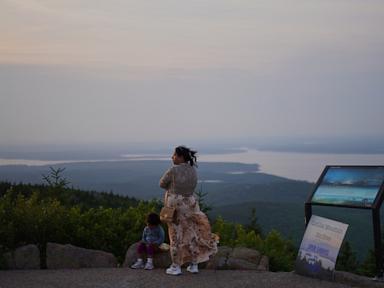
You stand on cold granite before sunrise, coffee cooling in your hands, waiting for the first light to hit the coast. Down on the stone ledge, a missing Wabanaki marker leaves an awkward blank space where Indigenous stories used to meet millions of eyes.
That single missing sign captures a much bigger fight over whose history national parks tell. It isn't just about metal frames or laminated panels bolted to rock. It's about whether public lands show the whole picture—ancient stewardship, hard colonial losses, shifting climates, and living Indigenous presence—or sand down the edges until only safe scenery remains.
Honestly, when a park takes down signs about Wabanaki beliefs or warming coastal weather, visitors walk away thinking they got the full story. They didn't.
Why a missing Wabanaki marker matters far beyond one sign
To the Wabanaki people, the peak isn't just Cadillac Mountain—it's Wapuwoc, woven into ancestral memory and living tradition. When wayside signs highlighting Wabanaki presence and spiritual ties came down at Acadia National Park, tribal leaders and advocates saw more than a policy tweak. They saw years of hard-won visibility pulled back in an instant.
Maulian Bryant, executive director of the Wabanaki Alliance, pointed out that the removed panels didn't even cover the darkest chapters of Indigenous history. They showed "the good stuff"—language, cultural roots, and ongoing connection—rather than smallpox devastation or the contraction from dozens of nations down to four. Think about that for a second. Even gentle, affirming representation got scrubbed.
Penobscot Nation citizen Jennifer Neptune described sign removals as a gut punch for Indigenous people and other marginalized communities whose histories already struggle for space in mainstream public memory. Meanwhile, former National Park Service director Chuck Sams—who stepped down in February 2025—warned that forcing history into a single narrow narrative runs counter to democratic pluralism.
Other voices in Washington see things differently. Interior Department officials have argued that certain removed displays pushed what they called fear-mongering rhetoric or wasted taxpayer money, framing their decisions as a course correction rather than erasure. That clash sits right at the heart of the national park debate. Should parks stick strictly to rocks, views, and simplified timelines, or do they owe visitors honest context about the people and ecosystems shaping the land?
The real fight over what national parks should tell
Walk through almost any major park in the United States and you'll notice how much interpretive signs do. They explain glacial carving, bird migrations, timber barons, Indigenous homelands, and climate shifts. Yet removals at Acadia—spanning summit panels and Great Meadow displays covering ecology, climate projections, and Wabanaki heritage—show how quickly federal priorities can reshape what visitors read on the trail.
Public opinion data suggests most visitors aren't asking for history to be scrubbed. Surveys cited in 2026 reporting from organizations like the National Parks Conservation Association with YouGov, as well as the Pew Research Center, show strong majorities of Americans favor keeping historical materials in national parks and addressing both national strengths and flaws. A federal court even ordered the restoration of removed climate and Wabanaki history signage at Acadia in June 2026, sparking legal pushback and appeals from the Interior Department.
Still, court orders and policy memos don't automatically change what happens on the ground day to day. Signs get delayed, reworded, or debated. Visitors who only read a granite plaque about magma or sunrise views might never realize a layer of human history was edited out.
Sweetgrass, baskets, and living presence on the land
Here's the detail a lot of coverage glosses over. Signs can disappear, yet Wabanaki culture hasn't gone anywhere.
When Acadia was established in 1916, park rules cut off traditional practices like gathering sweetgrass, severing everyday ties between Wabanaki families and ancestral coastal lands. Years later, collaborative research—including work led by Houlton Band of Maliseet citizen Suzanne Greenlaw alongside the U.S. Forest Service, the Schoodic Institute, and traditional gatherers starting in 2017—helped rebuild trust around co-stewardship. In 2024, the park moved to allow Maine's five federally recognized tribes to enter agreements for gathering sweetgrass inside Acadia.
That shift matters. Basketry using brown ash and sweetgrass isn't a museum prop to Wabanaki makers. Passamaquoddy basket maker Lydia Soctomah has spoken about how making a basket carries memory and spirit passed down through generations. And through partnerships like programs with the Abbe Museum in Bar Harbor, Wabanaki drummers, artists, and storytellers keep bringing ceremony and voice straight back onto the mountain.
Co-stewardship is messy, slow, and sometimes politically fragile. It's also way more durable than a single sign.
Common mistakes visitors make at contested heritage sites
Most travelers don't visit parks with bad intentions. They just rush. Here's where people trip up when a site's story feels incomplete or contested:
- Treating park brochures as the final word. A five-minute sign read isn't the whole history. Treat it as a starting point, not an encyclopedia.
- Separating nature from people. Treating "pristine wilderness" as empty land ignores centuries of Indigenous land management, fire use, and plant stewardship.
- Ignoring local Indigenous institutions. Museums, cultural centers, and tribal initiatives near a park often hold deeper context than a roadside pullout ever could.
- Confusing quiet trails with empty history. Just because you don't see a crowd or a marker doesn't mean nothing happened there.
How to read a national park with sharper eyes
If you're planning a trip to Acadia or any other national park where history and policy collide, you don't have to guess what's missing. A few practical habits change how you experience the place immediately:
- Look beyond the main overlook. Sunrise spots draw the biggest crowds and the shortest signs. Walk side trails, visit nature centers like Sieur de Monts, and check what's actually on display.
- Pair park stops with local Indigenous voices. Visit regional hubs like the Abbe Museum in Bar Harbor or explore resources from the National Park Service to hear perspectives directly from Wabanaki artists, historians, and educators.
- Notice what isn't mentioned. Ask yourself who lived on this land before park boundaries existed, whose names were replaced, and what ecological changes aren't listed on the board.
- Support stewardship groups doing long-term work. Whether it's Indigenous-led cultural programs or local conservation partnerships like Friends of Acadia, backing ongoing work keeps real stewardship moving even when federal headlines get loud.
Rocks don't argue back, and sunrise views never lose their drama. The stories we choose to tell beside them are up to us.