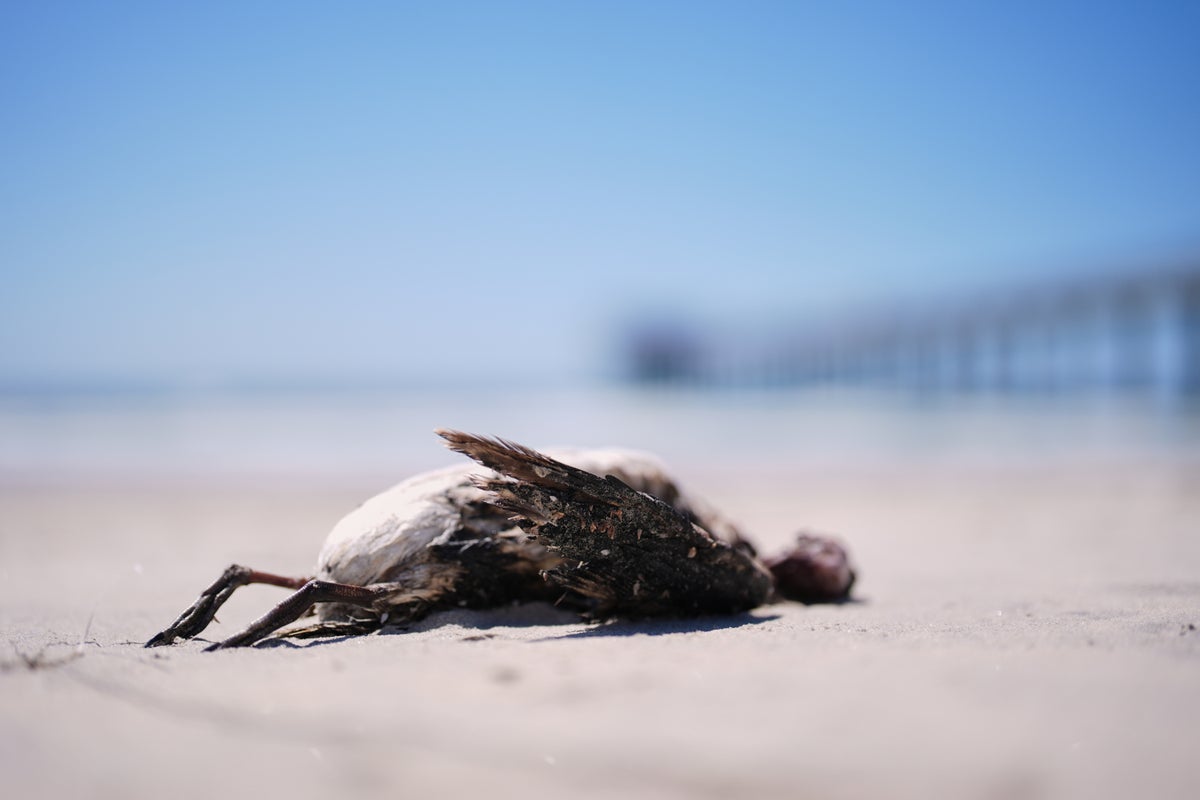
You can walk down a beach near Scripps Pier in San Diego right now and find them. Dead common murres tangled in washed-up kelp. Emaciated brown pelicans collapsed under coastal rocks. Even worse, beachgoers are watching cormorants literally walk out of the surf and drop dead on the sand within fifteen minutes.
It feels like a horror movie, but it is reality along the California coast. A persistent, punishing marine heat wave has roiled these waters for over a year. Now, the National Oceanic and Atmospheric Administration (NOAA) has confirmed that a powerful El Niño has officially formed. For California’s already battered seabird populations, this is a worst-case scenario.
The birds aren't dying from a mystery virus or a sudden spike in plastic pollution. They are starving to death in plain sight.
The Underwater Desert Forcing Birds to Starve
The core issue comes down to ocean physics. Normally, strong winds along the West Coast drive a process called upwelling. These winds push warm surface water out to sea, allowing deep, icy, nutrient-rich water to rise to the top. This cold water acts as fertilizer for the entire marine ecosystem. It sparks massive blooms of plankton, which feed krill, anchovies, and sardines.
When a marine heat wave hits, that process breaks down. For the past year, southerly winds have weakened, trapping a massive layer of hot water at the surface. According to data from Climate Central, some patches of the West Coast have experienced more than 200 days of elevated temperatures. Scripps Institution of Oceanography reported that multiple monitoring stations broke ocean temperature records for 40 consecutive days or more.
When the surface boils, the fish don't just sit there and bake. Schooling fish like sardines and anchovies dive deep into the ocean or swim north to find cooler water.
This creates a geographic mismatch. Seabirds like common murres, loons, and grebes are built to dive, but they have physical limits. If the fish escape below those limits, the birds come up empty-handed. A common murre needs to eat between 10% and 30% of its body weight every single day just to survive. Without that steady stream of calories, these birds hit a critical starvation threshold in less than three days.
Enter the Super El Niño
If the marine heat wave was the first punch, El Niño is the knockout blow.
El Niño is a natural climate pattern characterized by the sloshing of warm equatorial waters toward the eastern Pacific. It weakens the very trade winds that drive coastal upwelling. Dan Rudnick, who manages the robotic underwater glider program at Scripps, noted that the warm temperature anomalies recorded this spring—before El Niño even fully took hold—already rivaled the severe El Niño event of 2023.
Now that El Niño is formally active, it will pour fuel on the fire. Instead of the marine heat wave dissipating naturally, a massive new wave of tropical warmth is moving in to take its place. Some meteorologists warn this could morph into a "super El Niño" that stretches well into 2027.
We have seen this script play out before. In 2013, a catastrophic marine heat wave known as "the Blob" combined forces with a powerful El Niño. The resulting ecosystem collapse triggered the largest seabird die-off in recorded history. An estimated 4 million common murres perished in Alaska alone. A decade later, those populations still haven't fully recovered.
The View from the Triage Tents
The crisis is stretching wildlife rehabilitation centers to their absolute limits. The International Bird Rescue facility in Fairfield and the Santa Barbara Wildlife Care Network have been inundated with hundreds of starving birds.
Wildlife centers are reporting bizarre behavior driven by sheer desperation. Starving brown pelicans are turning up at inland lakes, crowded fishing piers, and tourist boats, begging for scraps or trying to steal bait. This desperation leads to a secondary wave of injuries caused by fishing hooks, line entanglements, and boat strikes.
When these birds arrive at rescue centers, they are severely emaciated, dehydrated, and hypothermic. Because they lack body fat, they lose the ability to regulate their internal temperature, even in warm weather.
The California Department of Fish and Wildlife has run extensive tests on the carcasses washing ashore. The vast majority have tested negative for avian influenza. The official diagnosis is almost universally severe malnutrition. Ironically, the birds are victims of their own recent success. The 2025 breeding season was exceptionally strong, meaning there are millions of young, inexperienced juvenile birds out on the water right now. These juveniles lack the hunting skills of older adults, making them the very first to starve when food supplies vanish.
The ocean is shifting right before our eyes. Tammy Russell, a postdoctoral scholar at Scripps, has documented five different species of boobies—birds native to subtropical and tropical waters—becoming common fixtures off the California coast. While tropical birds move north, local species are dying off.
What You Can Do on the Coast
This is a structural ecological crisis driven by global temperature shifts, but local actions matter immensely right now. If you live along the California coast or plan to visit the beach, you can take immediate steps to help researchers and rehabilitation teams.
- Document, Don't Touch: If you find a dead seabird on the beach, do not handle it. Instead, download the app for projects like COASST (Coastal Observation and Seabird Survey Team) or report the sighting to local beach survey groups. This baseline data helps scientists track the exact geographic footprint of the die-off.
- Give Live Birds Space: If you see a pelican or cormorant resting on the sand, leave it alone. Do not try to flush it back into the water. These birds are often resting on shore because they are completely exhausted and hypothermic. Forcing them to fly burns their last remaining calorie reserves.
- Contact the Experts: If a bird is visibly injured, entangled in fishing line, or completely unresponsive, call your nearest wildlife rehab center immediately, such as the International Bird Rescue or the Santa Barbara Wildlife Care Network.
- Reconsider Pier Fishing Tactics: If you fish from coastal piers, be hyper-aware of pelicans. Clean fish at designated stations with enclosed disposal units so starving birds aren't tempted to swallow sharp bones or discarded hooks.