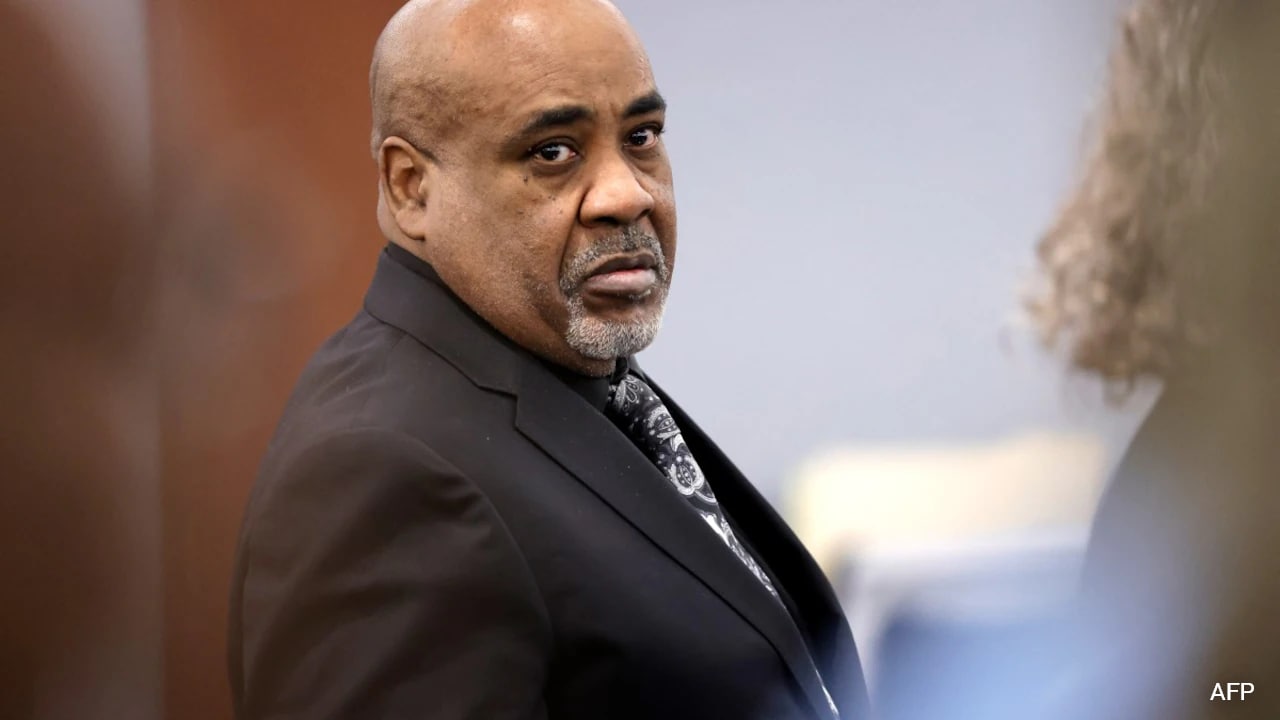
Call it a victory if you want. Hand out the headlines. Thirty years after Tupac Shakur took bullets near the Las Vegas Strip on September 7, 1996, Duane "Keffe D" Davis was convicted of first-degree murder on August 31, 2026, and sentenced on October 13, 2026, to 40 years to life in prison.
Do not celebrate yet.
Standard coverage treats this sentence like a tidy fairy tale. A cold case thaws out. Street omertà cracks. A self-styled shot-caller talks too much in interviews and memoirs, prosecutors pounce, a jury convicts in three hours, and justice finally arrives on schedule.
That story is lazy. Worse, it is dangerous.
If you look closely at how Duane Davis was jailed for 40 years over Tupac Shakur's murder, you are not watching a triumph of forensic brilliance or relentless detective work. You are watching a high-stakes collision between vanity, prosecution leverage, and a legal system that convicted a man largely out of his own mouth—while leaving huge structural questions about evidence, gang liability, and appellate survival wide open.
The Lazy Consensus Around A Thirty-Year Conviction
Most articles covering the October 2026 sentencing repeat the same comforting script. Tupac was shot after a Mike Tyson fight, died days later on September 13, 1996, and for nearly three decades the case became hip-hop's ultimate unsolved mystery. Then Davis—an uncle to South Side Compton Crips member Orlando "Baby Lane" Anderson, who got into a casino brawl with Shakur hours earlier and died in a 1998 shooting—ran his mouth one time too many.
Competitor pieces frame the outcome as proof that time catches up to everyone. "It always comes around," as the cliché goes.
That phrasing sounds poetic. Legally, it is mush.
Time did not catch up to Davis on its own. For years, investigators had his name and his family connection, yet no case went to trial. What changed was not a sudden influx of physical trace evidence, a recovered murder weapon, or a lineup of newly cooperative eyewitnesses who suddenly forgot decades of fear. Witnesses still stayed silent. Physical proof tying Davis directly to the fatal shots remained thin or absent.
What moved the needle was self-incrimination packaged as entertainment. Davis spent years doing interviews and published a 2019 memoir describing the night in Las Vegas, apparently believing a 2008 proffer or interview with law enforcement gave him a shield he did not actually hold. When prosecutors put those public boasts on trial in August 2026, a jury of ten women and six men decided he had written his own prison sentence.
You Are Asking The Wrong Question About "Closure"
When people search for updates on the Tupac Shakur murder case, they usually ask two questions: Did they finally get the right guy? and Does this mean the case is finally over?
Both questions miss the mark.
First, ask what "getting the right guy" means in a gang-retaliation shooting where multiple people were in a vehicle and the alleged triggerman, Orlando Anderson, died twenty-eight years ago. In criminal law, orchestrator liability—convicting someone for directing, facilitating, or participating in a first-degree murder rather than pulling the trigger—is real, established, and severe. Prosecutors argued Davis was a key organizer and participant tied to the retaliation for the assault on Anderson. A 40-to-life sentence, which included a 20-year mandatory enhancement tied to profiting from the murder, reflects how harshly Nevada law treats that conduct.
Yet holding a 63-year-old man for decades based heavily on his own boastful storytelling creates an obvious tension. Defense attorney Michael Sanft argued that Davis exaggerated for clout and cash, pointing out that bragging in a book or interview is not the same thing as hard physical evidence. Jurors did not buy the "he was just lying for attention" defense. Still, anyone who watches trials knows how perilous it is when the state's strongest pillar is a defendant's own ego.
Second, this sentence does not close the chapter. On October 30, 2026, a notice of appeal was filed, and on November 9, 2026, the Nevada Supreme Court docketed Davis's appeal—right around the time Sanft passed away, leaving representation and briefing schedules to be sorted out. Docketing an appeal is procedural, not a ruling on the merits. A conviction can stand, or appellate courts can scrutinize evidentiary rulings, statements, and enhancements for years.
What People Also Ask (And Why The Usual Answers Fail)
- "Why did it take thirty years to put Duane Davis in prison?" Because cold cases don't solve themselves through nostalgia. Decades of silence, jurisdictional friction between Compton and Las Vegas, and lack of airtight physical proof stalled early momentum. Only when Davis's own public statements gave prosecutors a coherent narrative—and a grand jury indicted him in September 2023—did a courtroom reckoning become viable.
- "Does a 40-year sentence mean he dies in prison?" At 63 years old with a sentence of 40 years to life, the math is brutal even before factoring in prison health and appeal timelines. Even if parole eligibility existed decades down the road, practical reality points toward spending the rest of his life behind bars unless an appellate court vacates the judgment.
- "Does this solve every loose end around Tupac's death?" No. A conviction resolves one legal proceeding against one defendant. Internet conspiracy theories about industry setups, hidden shooters, or secret deals will keep churning regardless of what happens in Clark County District Court.
Inside The Mechanics Of The Prosecution And The Defense
Having covered high-stakes legal battles, media spin, and crisis communications, I have seen plenty of defendants and public figures blow millions—or their freedom—by treating media appearances like harmless theater. Once words leave your mouth on camera or in print, you do not own the context anymore. Prosecutors do.
To see why this case landed where it did, separate the four moving parts:
- The Motive Chain: Prosecutors tied the September 7, 1996 shooting to an earlier altercation involving Orlando Anderson. In homicide trials, establishing motive and intent turns a chaotic street shooting into premeditated first-degree murder.
- The Memoir Trap: People love to treat true-crime books and YouTube interviews as side hustles. When a suspect narrates events, roles, and rivalries for profit, every sentence becomes potential evidence of knowledge, intent, or financial gain tied to the crime.
- The Physical Evidence Gap: The defense hammered the lack of a smoking gun or forensic lock tying Davis directly to the act decades later. In many trials, a thirty-year gap with no physical anchor is fatal to the prosecution. Here, jurors weighed Davis's own words heavily enough to convict anyway.
- The Sentencing Hammer: A sentence of 40 years to life, enhanced for profiting from the murder, turns a late-life conviction into a permanent lock.
Imagine a scenario where a defendant never wrote a book, never did street-press interviews, and kept quiet after the 1990s. Without those public admissions putting him at the center of the story, prosecutors would have faced a vastly steeper climb to prove first-degree murder beyond a reasonable doubt thirty years later. That single thought experiment shows how much fuel Davis handed the state.
Where My Contrarian Read Can Go Wrong
Honesty matters if you want a sharp analysis rather than a cheerleader section. Pushing back on the "case finally solved" narrative carries its own risks.
First, questioning the neatness of the storyline can sound like minimizing the loss of Tupac Shakur or dismissing the pain of his family, including his half-sister Sekyiwa Shakur and stepbrother Maurice Shakur, who spoke at sentencing. A man lost his life at twenty-five. A family lived with grief and unanswered questions for thirty years. Pointing out evidentiary gaps or appellate hurdles does not erase that human cost.
Second, being skeptical of lazy media narratives does not mean claiming the jury got it wrong. Twelve jurors—or sixteen including alternates—sat through the testimony in Las Vegas and reached a verdict in three hours. The defense claimed jurors carried preconceived notions; prosecutors called it an open-and-shut case. Until an appellate court rules otherwise, the verdict stands.
What You Should Actually Do With This Story
If you read news about high-profile convictions and cold cases, stop falling for two traps: believing every late conviction is a flawless triumph of justice, and believing every defense complaint about "no physical evidence" means an innocent verdict is guaranteed.
Track the appellate docket instead of the outrage cycle. Watch what issues are raised before the Nevada Supreme Court, how prior statements and enhancements are reviewed, and whether new counsel changes the legal strategy. And if you ever find yourself—or a client, a brand, or a friend—tempted to monetize a past controversy for clout, shut that impulse down immediately.
Ego is a terrible alibi.
Duane "Keffe D" Davis sentenced to 40 years to life for 1996 murder of Tupac Shakur
This video directly covers the October 2026 sentencing of Duane Davis and includes family statements that ground the human impact behind the legal headlines.