Labeling Ukrainian strikes on Russian oil infrastructure a "disgrace" treats a brutal war of survival like a polite etiquette dispute. It sounds decisive on cable news. It feels tidy in a headline. Yet it misses how energy markets, wartime logistics, and asymmetric attrition actually work.
Competitor coverage framing this clash around a single blunt label leans on a familiar, lazy consensus: big powers set the rules, energy infrastructure is sacred when prices get twitchy, and any escalation that rattles global crude markets is reckless. That framing treats oil refining and fuel supply chains as if they exist in a vacuum apart from the military machine they bankroll. In reality, fuel, lubricants, rail logistics, and export revenue are the lifeblood of sustained mechanized warfare. Calling strikes on those nodes a "disgrace" confuses noise with analysis.
Let's be clear about the terms before going any further. "Upstream" production involves extracting crude oil from the ground—wells, fields, and gathering lines that are sprawling, redundant, and slow to knock out permanently. "Downstream" infrastructure—refineries, catalytic crackers, vacuum distillation units, tank farms, and export terminals—turns raw crude into diesel, jet fuel, and marketable products, and relies on specialized, hard-to-replace equipment. Confusing the two leads analysts to predict instant market collapse when a refinery gets hit, or to pretend that hitting fuel depots has no military logic. Both claims are lazy.
Why the "Disgrace" Frame Gets the Incentives Backward
When politicians or pundits call strikes on Russian oil sites a disgrace, they usually argue from one of two angles: either it risks spiking global fuel prices, or it crosses an unspoken boundary that invites retaliation. Both arguments take the easiest path and skip the harder math.
First, global oil markets price risk, spare capacity, and trade-route rerouting—not moral outrage. Crude oil is fungible, and refined products move through complex global arbitrage chains. When refineries go offline, exporters often shift more raw crude onto tankers or pipelines, while importers adjust sourcing across regions. Treating every strike on a Russian oil facility as an automatic, catastrophic shock to Western consumers ignores how adaptable modern commodity flows are, even when friction raises costs at the margins.
Second, the "don't provoke escalation" argument assumes restraint buys peace. I have watched enough strategic post-mortems and commodity stress tests over the years to see how that logic fails under pressure. When one side has deep industrial reserves and an entrenched war economy, unilateral restraint rarely earns mercy; it usually hands the stronger logistics network a quieter rear area. If a defender has limited long-range firepower, spending it on targets that force the attacker to divert air defenses, ration fuel, or scramble repair crews changes the cost curve of the war.
Calling a strike a "disgrace" because it complicates diplomacy or energy pricing is a value judgment dressed up as strategy. Strategy asks a colder question: what degrades the adversary's ability to keep fighting, and at what real cost?
People often ask why energy targets draw sharper condemnation than barracks or command posts. The answer comes down to visibility and self-interest. A destroyed fuel depot shows up in commodity chatter, shipping routes, and political talking points back home. Politicians hate explaining higher pump prices or messy diplomatic optics to voters, so they reach for moralized language to distance themselves from the fallout. That does not make the strikes strategically incoherent. It makes the commentary defensive.
The Mechanics of Energy Attrition Nobody Wants to Admit
To see why oil infrastructure sits squarely at the center of modern attrition warfare, look at how a large military stays mobile. Tanks, armored personnel carriers, trucks, aircraft, and generators do not run on speeches. They run on diesel, aviation fuel, and lubricants, moved along rail networks and highways that depend on steady supply.
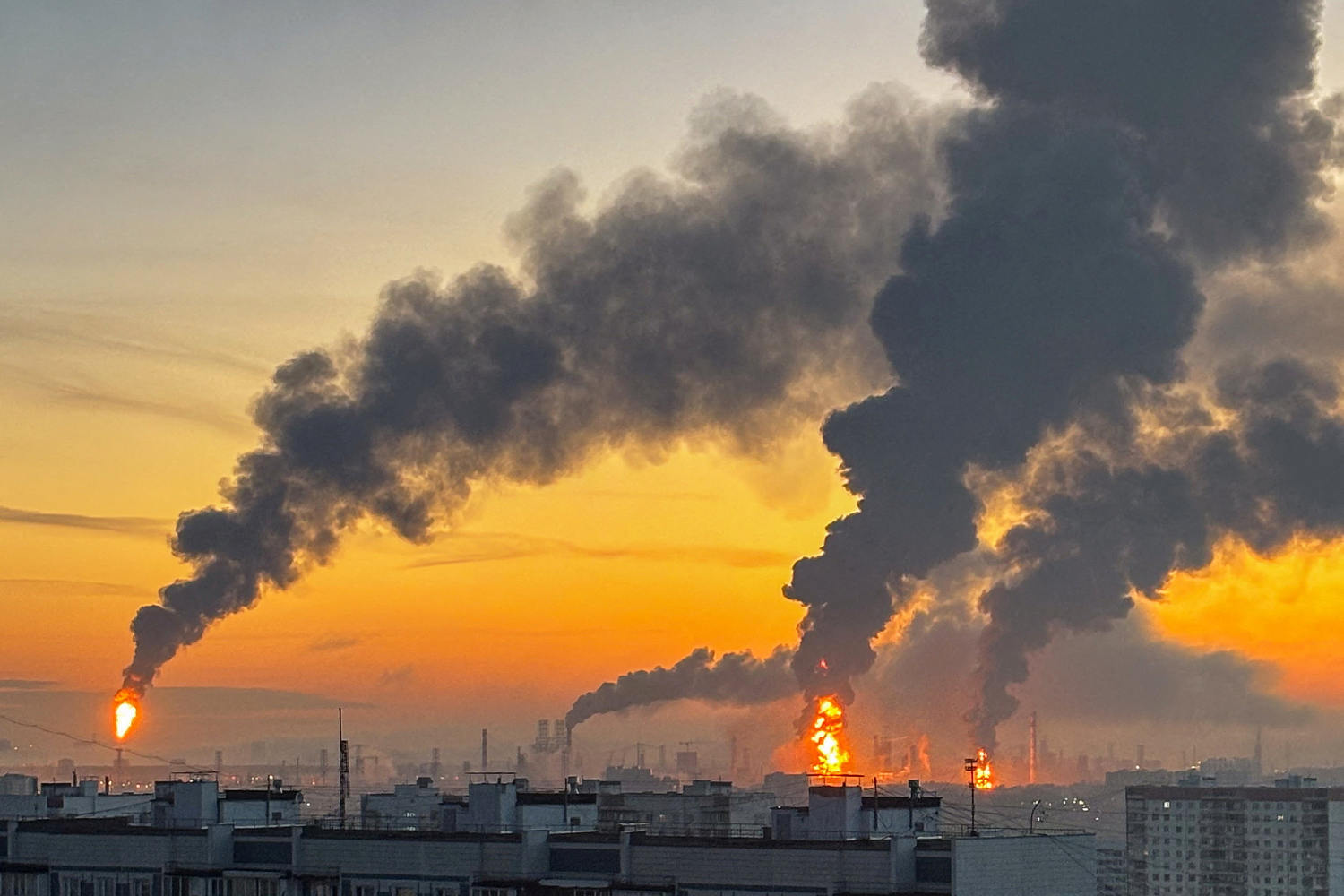
Refineries are attractive targets precisely because they are concentrated industrial nodes. A single refinery complex contains complex processing towers, heat exchangers, control systems, and storage tanks. Even when fires are put out and partial operations resume, repairing specialized components under sanctions and wartime constraints takes time, money, and engineering focus.
Consider a thought experiment. Imagine a scenario where a military force must supply hundreds of miles of active front lines while also keeping domestic transport running across eleven time zones. If its refineries suffer intermittent damage, two pressures collide at once: domestic fuel markets feel tightness, and military planners face harder allocation choices between frontline units, rear-area logistics, and civilian agriculture or transit. Even if total crude output does not collapse overnight, friction compounds. Air-defense batteries have to be stretched thinner to guard industrial sites miles from the front. Repair crews get pulled away from other bottlenecks.
That is the nuance most hot takes flatten. A strike does not need to erase an entire oil sector in a week to matter. Attrition works through cumulative drag—higher operating costs, longer repair cycles, diverted air defenses, and constant uncertainty for managers trying to keep output steady.
What People Also Ask—And Why the Premise Is Often Flawed
- Does hitting oil sites actually end a war faster? Rarely by itself. Wars usually end through a mix of battlefield exhaustion, economic strain, political shift, and diplomatic leverage, not a single silver-bullet target set. Anyone promising a quick knockout punch from energy strikes is selling false certainty.
- Won't striking oil infrastructure backfire on global markets? It can create volatility, insurance headaches, and regional price distortions. Yet blaming a wartime strike for every market wobble ignores how sanctions, shipping shifts, and producer decisions already reshape global supply.
- Is attacking energy infrastructure a violation of the rules of war? Under international humanitarian law, dual-use or war-sustaining economic targets face intense legal and political scrutiny depending on civilian harm and proportionality. Reducing that complex legal and strategic debate to a single soundbite like "disgrace" adds zero clarity.
What Serious Analysts Should Watch Instead of Soundbites
If you care about what happens next rather than who wins the cable-news quote of the day, stop tracking outrage and start tracking bottlenecks. Real leverage in energy and war shows up in gritty operational details.
- Track repair speed, not just strike headlines. A dramatic plume of smoke grabs attention, but throughput weeks later tells the real story. Watch whether damaged units stay down or return to partial service quickly.
- Watch air-defense allocation. Every missile battery sent to protect a refinery or fuel terminal is one less battery protecting another high-value site or front-line sector. Resource allocation reveals true priorities.
- Follow refined product flows, not just crude rhetoric. Crude numbers and refined fuel numbers behave differently. Bottlenecks in diesel or export terminals create different pressures than shifts in raw crude extraction.
- Separate domestic politics from operational reality. Political statements about strikes often aim at domestic audiences, allies, or negotiating leverage. Treat rhetoric as a signal of political positioning, not an objective audit of battlefield impact.
Heavy hitters in strategic studies and energy economics—from classic theorists of war like Carl von Clausewitz on friction and attrition to modern energy analysts studying supply-chain resilience—have long emphasized that war is a contest of wills and logistics under uncertainty. Friction is normal. Messy trade-offs are unavoidable. Pretending otherwise just leaves you blindsided when events refuse to follow a neat script.
The Catch With My Own Contrarian Take
Being contrarian has its own traps, and I am not going to pretend this perspective is cost-free. Pushing back against the "disgrace" framing can easily tip into cold detachment—treating infrastructure strikes like a video-game spreadsheet while ignoring human costs, civilian risks, and real economic strain on ordinary people.
There is also a real risk of over-interpreting tactical hits as strategic breakthroughs. Military history is full of analysts who fell in love with a clever target set and overestimated how quickly it would force an adversary's hand. Complex industrial systems bend, adapt, and improvise far more often than commentators expect.
Still, clear-eyed realism beats comfortable clichés every time. Calling strikes on Russian oil sites a "disgrace" lets commentators sound tough or virtuous without doing the hard work of weighing logistics, incentives, and trade-offs. Look past the label, follow the fuel and the friction, and you will see the real contest much more clearly. If you want to keep your notes organized or pick up threads like this later, signing in to a Google Account makes it easy to save your chat history across sessions.
The war isn't decided by who gets the sharpest one-liner; it's decided by who can absorb the friction without breaking.