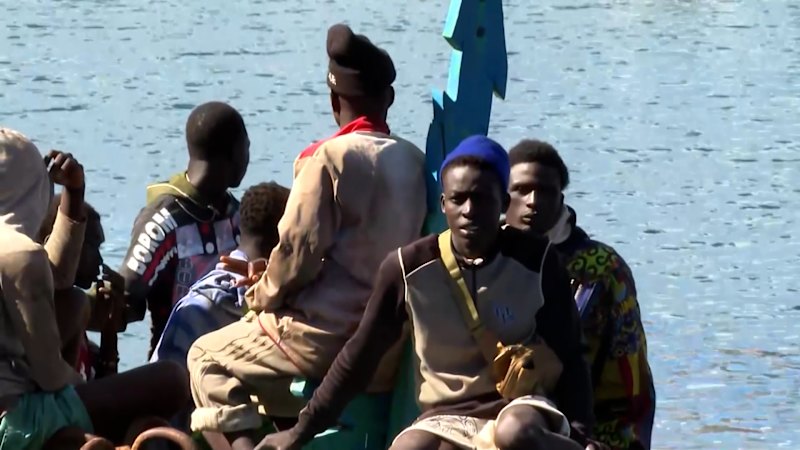
When nearly 1,500 migrants reached the Canary Islands across 14 wooden boats in a single 24-hour window, local emergency teams weren't just overworked—they were overwhelmed.
Small volcanic outcroppings in the Atlantic Ocean are bearing the main impact of an escalating humanitarian crisis. When maritime rescue ships docked at La Restinga on El Hierro, they brought ashore 1,488 survivors from West African nations like Senegal, Gambia, and Guinea. One single wooden vessel squeezed in 240 passengers, including 36 children and 12 women who survived days at sea.
If you follow European border issues, you know the Atlantic route has always been dangerous. It's quickly becoming the primary crossing point for migrants trying to reach Spain.
Why the Atlantic Crossing Is Explosive Right Now
The geography tells the whole story. While the Mediterranean route gets more media airtime, the Atlantic voyage from the West African coastline to the Canary Islands is far more treacherous.
Migrants set sail from Senegal, Mauritania, or Morocco in traditional wooden fishing pirogues. These boats aren't built for open ocean swells. They lack basic navigational gear, adequate freshwater, and protective shelter. A minor engine breakdown transforms a three-day voyage into a weeks-long drift toward open ocean.
Several factors drive people onto these boats:
- Collapse of local fisheries: Industrial foreign trawlers have gutted coastal fish stocks in West Africa, wiping out artisanal fishing livelihoods.
- Political destabilization: Ongoing conflicts and political crackdowns across the Sahel force young people to leave home.
- Strict Mediterranean patrols: Enhanced surveillance along North African borders pushes smugglers south toward Atlantic launching points.
When weather windows open in late autumn, dozens of boats launch simultaneously. Coast guard crews from Maritime Rescue vessels like Acrux, Navia, and Urania work non-stop to pull people from the water before the sea swallows them.
The disproportionate Pressure on El Hierro
El Hierro is the smallest inhabited island in the archipelago, with a population of roughly 11,000 residents. Expecting an island that size to process over a thousand arrivals in a single weekend creates severe bottlenecks.
The island's primary reception hub at La Restinga operates around the clock. Red Cross medical personnel test for hypothermia, severe dehydration, and injuries caused by standing for days in saltwater. Local infrastructure wasn't designed for this volume.
Temporary shelters quickly hit maximum capacity. Spain's central government relies on airlifts to transfer arrivals to larger facilities on Tenerife and Gran Canaria, but logistics struggle to keep pace with incoming waves.
Regional leaders like Fernando Clavijo have called for a coordinated European Union strategy. The Canary Islands effectively act as a southern border for the entire European continent. Yet local municipal resources handle the initial shock.
What Happens After Boats Land
The immediate post-arrival timeline follows strict legal and humanitarian protocols under Spanish law:
- Medical triage: Emergency crews evaluate every individual upon landing. Severe cases of hypothermia or dehydration get immediate helicopter transfers to regional hospitals.
- Identification and processing: National Police officers process arrivals at temporary centers to determine identity and country of origin.
- Protection screening: Unaccompanied minors fall under the jurisdiction of the Canary Islands' regional government for long-term care and housing.
- Mainland transfers: Adult migrants are moved into mainland Spanish humanitarian networks or scheduled for deportation under bilateral agreements.
This processing pipeline breaks down when hundreds of people land within hours. Processing facilities get backed up. Frontline workers run low on basic supplies, and local healthcare systems face intense strain.
Broader European Implications
Migration isn't just a regional issue for Spain—it's a central debate across European politics.
The surge in Atlantic arrivals shows how migration routes shift when enforcement increases elsewhere. Tightening borders in one corridor simply diverts human movement to more dangerous alternatives. Smugglers adapt quickly, taking greater risks with human lives.
Financial aid packages to West African nations aim to curb departures at the source. But without long-term economic stability and restored local industries, young workers will keep taking their chances on open ocean crossings.
To see what rescue operations look like when boats arrive at remote harbors, watch how emergency crews manage these landings on the ground.
The video below shows the real-world scale of coastal operations during peak arrivals.
Regional authorities need immediate policy adjustments:
- Automatic mainland distribution: Establish clear thresholds for transferring arrivals to mainland Spain within 48 hours to prevent local island overload.
- Upgraded search assets: Station additional high-capacity rescue vessels permanently off the West African coast to interdict failing pirogues earlier.
- Direct support for local youth services: Expand federal funding specifically for the care and education of incoming unaccompanied minors on the islands.
The sea route to the Canaries remains one of the deadliest passages in the world. Until underlying economic pressures in West Africa and structural processing gaps in Europe are addressed directly, the archipelago will stay on the front lines of this crisis.