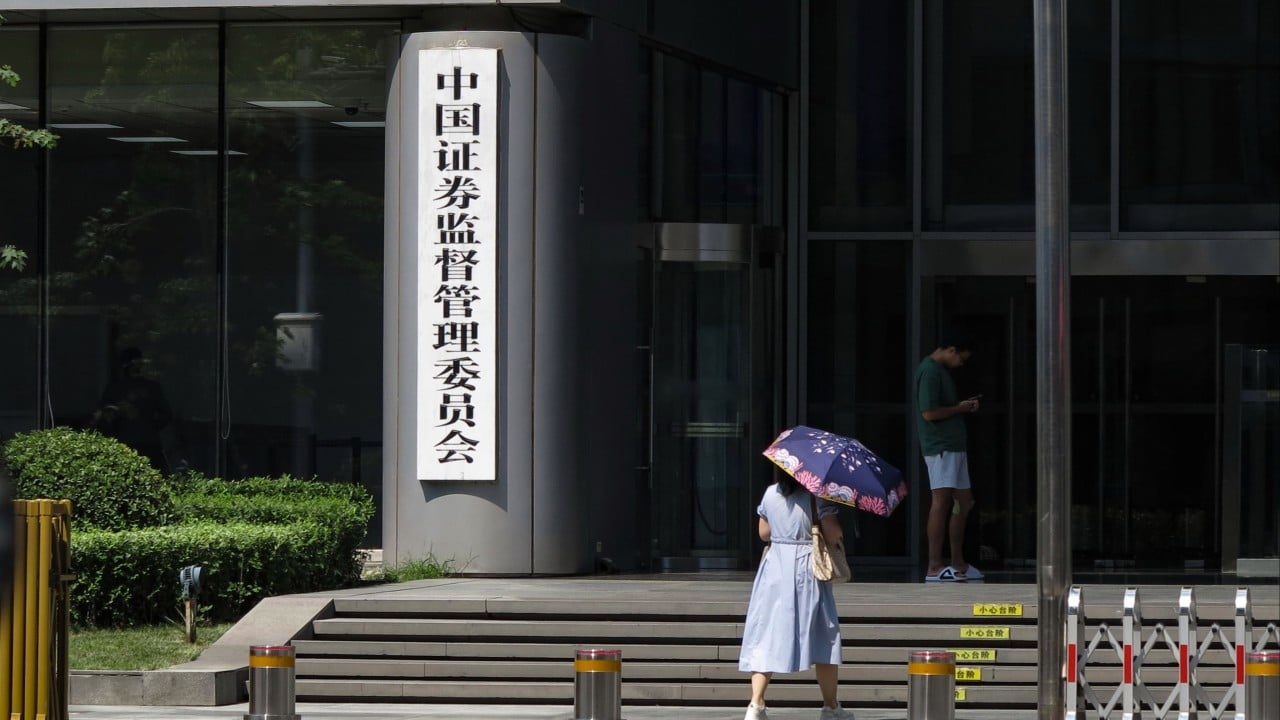
When a Hong Kong-listed brokerage discloses that its chairman has been detained and placed under investigation on the Chinese mainland, the market rarely treats it as an isolated personnel hiccup. Financial Street Securities, a Beijing-backed regional brokerage traded in Hong Kong, confirmed that its top executive is under formal investigation by mainland authorities—a terse regulatory filing that instantly erased investor certainty and placed the firm’s governance, cross-border debt pipelines, and state-backed lineage under an unforgiving spotlight.
The announcement followed a familiar, chilling script. No specific charges were detailed. No timeline for resolution was offered. Just a brief exchange filing noting that the company’s daily operations remain normal while another executive steps in to shoulder the chairman’s duties. For a different look, read: this related article.
For seasoned observers of China’s capital markets, that boilerplate reassurance reads less like comfort and more like a warning siren.
The Anatomy of a Mainland Disappearance
In Western markets, an executive investigation typically unfolds through a slow, public drip of subpoenas, civil complaints, and defense counsel statements. In mainland China, the sequence runs in reverse. An executive simply stops returning calls, misses a scheduled board meeting, and days—sometimes weeks—later, the listed entity issues a mandatory disclosure to the Hong Kong Stock Exchange confirming that the individual is subject to liuzhi (retention in custody) or a parallel disciplinary probe. Further coverage regarding this has been provided by Business Insider.
This procedural opacity is not an accidental flaw in the system. It is the system.
Under China’s supervision framework, disciplinary bodies—most notably the Central Commission for Discipline Inspection (CCDI) and its provincial branches—possess sweeping authority to detain executives of state-linked enterprises for months without formal criminal arrest or immediate access to external legal counsel. Because Financial Street Securities operates under the ultimate umbrella of Beijing’s Xicheng District state assets apparatus, its leadership sits squarely inside the dual-track orbit of corporate governance and party-state discipline.
When the Hong Kong exchange forces a disclosure under Listing Rule 13.09—which requires immediate release of inside information—the company is often relaying the bare minimum it has been permitted to say by mainland investigators. The board itself frequently knows little more than the investors reading the PDF at midnight.
Why Regional Brokerages Are Suddenly in the Crosshairs
For years, China’s anti-corruption campaign focused heavily on the "big tigers"—policy bank chairmen, sovereign wealth fund managers, and executives at tier-one state-owned commercial banks. Regional securities houses operated in a quieter tier, overshadowed by giants like CITIC Securities and CICC.
That buffer has vanished.
The current wave of scrutiny has shifted downward into provincial and municipal financial platforms, local asset management companies, and mid-sized brokerages. The reason comes down to balance-sheet stress. Over the past decade, regional brokerages served as the primary financial plumbing for Local Government Financing Vehicles (LGFVs). They underwrote trillions of yuan in municipal corporate bonds, structured off-balance-sheet wealth management products, and arranged high-yield private placements for cash-strapped local districts.
As China’s property slump choked off land-sale revenues, local governments struggled to service that debt. Regulators in Beijing began auditing how these deals were originated and priced. What they found in several regional brokerages was a dense web of kickbacks, inflated underwriting fees, and off-the-books side agreements designed to mask credit risk.
"In a bull market, aggressive bond underwriting looks like financial innovation. When local revenues dry up, every unconventional fee structure starts looking like a crime scene."
The Governance Trap of Hong Kong-Listed Mainland Firms
Financial Street Securities occupies a particularly awkward structural position. Listed in Hong Kong under the name Financial Street Property and its affiliated financial arms—specifically Hengtai Securities, which rebranded to Financial Street Securities after Beijing’s Financial Street Group took effective control—the brokerage bridges two incompatible regulatory regimes.
Hong Kong’s Securities and Futures Commission (SFC) demands transparency, fiduciary accountability to minority shareholders, and clear lines of executive authority. Mainland state ownership, by contrast, vests ultimate decision-making power in party committees and municipal state-owned asset supervision commissions (SASAC).
When a chairman is detained, that structural tension snaps.
The Myth of "Business as Usual"
Every Hong Kong filing announcing a detained chairman contains the exact same clause: The Board believes that the incident will not have a material adverse impact on the normal business operations of the Company.
Take that claim with extreme caution.
While retail trading apps keep running and back-office settlement systems do not grind to a halt overnight, a securities firm runs on institutional trust and regulatory approvals. Neither survives an ongoing investigation unscathed.
- Underwriting freezes: When a brokerage’s top leader is under investigation, mainland regulators routinely pause approvals for the firm’s pending IPO sponsorships, bond issuances, and refinancing mandates. Corporate clients quietly pull their mandates rather than risk having their own deals delayed by association.
- Counterparty pullbacks: Interbank lenders and institutional trading desks immediately tighten credit lines. Repo financing becomes more expensive, and counterparties demand higher collateral haircuts.
- Internal paralysis: Middle-level managers stop signing off on complex transactions. In an environment where retrospective audits can turn a routine credit approval into a disciplinary offense, bureaucratic self-preservation takes over. Nobody wants their signature on the next deal that goes sour.
Following the Money in Municipal Finance
To understand why a brokerage linked to Beijing’s prestigious Financial Street district attracts this level of scrutiny, one has to look at the geography of power in the Chinese capital.
Financial Street in Xicheng District is not just a neighborhood; it is the regulatory nerve center of Chinese finance, housing the People’s Bank of China, the National Financial Regulatory Administration, and the China Securities Regulatory Commission. Entities carrying the "Financial Street" banner carry an implicit aura of institutional prestige and political proximity.
That prestige made their bond desks extraordinarily effective at distributing debt across the country. Regional issuers wanted the Financial Street stamp of approval on their offerings, and institutional buyers assumed that proximity to Beijing’s regulators implied rigorous due diligence.
Yet the restructuring of Hengtai Securities into Financial Street Securities was itself a complex rescue and consolidation exercise. Taking over a sprawling regional brokerage meant inheriting legacy portfolios, historical underwriting exposures, and entrenched regional branch networks—especially in Inner Mongolia and northern industrial provinces where corporate defaults and municipal debt restructuring have been acute.
When investigators dig into a brokerage following a state-backed takeover, the probe frequently traces back to one of two triggers:
- Legacy cleanup: Audits conducted after a state shareholder assumes control uncover irregular transactions executed prior to or during the transition period.
- Cross-case contagion: A detained official at an LGFV, a municipal bank, or a regulatory bureau names the brokerage executives who helped structure or place problematic debt instruments.
In mainland financial investigations, cases rarely stay contained to a single institution. One interrogation room leads directly to three other boardrooms.
What Minority Shareholders Actually Own
For international and Hong Kong-based investors holding H-shares in mainland regional brokerages, the Financial Street Securities disclosure exposes an uncomfortable truth about valuation.
Many of these stocks trade at steep discounts to book value—often 0.3x to 0.5x price-to-book—tempting value investors who view them as cheap proxies for China’s capital market reforms or potential targets for state-mandated industry consolidation. Beijing has openly encouraged mergers among brokerages to create globally competitive investment banks, fueling periodic speculative rallies in smaller listed firms.
The risk embedded in that thesis is governance asymmetry.
Minority shareholders have zero visibility into the internal disciplinary files of state-backed enterprises until a crisis becomes legally impossible to hide. By the time a Hong Kong exchange filing hits the wire, institutional insiders on the mainland have often been whispering about the chairman’s absence for days.
Even when a firm’s balance sheet appears adequately capitalized on paper, contingent liabilities from regulatory fines, disgorged underwriting fees, or forced compensation to bondholders can erode net assets rapidly. Worse, a brokerage embroiled in an investigation loses its attractiveness as a clean merger partner, stripping away the consolidation premium that propped up its share price.
Reading the Signals Before the Filing
Seasoned China market analysts rarely wait for the formal Hong Kong announcement to gauge trouble at a mainland financial institution. The warning signs almost always surface weeks earlier in subtle operational shifts:
- Sudden delegation of signing authority: Internal circulars quietly reassigning approval powers for investment banking or proprietary trading committees to vice presidents or chief risk officers.
- Conspicuous absences: The chairman failing to appear at annual industry forums, municipal economic work conferences, or routine earnings briefings where their presence is protocol.
- Delayed bond prospectus updates: Issuer filings where the brokerage acts as lead underwriter suddenly stalling without explanation from the exchange.
- Abnormal H-share liquidity spikes: Unexplained block selling in Hong Kong prior to any public news, driven by connected onshore capital moving ahead of the regulatory curve.
The Structural Reckoning for China’s Securities Sector
The detention of Financial Street Securities’ chairman is not an anomaly; it is a symptom of an industry undergoing forced deleveraging and political re-engineering.
For twenty years, China’s brokerage sector expanded by monetizing regulatory arbitrage and credit expansion. Every new wave of financial liberalization—from wealth management channels to corporate bond markets—created lucrative fee pools for firms willing to push compliance boundaries.
Beijing’s financial leadership has made clear that era is over. Under the mantra of "financial security" and strict regulatory supervision, authorities are treating aggressive financial engineering not as a civil compliance lapse, but as a threat to systemic stability.
Executive accountability is now personal, retroactive, and severe. Signing off on a defective bond issuance five years ago carries the same personal career risk today as a current violation.
For investors, the lesson is blunt. When evaluating mainland financial institutions listed offshore, traditional financial ratios tell less than half the story. Balance sheet leverage and return on equity matter far less than asset origin, municipal debt exposure, and the cleanliness of historical underwriting books.
Until a brokerage can prove that its past deal flow can survive a forensic audit by Beijing’s disciplinary inspectors, every "business as usual" statement from the boardroom comes with an expiration date.