The envelope arrives on a Tuesday. It is white, standard-issue, smelling faintly of machine oil and bureaucratic indifference. Inside sits a piece of stiff paper promising five hundred dollars.
For Elena, who watches her mailbox the way a sailor watches the horizon for a break in the storm, five hundred dollars is not a statistic. It is the cost of two months of insulin, or three weeks of groceries, or the nagging mechanic’s bill she has been dodging by ignoring the screech in her Honda’s brakes.
She turns the paper over. She reads the fine print. She tries to understand why a political promise wrapped in a rebate check feels less like a windfall and more like a weather report predicting rain after the roof has already caved in.
To understand why that check matters—and why it leaves a strange, metallic taste in the mouth of anyone who has ever tried to buy health insurance on the open market—we have to look past the press releases and step inside the kitchen of millions of Americans living in thirty states who rely on the Affordable Care Act.
Every autumn, the ritual repeats. Open enrollment arrives like a cold front. People sit at kitchen tables with calculators, coffee cups, and rising panic. They stare at premium tables that read like ancient runes. Deductibles that require a minor lottery win to clear. Copays that turn a simple sinus infection into a financial crisis.
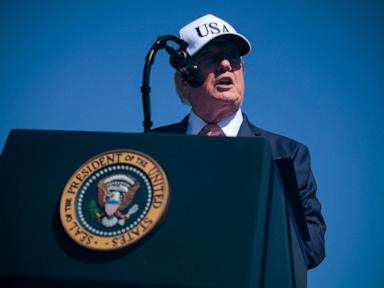
When a politician stands at a podium and announces that one million enrollees will soon see five hundred dollar rebate checks, the immediate emotional response is a sigh of relief. Who wouldn't want cash back? Who wouldn't welcome a cushion against the relentless upward drift of the cost of living?
Money talks. But numbers can also whisper distractions.
Consider a hypothetical scenario, one played out in millions of households across the country. Elena makes just enough money to disqualify her from Medicaid, but not enough to comfortably absorb a monthly premium that costs more than her rent. She is part of the working class invisible middle—too poor to afford care without help, yet navigating a system built with trapdoors.
When a rebate check arrives, it arrives as a discrete event. It has a beginning, a middle, and an end. You cash it. You spend it. It vanishes into the gaping maw of utility bills and credit card minimums.
Meanwhile, the structural architecture of the healthcare market remains entirely untouched.
This is the sleight of hand at the heart of modern political economics. A rebate check is tangible. It fits neatly into a thirty-second campaign ad. It is easy to photograph, easy to broadcast, and easy to applaud. But structural reform is boring. It looks like spreadsheets, legislative committee hearings, and actuarial tables. Nobody ever wept tears of joy over a well-optimized risk pool.
Yet, the anxiety driving these healthcare costs is profoundly human. It is the midnight sweat of wondering if a chest pain is indigestion or a heart attack you cannot afford to diagnose. It is the calculation of whether skipping a prescription refill this month will save enough cash to pay the electric bill.
When the news cycle focuses on five hundred dollars handed back to a fraction of the population, it frames healthcare as a retail transaction. As if buying health insurance were no different than buying a television set, where a manufacturer's rebate might sweeten the deal on a Friday night.
Health insurance is not a consumer good. It is a shared compact against the random cruelty of biology.
The thirty states targeted by these specific initiatives are not uniform. Some have expanded Medicaid; others have fought it tooth and nail in a protracted ideological war that has left millions in a coverage gap. In these states, the healthcare marketplace is a fragile ecosystem. Enrollees face wild fluctuations in carrier participation. One year, there are four choices. The next year, two pull out, leaving a single provider with a monopoly on despair and the freedom to hike rates without fear of competition.
Handing out a rebate check in that environment is akin to giving a bucket to someone standing on the deck of a sinking ship. The water level drops for a second. You feel a momentary sense of progress. Then the hull groans, and the sea comes rushing back in.
We have built a system where vulnerability is monetized and relief is theatrical.
Think about the psychological toll of the modern deductible. A high-deductible health plan means you are technically insured, which satisfies the letter of the law and quiets the conscience of policymakers. But practically speaking, you are self-insured for the first several thousand dollars of care. You avoid the doctor. You let the persistent cough linger. You hope the lump in your neck goes away on its own.
Then, when a policy tweak offers a modest financial rebate, the messaging treats you as if you should be grateful for the crumb.
The math of the situation reveals an uncomfortable truth. Five hundred dollars divided across twelve months is roughly forty-one dollars a month. When monthly premiums for a bronze or silver tier plan can easily span hundreds or thousands of dollars depending on age and geography, forty-one dollars a month is a rounding error. It is a drop of water on a scorching sidewalk.
Yet, to dismiss the check entirely would be to misunderstand the desperation of the people receiving it. For Elena, forty-one dollars a month is the difference between buying generic groceries or name-brand groceries. It is the gas to get to an interview across town. In a life lived on the financial margin, every dollar is a soldier holding the line against total collapse.
The tragedy is not that the check arrives. The tragedy is that the check has to exist at all.
It is a symptom of a deeper failure of imagination. We treat healthcare access as a perpetual political football, kicked back and forth between administrations, while the people living inside the numbers try to dodge the cleats. We celebrate bandages while ignoring the infection festering underneath.
When the check is cashed and spent, the silence returns. The mailbox goes back to holding junk flyers and utility bills. The premiums for the next year are announced, ticking upward by percentages that outstrip wage growth. The deductible resets to zero, as it does every January, demanding that the game begin anew.
Elena puts the empty envelope in the recycling bin. She looks at her phone, checks her bank balance, and calculates the math of survival for the hundredth time that week. The check helped for a moment. But the horizon is still dark, and the wind is starting to rise.