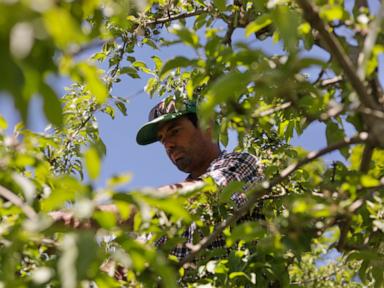
Vermont just became the first U.S. state to ban paraquat, a highly effective yet brutally toxic weed killer tied to a 250% increase in Parkinson’s disease risk. Governor Phil Scott signed House Bill 739 into law, triggering an immediate countdown for agricultural operations across the state. While environmental and health advocacy groups are celebrating this as a historic victory that shifts the national conversation, the reality on the ground highlights a jagged regulatory fracture. Vermont is the first in the nation to enact a ban, yet it remains among the last in the Western world to address a chemical already outlawed in more than 70 countries, including China, Brazil, and the European Union.
The legislation halts the sale and use of the chemical on November 1, though it carves out a critical grace period until 2030 for orchardists and berry growers. This compromise exposes a deep tension within the agricultural industry. To understand why a state using a mere 107 gallons of paraquat annually took center stage in a global chemical war, one must look past the press releases and examine the economics of farming, the limits of state-level oversight, and the fierce lobbying of corporate agrochemical giants.
The Geography of Toxic Exposure
Paraquat is not your standard backyard weed killer. It is a restricted-use chemical so acutely toxic that a single accidental sip can cause systemic organ failure and death within days. There is no antidote. On a chronic level, the epidemiological evidence linking it to neurological degradation has mounted for decades. Research indicates that the chemical triggers intense oxidative stress, destroying dopamine-producing neurons in the brain and mimicking the exact cellular mechanisms of Parkinson's disease.
The danger is not confined to the farmworkers wearing respirators and heavy protective gear. Because of chemical drift, vaporized particles travel on the wind, settling into the soil, water, and air of surrounding communities. In Vermont, where small family farms frequently border residential zones and rural schools, this overlap turns a localized agricultural tool into a broad public health liability.
A Fractured Regulatory Field
The political fight over the herbicide exposes an ongoing battle between state-level protections and federal inertia. The U.S. Environmental Protection Agency continues to permit paraquat use nationwide, though it mandate specialized training and certification every three years. Recently, EPA leadership announced a fresh reassessment of the chemical's safety under pressure from multiple legal challenges. However, the federal government's historical reluctance to issue an outright ban leaves a regulatory vacuum that individual states are now attempting to fill.
Thirteen other states have introduced similar legislation, but those efforts face aggressive resistance in regions where agriculture operates at an industrial scale. In the Midwest and the South, paraquat is applied by the millions of pounds to vast monocultures of corn, soybeans, and cotton. Corporate manufacturers have fiercely defended the herbicide, pointing to industry-funded studies to argue that no peer-reviewed analysis proves direct causation. This defense highlights a classic corporate strategy: exploiting the statistical difficulty of proving absolute causation in a world where humans are exposed to hundreds of environmental toxins simultaneously.
The Orchardist Dilemma
For a small-scale apple grower or berry farmer, the loss of this chemical presents a distinct economic hurdle. Fruit growers rely on the herbicide to clear aggressive grasses around young tree trunks without damaging the delicate bark. It is fast, highly effective, and rain-fast within thirty minutes.
Without it, farmers face a choice between more expensive chemical alternatives that carry a higher risk of crop damage if misapplied, or labor-intensive mechanical options like chip mulching, tilling, and manual weeding. In a margin-thin industry, rising labor costs can dictate whether a family orchard survives. Vermont fruit growers now find themselves operating under an entirely different set of rules than their competitors just across the border in upstate New York. A Vermont apple must compete on the same supermarket shelves as a New York apple produced with cheaper, federally approved chemical tools.
The Global Supply Chain Paradox
The most striking contradiction of the paraquat market lies in its manufacturing and distribution. Syngenta, the primary historical manufacturer of the herbicide, is headquartered in Switzerland and maintains massive production facilities in the United Kingdom. Yet, both Switzerland and the UK banned the use of paraquat on their own soil years ago. European corporations have spent decades profiting from the export of a high-risk chemical to foreign markets while their domestic populations are legally shielded from its consequences.
Even as Syngenta phases out its global manufacturing of the product, generic chemical suppliers continue to fill the demand. This creates a persistent loophole. A state can ban the chemical within its borders, but its citizens will continue to buy, consume, and wear products grown with that very same chemical in neighboring states or countries. True systemic protection requires a uniform federal standard. Until the federal government aligns its environmental policies with international consensus, state-level bans will remain isolated triumphs in a structurally compromised system.