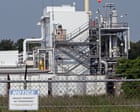
Paying your way out of a decade of illegal pollution doesn't come cheap, but it might just buy you the right to keep doing it.
The US federal government just finalized a massive 450 million dollar multi-state settlement with chemical heavyweight Chemours Co. The deal addresses more than ten years of illegal discharges of synthetic per- and polyfluoroalkyl substances, better known as PFAS or "forever chemicals." These are the compounds that make your cookware non-stick, your rain jackets waterproof, and your military gear stain-resistant. They also happen to build up in your bloodstream and stay there.
This historic agreement marks the first time the federal government has secured a comprehensive settlement against a primary manufacturer of these compounds. The deal covers four separate facilities across West Virginia, North Carolina, and New Jersey. For years, these plants dumped toxic chemicals directly into crucial water sources: the Ohio River, the Cape Fear River, and the Delaware River.
If you live anywhere near these facilities, you've likely been drinking these chemicals. The Environmental Protection Agency (EPA) and the Department of Justice (DOJ) explicitly stated that local communities faced illegal PFAS exposure for a generation.
Where the Money Goes
A headline figure like 450 million dollars sounds massive, but the actual breakdown reveals exactly how the corporate math works out. Chemours isn't just cutting a single check to the US Treasury. Instead, the total cost is divided into penalties, immediate cleanup mandates, and long-term infrastructure overhauls.
First, Chemours will pay a 22.5 million dollar civil penalty for its environmental violations. That's the actual fine. The rest of the cash goes toward trying to fix the damage or preventing future leaks.
The company has to spend roughly 280 million dollars just to provide alternative, clean drinking water to contaminated communities near its plants in West Virginia and New Jersey. Think about that number. Providing clean water because your factories ruined the local supply costs more than ten times the actual government fine.
Another 90 million dollars will fund a government-supervised mitigation program stretched over the next 15 years. In West Virginia alone, Chemours has to sink 60 million dollars into upgrading its Washington Works facility, which includes installing 14 separate treatment systems to catch PFAS in wastewater, stormwater, and groundwater. Furthermore, the company must slash its releases of GenX—a notorious type of PFAS developed as a supposedly safer alternative—by at least 99% across all locations.
The Fine Print That Favors Industry
Here's the twist. The settlement doesn't force Chemours to stop making these controversial chemicals. In fact, it explicitly protects their right to keep producing them.
The Justice Department openly defended this balance. Government officials noted that Chemours plays a vital role in fulfilling both commercial and military obligations. Because there aren't easy substitutes for PFAS in high-tech military hardware, semiconductor manufacturing, and aerospace engineering, Uncle Sam chose compliance over a shutdown. The government gets to claim a win by making a polluter pay, while Chemours gets a clear roadmap for long-term manufacturing operations without the threat of being forced out of business.
Unsurprisingly, not everyone is celebrating this compromise. Critics argue the federal deal lets the company off far too easily. North Carolina Attorney General Jeff Jackson publicly blasted the agreement, calling it an insult to the people living in the eastern part of his state. He pointed out that while North Carolina is essentially ground zero for GenX water contamination, this federal package does practically nothing to actually dredge or thoroughly clean the local Cape Fear River basin.
A Conflicting Regulatory Landscape
The timing of this announcement highlights a major contradiction in current US environmental policy. The federal settlement landed on the exact same day reports surfaced that the administration plans to soften certain drinking water limits for forever chemicals.
The EPA is moving forward with a proposal to roll back parts of the strict drinking water standards established during the Biden administration. While the agency will keep tough limits on the two most common types of PFAS, it plans to delay timelines and ease up on overall restrictions. EPA Administrator Lee Zeldin defended the move by arguing that water utilities need achievable regulatory compliance goals.
Essentially, the government is acknowledging that forever chemicals cause major health issues, including low birth weights, cardiovascular disease, and specific cancers. Yet, at the same exact time, regulators are loosening the rules because enforcing those safety limits is simply too expensive for local towns and water authorities.
What This Means for Corporate Accountability
If you run a business or track environmental liabilities, this settlement establishes a major precedent. It proves that the federal government is shifting toward corporate accountability at the source of production rather than just punishing the municipal water utilities that inherit the dirty water.
However, it also signals that the government views certain chemical manufacturers as too critical to fail. If your product is deeply embedded in the military-industrial supply chain, regulators will work with you to manage your pollution rather than shutting down your assembly lines.
It is also worth noting that this federal deal doesn't clean the slate entirely for the industry. Chemours, alongside its spin-off parent DuPont and Corteva, previously agreed to a separate 2 billion dollar settlement with the state of New Jersey. This new federal decree operates completely independently of those state-level lawsuits. Legacy liabilities from decades of heavy industrial manufacturing will continue to plague these balance sheets for years to come.
If you are a property owner, local business leader, or municipal official in an industrial corridor, don't wait for federal agencies to solve localized water issues. You need to take proactive steps to protect your operations.
Start by ordering independent, third-party well water testing if your facility sits within 25 miles of any major chemical manufacturing plant. Standard carbon filters don't always catch complex synthetic compounds, so you'll want to look specifically into dual-stage sediment and reverse osmosis filtration systems for your facilities. Keeping independent records of your local water quality right now is the only real leverage you have if regional contamination issues worsen.