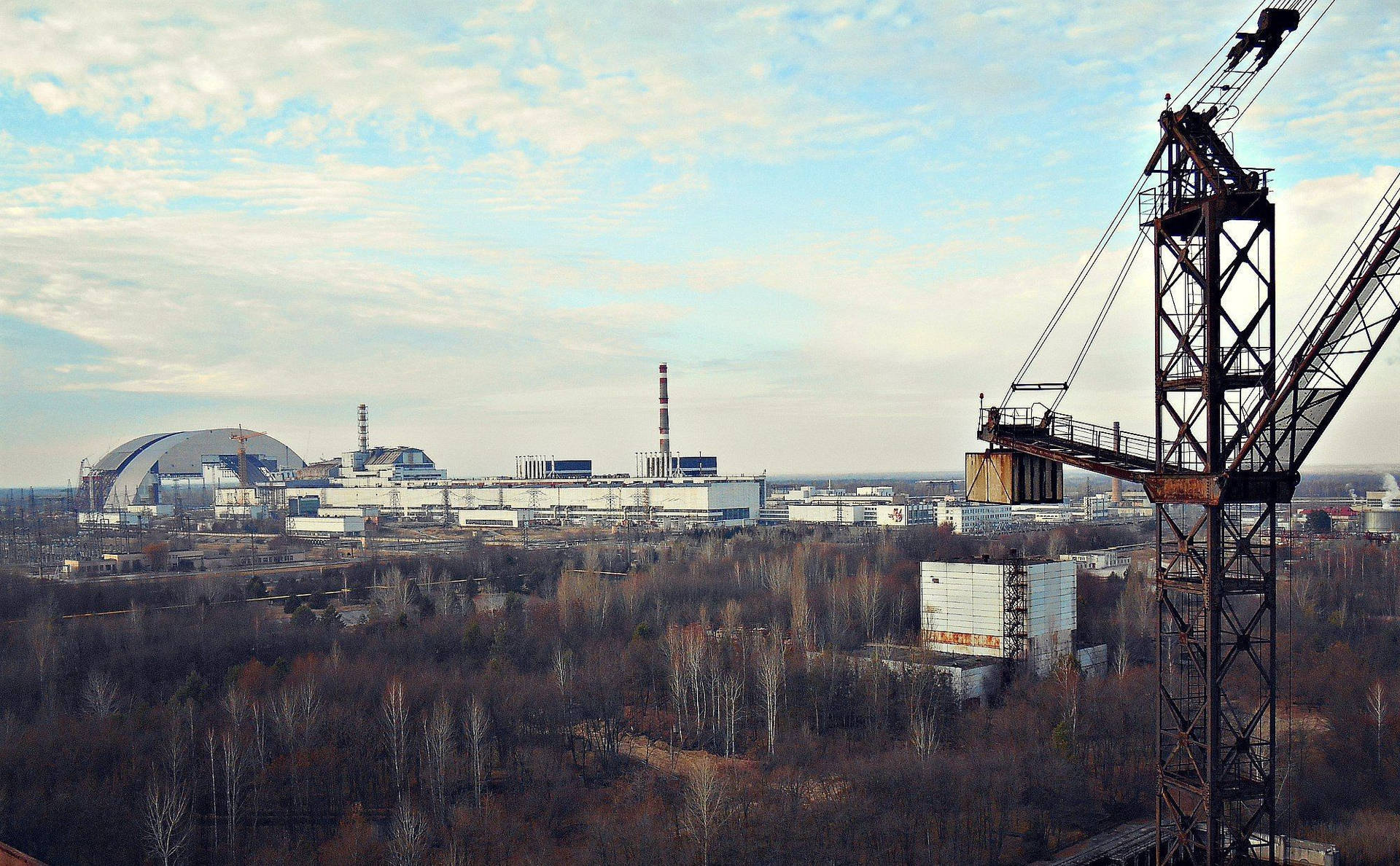
The media loves a ghost story. For decades, the Chernobyl Exclusion Zone has been the ultimate backdrop for disaster voyeurism, a cautionary tale of Soviet hubris that we keep on life support because it sells clicks. Now, with the shadow of Russian kinetic warfare looming over the site, the narrative has shifted to "New Threats" and "Imminent Catastrophe."
It is time to stop clutching your pearls. For an alternative perspective, consider: this related article.
If you look at the data rather than the cinematic dread, the Exclusion Zone isn't a ticking time bomb. It is a fortress of unintended consequences. The "threat" posed by the presence of Russian troops or power outages isn't a radiological crisis; it is a logistical headache being masqueraded as an apocalypse. We are obsessed with the wrong risks because we don't understand how physics actually works in a decommissioned graveyard.
The Myth of the Atmospheric Meltdown
Most reporting on the current "threat" to Chernobyl assumes that if you hit the site with a missile or cut the power, we repeat 1986. This is scientifically illiterate. Similar insight on this matter has been shared by TIME.
In 1986, Reactor 4 was at full power. It had a massive inventory of short-lived, highly energetic isotopes like Iodine-131. When it blew, the graphite fire acted as a chimney, lofting those isotopes into the jet stream.
Today, that fire is out. The short-lived isotopes are gone. They decayed decades ago. What remains is primarily Cesium-137 and Strontium-90. These are heavy. They are stubborn. They are tied up in the soil and the "lava" of the basement. You cannot "blow up" a cold reactor and get the same result as a thermal explosion in an active one.
Even if the New Safe Confinement (the giant arch) were breached by a stray shell, you wouldn't see a continental cloud of death. You would see a localized dust kick-up. Bad for the soldiers breathing it? Yes. A threat to Paris or London? Not even close.
Why the Power Outage Panic is a Farce
The "Competitor" articles scream about the spent fuel pools. They claim that without electricity to circulate water, the fuel will overheat, the water will boil away, and we will face a massive radiation release.
I have spent years looking at the thermal loads of aging nuclear waste. This "boiling pool" scenario is a fantasy.
The spent fuel at Chernobyl has been cooling for at least 24 years. The heat generation is negligible. Engineering assessments from organizations like the International Atomic Energy Agency (IAEA) have repeatedly confirmed that the heat load is low enough that the water in the pools can dissipate heat through natural convection without any active cooling.
- Heat Load: The fuel is effectively "cold" in nuclear terms.
- Evaporation: Even if the pumps stop forever, it would take weeks, if not months, for the water level to drop significantly.
- Safety Margin: There is enough water volume to provide shielding for years.
The alarmism surrounding the power grid at Chernobyl is a political tool, not a radiological reality. It’s used to highlight the brutality of the occupation—which is real—but by lying about the physics of the waste.
The Red Forest and the Dust Boogeyman
When Russian tanks rolled through the Red Forest, the internet lost its mind. "They're kicking up radioactive dust!" "The soldiers are getting radiation sickness!"
Let’s be precise. The Red Forest is one of the most contaminated outdoor sites on earth. If you dig a trench there, you are an idiot. You will increase your lifetime cancer risk. But the idea that moving dirt in northern Ukraine creates a "threat" to the rest of Europe is a failure of scale.
Radiation follows the inverse-square law. It also follows the law of dilution. A tank kicking up dust creates a plume that dissipates within meters. Unless you are standing in the tread marks inhaling the dirt, the dose is negligible. We’ve seen the sensors. During the initial invasion, gamma spikes were recorded. You know why? Because the heavy vehicles disturbed the topsoil. You know how high they went? Not high enough to trigger a health warning in the nearest inhabited village.
The "threat" is to the individual soldier’s long-term health, not to global security. We are conflating a workplace safety hazard for an invading army with a planetary disaster.
The New Safe Confinement is Overbuilt and Under-Challenged
The New Safe Confinement (NSC) is a marvel of engineering. It was designed to withstand a Class-3 tornado and a massive earthquake. It is a 36,000-ton steel shield.
Critics argue that "Russia might weaponize the site." Why would they? From a cold-blooded military perspective, the Exclusion Zone is a geographic bottleneck with zero strategic value other than its proximity to the Belarusian border. It is a "no-man's land" that serves as a buffer.
The real danger isn't the radiation; it’s the obsession with it. By focusing all our anxiety on the 1,000 square miles of the Exclusion Zone, we ignore the actual industrial threats in Ukraine—the chemical plants, the active pressurized water reactors (VVERs) at Zaporizhzhia, and the conventional dams.
Chernobyl is the distraction. It is the one place in Ukraine where the "poison" is already settled, mapped, and largely immobile.
The Ecology of Abandonment
While the world worries about "threats," the Exclusion Zone has become Europe’s largest unintended nature reserve. Wolves, Przewalski's horses, and lynx are thriving. They are doing better in a "radioactive wasteland" than they ever did when humans were "managing" the land.
This is the ultimate contrarian truth: Human presence is more toxic to the environment than a managed level of radiation.
The Russian occupation was a blip in the zone’s ecological timeline. The real threat to the site isn't a missile; it’s the eventual return of "normalcy"—the day we decide to turn the zone back into a tourist trap or an industrial hub.
Stop Asking if Chernobyl is Safe
The question "Is Chernobyl safe?" is a flawed premise.
If you mean "Can I live there and raise a family?" the answer is no, due to the Strontium in the soil.
If you mean "Is it going to explode and kill us all?" the answer is a resounding no.
We need to treat the site as what it is: a historical monument and a waste storage facility. It is not a dormant volcano. It is a heavy-metal graveyard. The "threats" reported by the media are based on a 1980s understanding of nuclear physics that ignores the reality of decay.
The radioactive inventory has changed. The thermal dynamics have changed. The containment has changed.
The only thing that hasn't changed is our desire to be terrified by a three-leaf clover logo. Chernobyl is the most monitored, studied, and reinforced patch of dirt on the planet. If you want to worry about something, worry about the crumbling coal ash dams or the aging chemical pipelines in your own backyard. Those don't have a 36,000-ton steel arch protecting them.
Chernobyl isn't the threat. It's the most stable thing in a country currently defined by chaos.
Stop looking for monsters in the basement of Reactor 4. They’ve been dead for forty years.


