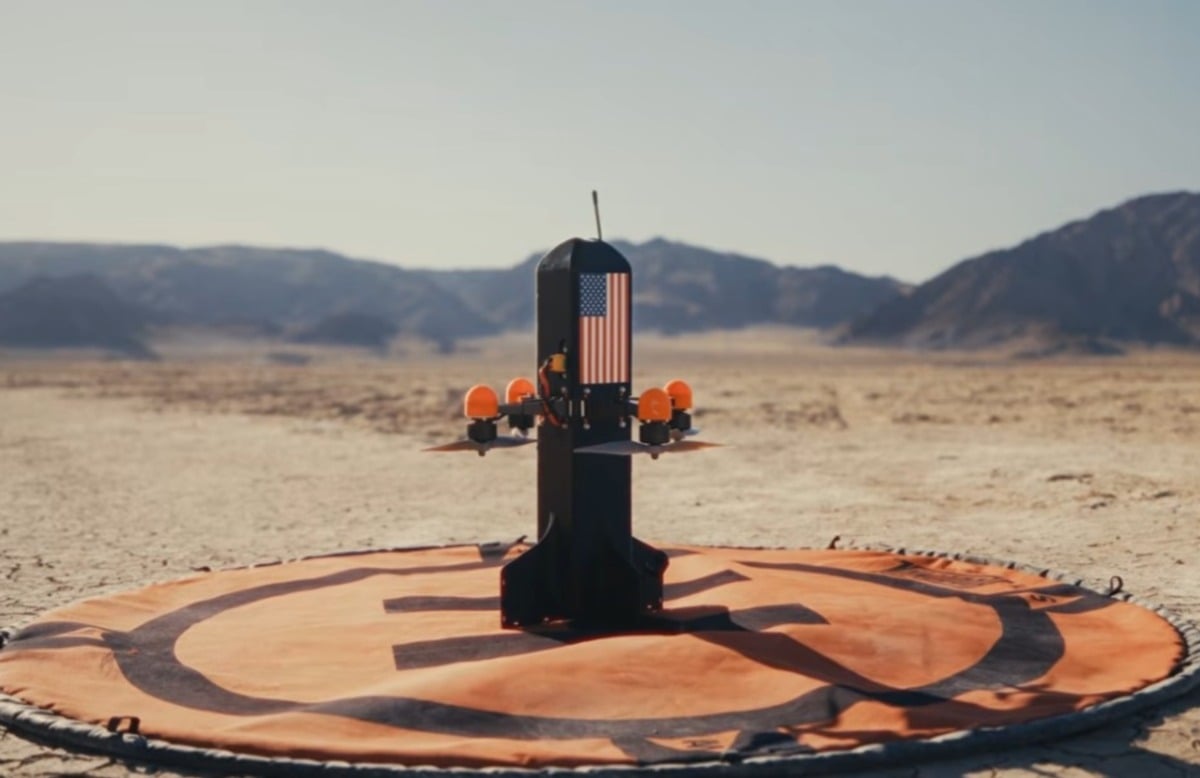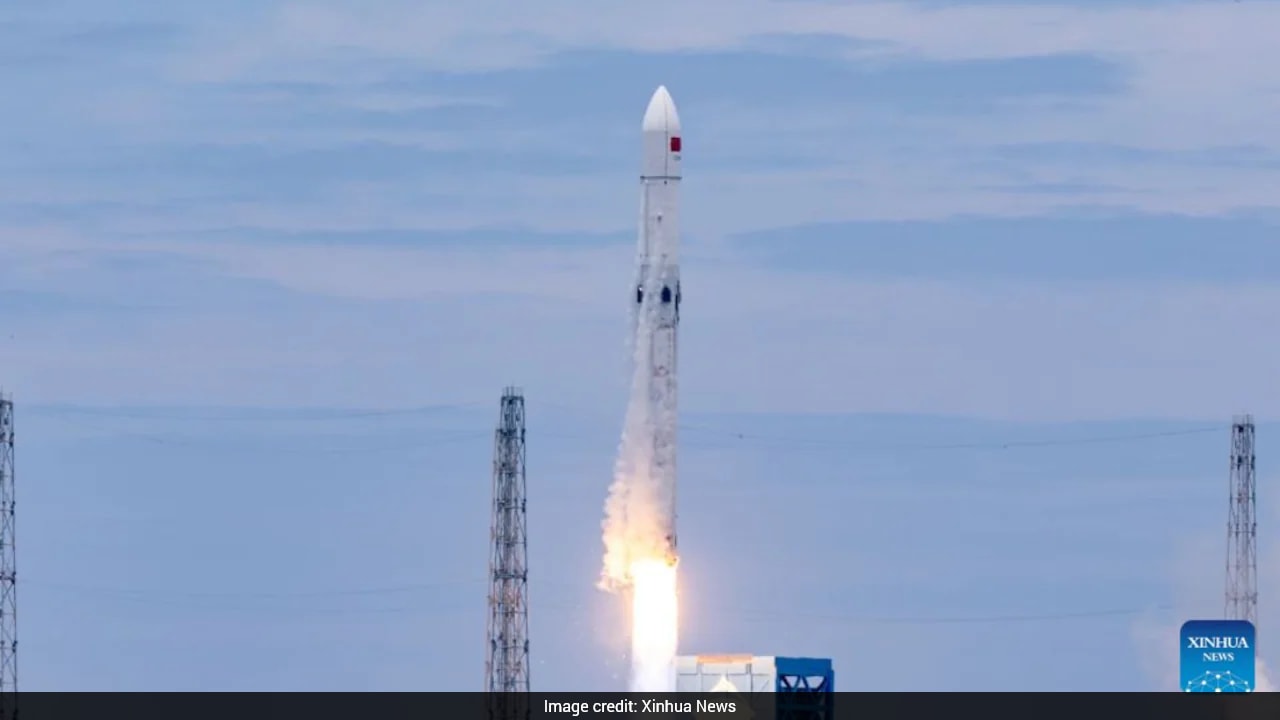
China recently completed a high-altitude vertical takeoff and vertical landing test of a reusable rocket, leading state media to claim the country has closed the technological gap with SpaceX. The state-run aerospace apparatus is aiming to fly its own equivalents to the Falcon 9 within the next twenty-four months. However, equating an experimental test flight to a mature commercial launch system ignores the massive operational, materials, and economic hurdles Beijing must still clear. Successfully landing a prototype is one thing. Achieving the rapid, low-cost reuse that disrupted the global launch market is an entirely different problem.
Western observers frequently mistake China’s space program for a single, unified monolith. It is actually a sprawling ecosystem split between traditional state-owned giants and a heavily subsidized crop of commercial startups. Both factions are chasing reusable launch vehicles. The China Aerospace Science and Technology Corporation (CASC) has spent years iterating on its Long March series, attempting to add grid fins and landing legs to existing architectures. Meanwhile, private firms like LandSpace, Space Pioneer, and iSpace are racing to build methane-fueled rockets that mimic the design philosophy of the Falcon 9 and Starship.
The immediate pressure on Beijing is not just about national prestige. It is about bandwidth. China is currently trying to deploy its own massive satellite megaconstellations, including the Guowang and G60 Horizon projects, which require launching thousands of low-Earth orbit satellites to compete with Starlink. The existing fleet of expendable Long March rockets lacks the cadence and the cost profile to make these constellations viable. Reusability is a structural necessity for China's strategic goals.
The Margin of Mass Penalty
To understand why catching up to a reusable rocket system takes decades rather than months, you have to look at the unforgiving math of rocket performance. When a launch provider decides to land the first stage of a rocket, they are intentionally destroying its payload capacity.
A reusable rocket must keep a significant portion of its propellant reserves untouched during the initial ascent. This fuel is required to perform three distinct operations: the boostback burn to reverse direction, the reentry burn to slow down upon hitting the atmosphere, and the final landing burn. This retained fuel is heavy. Every kilogram of propellant held back for recovery is a kilogram that cannot be used to push satellites into orbit.
SpaceX managed this trade-off by spending a decade optimizing the Merlin 1D engine, pushing its thrust-to-weight ratio past 180 to 1. This extreme efficiency gave the Falcon 9 enough performance margin to absorb the reusability penalty while remaining commercially competitive. China's current operational engines, such as the kerosene-fueled YF-100, do not possess these performance margins. If you bolt landing legs and grid fins onto a rocket powered by heavier, less efficient engines, the payload capacity drops so low that the vehicle ceases to be commercially useful.
The Methane Pivot and the Scalability Wall
Recognizing the limitations of their older kerosene engines, Chinese rocket designers have pivoted heavily toward liquid oxygen and methane propulsion. Methane burns cleaner than kerosene, leaving virtually no soot inside the turbopumps and injectors. This lack of coking is essential for rapid turnaround times without rebuilding the engine between flights.
LandSpace made history by reaching orbit with its methane-powered Zhuque-2, beating Western rivals to that specific milestone. But scaling that technology up to a reusable, multi-engine booster introduces severe engineering complexities.
Deep Throttling and Rocket Dynamics
Landing a rocket requires an engine that can turn its power down to a fraction of its maximum capacity. As the rocket returns to Earth, it is nearly empty and incredibly light. If the engines provide too much thrust at their lowest setting, the rocket will accelerate upward before it ever touches the pad, rendering a soft landing impossible.
- The Falcon 9 Solution: The Merlin engine can throttle down to roughly 40% of its maximum thrust. When combined with the massive weight of the rocket structure, a single-engine landing burn achieves a precise, brief deceleration profile.
- The Chinese Challenge: Most Chinese liquid-propellant engines use gas-generator cycles that struggle to maintain stable combustion at low throttle levels. Achieving stable operation at 30% or 40% thrust requires highly precise, dynamic control of injector geometry and turbopump speeds. Without this deep throttling capability, Chinese boosters cannot perform a controlled touchdown.
The Multi-Engine Combustion Problem
To match the lifting capacity of modern commercial rockets, designers must cluster multiple engines together on a single booster. This creates a highly volatile acoustic and thermal environment.
When nine or twenty-nine engines fire simultaneously in close proximity, their exhaust plumes interact, creating acoustic vibrations that can tear the base of the rocket apart. SpaceX spent years mastering the fluid dynamics and thermal shielding necessary to prevent these engines from destroying each other during ascent and reentry. Chinese startups are only now beginning to test multi-engine clusters on static stands. Moving from single-engine hops to multi-engine orbital flights means entering a regime of unpredictable harmonic resonance and thermal feedback.
The Invisible Supply Chain and Infrastructure Bottleneck
The physics of the rocket itself is only half the battle. The true difficulty of commercial spaceflight lies in the supporting industrial base and infrastructure. A reusable rocket requires a supply chain optimized for rapid refurbishing, specialized metallurgy, and massive testing facilities.
[Orbital Launch] ──> [Atmospheric Reentry] ──> [Precision Landing]
                              │
                              ▼
                [Thermal & Structural Stress]
                              │
                              ▼
                [Supply Chain / Refurbishment]
Every time a rocket stage reenters the atmosphere, it acts as a giant meteor, generating immense friction and heat. The grid fins, steering actuators, and base shielding must survive temperatures exceeding 1,000 degrees Celsius while continuing to function perfectly. Developing the specific superalloys and single-crystal metals capable of enduring these repeated thermal cycles without cracking is a slow, iterative process. China's domestic aerospace supply chain has historically focused on manufacturing expendable components for state military contracts, where long-term durability is irrelevant because the hardware is destroyed after one use. Shifting that entire industrial base to produce components that can survive fifty high-temperature cycles requires completely rewiring the manufacturing sector.
Furthermore, geographic constraints hamper China’s launch operations. The country’s primary inland launch sites, such as Jiuquan and Xichang, are located deep within the interior for Cold War-era security reasons. When an expendable rocket launches from these sites, spent stages routinely fall over land, occasionally threatening villages in the downrange drop zones.
Recovering a reusable booster at these inland sites requires flying it all the way back to the launch pad, which demands an enormous amount of fuel and drastically reduces payload capacity. The alternative is landing downrange on desert pads, which then requires trucking a massive, delicate orbital booster hundreds of kilometers across rough terrain back to the launch site. This logistical nightmare eliminates the cost savings that reusability is supposed to provide. While China is expanding its coastal launch facility in Wenchang and experimenting with sea-launch barges, the throughput of these maritime sites is currently restricted by strict military airspace controls and seasonal weather patterns.
The Economic Delusion of Low-Frequency Reuse
The ultimate measure of a reusable rocket program is its balance sheet, not its engineering footage. The capital expenditure required to design, test, and build a reusable launch vehicle is astronomical. If a launch provider only flies that vehicle three or four times a year, the fixed costs of maintaining the recovery fleet, specialized technicians, and launch pads will outweigh any savings gained from recovering the hardware.
SpaceX achieves its economic advantages because it operates at a blistering cadence, absorbing its own launch capacity through the deployment of Starlink. This high flight rate allows the company to amortize its massive development and infrastructure costs over dozens of launches per year.
China's commercial space sector does not yet have a comparable source of internal demand. The state-run megaconstellations are still in the early planning and initial deployment phases, and international commercial customers remain deeply hesitant to buy flights on Chinese vehicles due to geopolitical tensions and export control regulations like ITAR. Without a constant, high-volume stream of payloads, a reusable Chinese rocket becomes an expensive trophy. The high cost of maintaining the specialized recovery infrastructure sits idle between infrequent launches, driving the per-flight cost above that of a simple, mass-produced expendable vehicle.
The recent test successes coming out of China's aerospace sector demonstrate impressive engineering agility, but they represent the beginning of the curve rather than its apex. Landing a test vehicle verifies the guidance software and the basic flight control mechanisms. It does not solve the structural weight penalties, the complex metallurgical demands of engine refurbishment, or the harsh logistical realities of overland recovery. Beijing will undoubtedly field operational reusable rockets in the coming years. But building a sustainable, high-frequency launch architecture that can match the economic realities of modern commercial spaceflight requires surviving a grueling war of attrition against the laws of physics and supply chain economics.